


BMS Machinery · Coil-fed gutter production
Seamless Gutter Machine
A seamless gutter machine forms coil into straight gutter runs and cuts them to length. Select the BMS forming and cutting route around your profile, coil and finished-length handling.
Compare Gutter Machines for Sale →For rainware manufacturers and sheet-metal workshops.
Production fit
Where will you form the gutter?
The same finished length creates different demands in a fixed workshop, a relocated production cell and an installation site. Choose the working arrangement before selecting the machine package.
Fixed workshop
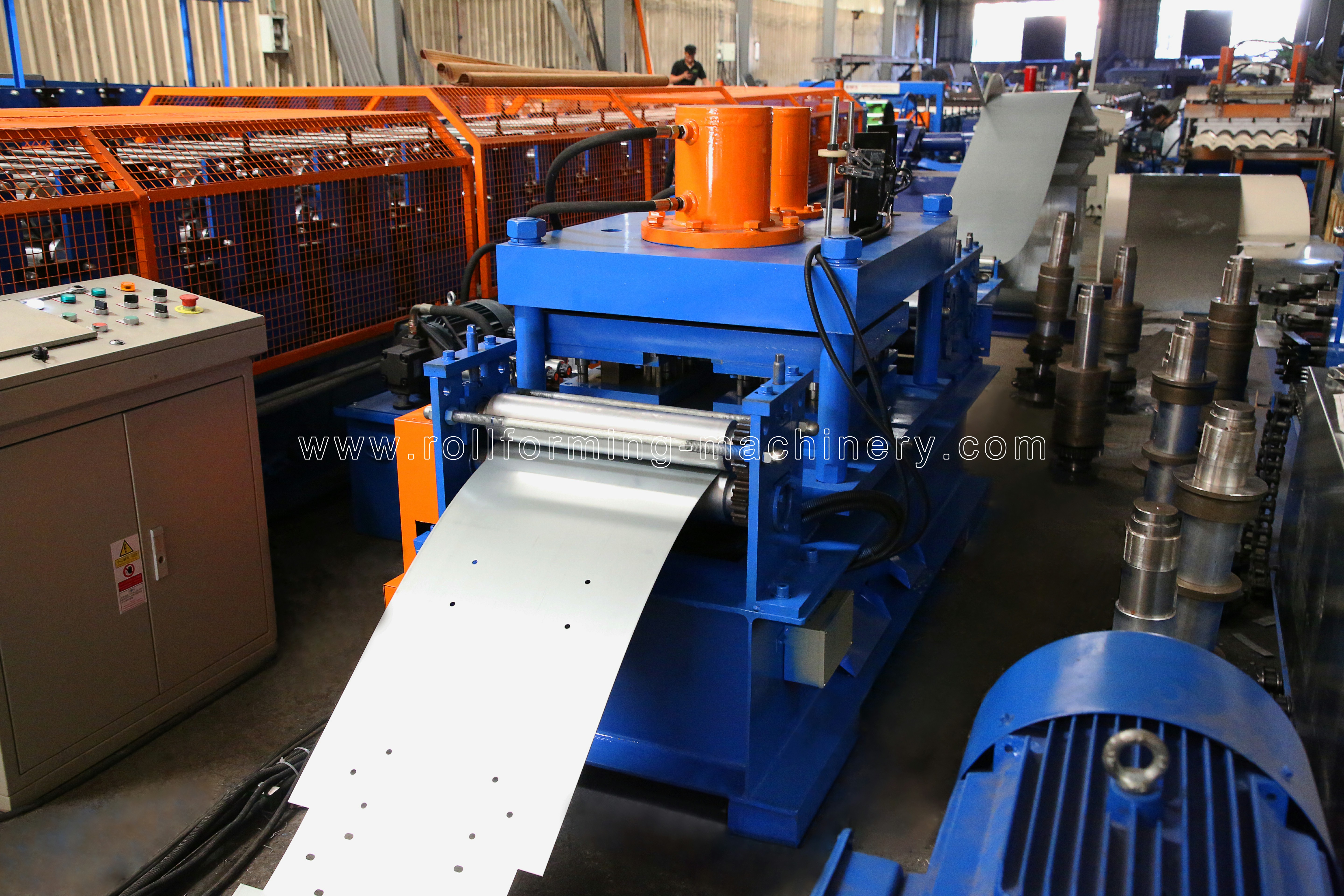
Use a repeatable coil-loading position and output lane. Long runs need support and a clear route to storage; short batches need an efficient collection and counting position.
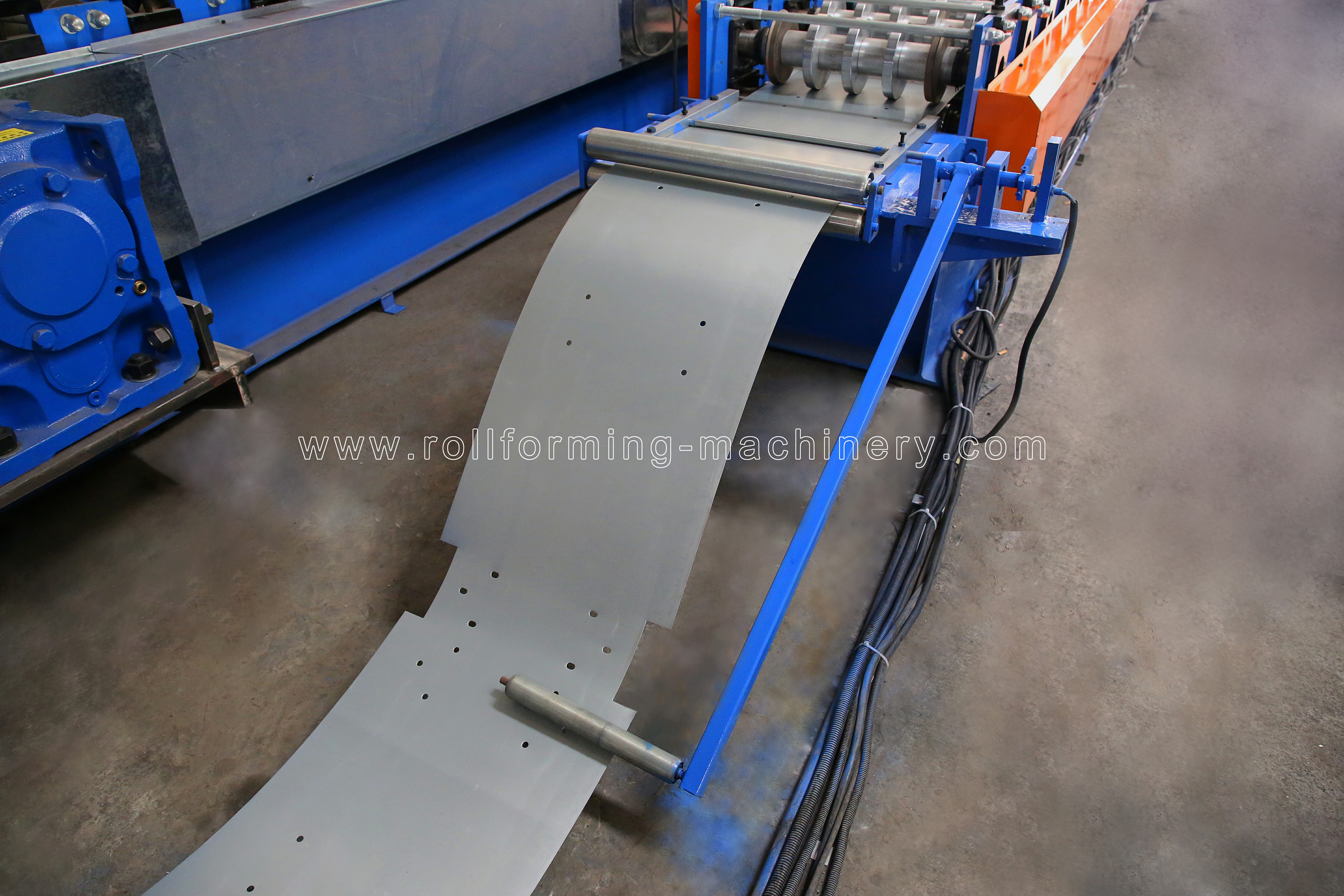
The Easy Installation gutter line lists a decoiler, guide, forming mill, hydraulic post cutter, PLC control and exit racks. Start here when evaluating a workshop line.
Relocated production cell
Allow for loading, transport and setting up the feed and receiving areas again. Carrying the machine and carrying finished gutters are separate handling tasks.
Review the Portable Gutter Roll Forming Machine with its selected profile and shear. Include machine dimensions, transport mass and a working layout in the equipment brief.
Forming at the installation site
Include vehicle access, coil unloading, operating power, a level working position and room to support and remove the longest run. These conditions vary from site to site.
Evaluate the portable route against the intended site setup. A vehicle-based arrangement needs its own mounting and transport plan, alongside the machine and coil specifications.
The production cell
From coil feed to a finished straight run
The forming rollers shape coil into a continuous gutter profile; the cutter separates it into ordered lengths. Match the feed, forming tools, cut cycle and receiving area as one production cell.
- 01
Supply the coil
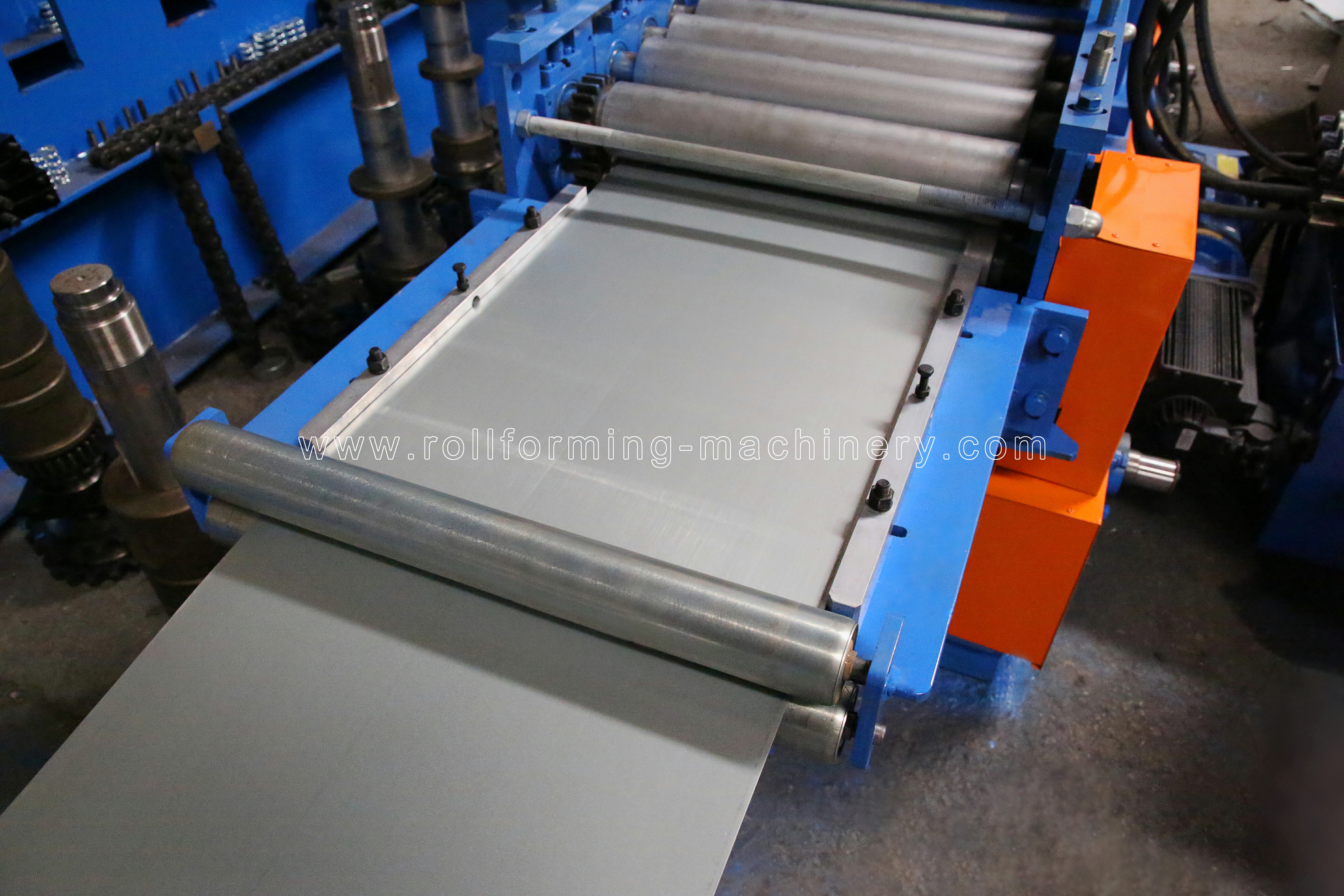
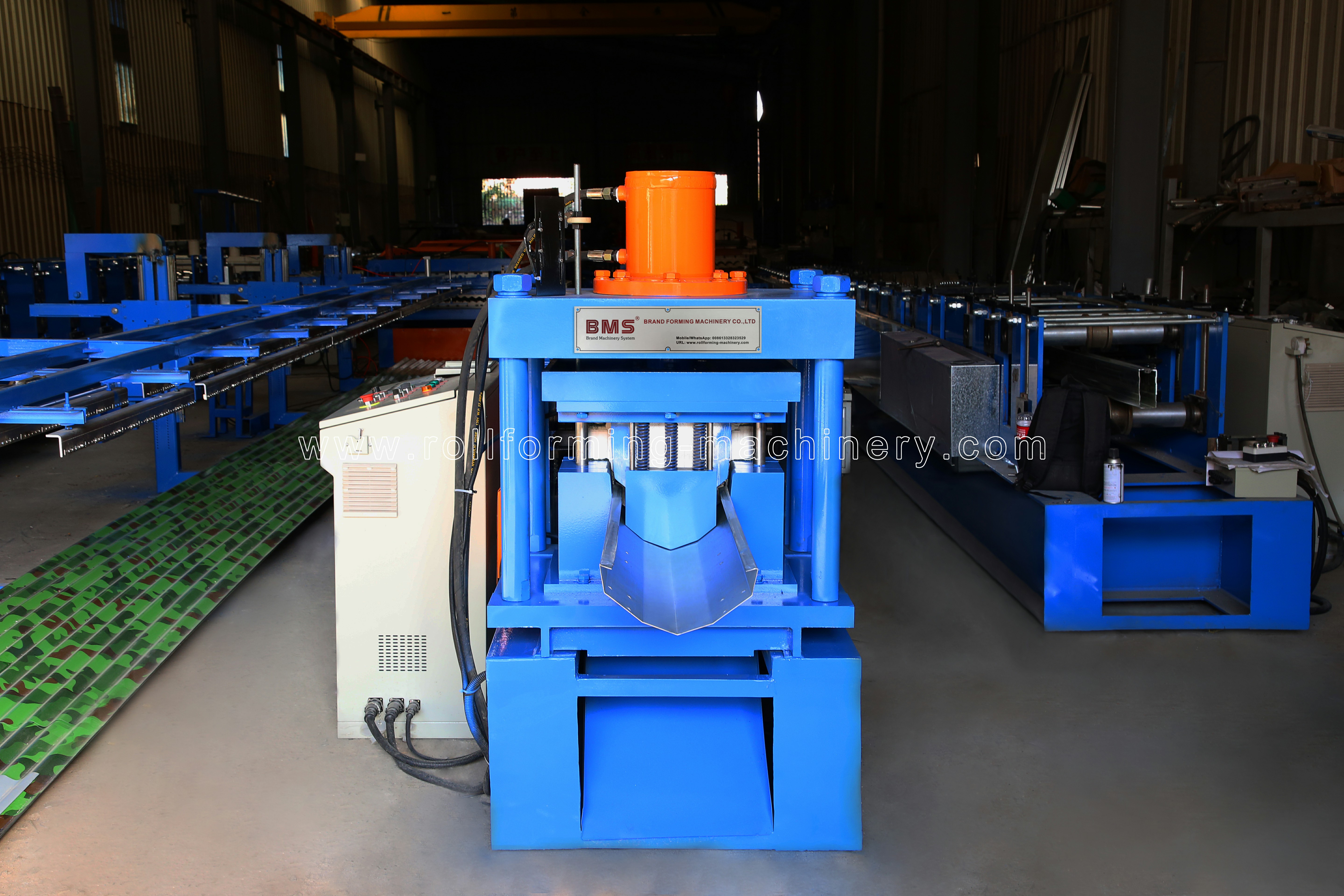
Match coil width, weight and inside diameter to the decoiler. Include loading access and the sheet path into the feed guide.
- 02
Form the profile
The guide aligns the strip; successive rollers shape it. Coil specification and the gutter drawing belong to the same tooling brief.
- 03
Control the cut
The Easy Installation line uses a hydraulic post cutter and PLC control. Specify the finished lengths and the required run-and-cut sequence.
- 04
Receive the run
Support the section as it leaves the outlet. Coordinate removal with the next forming cycle and protect the formed edges during carrying and stacking.
Optional punching adds a separate requirement: hole position, pitch and its relationship to the cut end. Put these details on the drawing when your order needs holes.
Length & output handling
Choose finished length with handling in mind
Short-piece orders put more demand on the cut cycle and collection; long runs put more demand on support and carrying space. Select length control together with the longest output lane and the route to storage.

Working-space concept. Use the selected machine layout and your longest order to set the actual dimensions.
| Your order pattern | What becomes important | What to specify |
|---|---|---|
| Many short pieces | More cuts and more individual pieces to collect, count and stack. | Length/count control, cut-cycle behavior and a clear collection position. |
| Repeated long runs | Support along the emerging section and room to carry it without twisting or dragging. | Longest finished length, support arrangement and the route to storage or dispatch. |
| Mixed lengths and small batches | Order changes, coil changes and piece identification can interrupt the forming cycle. | A representative length list, pieces per batch, coil changes and handling method. |
On smaller screens, scroll the comparison sideways to read every column.
Compare a complete trial batch. Line speed describes travel while forming. Usable shift output also depends on feeding, cutting pauses, optional punching, coil changes, setup, stops and piece removal. Time the agreed order mix rather than multiplying a rated speed by shift hours.
Machine shortlist
Selected BMS seamless gutter machine options
Start with the profile drawing and coil specification. These two BMS routes have different forming and cutting arrangements; their complete specifications stay with the individual machine pages.
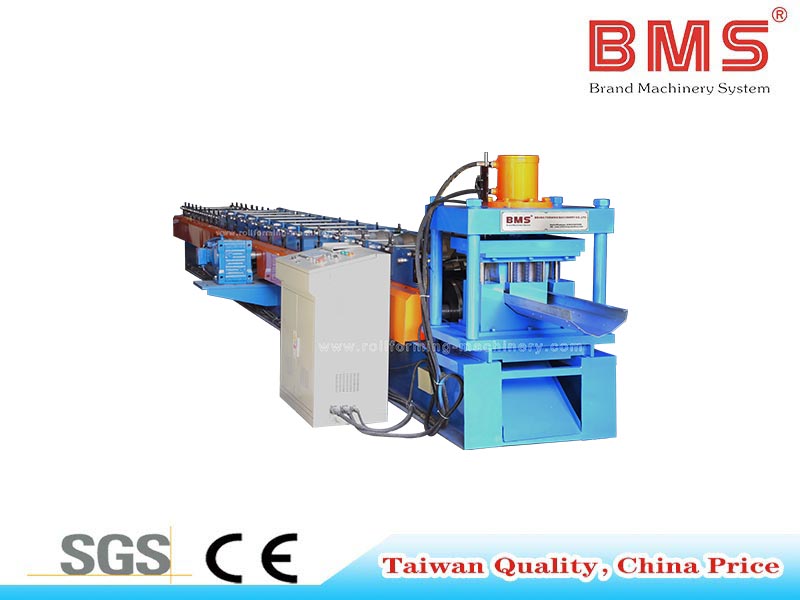
Easy Installation Seamless Gutter Forming Machine
A workshop-line candidate for a drawing-defined galvanized gutter, with hydraulic post cutting, PLC control and optional punching holes.
- Coil material
- Galvanized sheet
- Thickness
- 0.25–0.55 mm for this reference configuration
- Feed width
- According to the gutter drawing
- Output scope
- Exit racks in the reference workflow; match support to your finished lengths

Portable Gutter Roll Forming Machine
A candidate when relocation is part of the production plan. Evaluate the selected profile, loading arrangement, transport and working setup together.
- Coil material
- Galvanized steel (GI), PPGL or aluminum, matched to the selected tooling
- Thickness
- 0.3–0.6 mm for this reference configuration
- Cutting
- Easy cut shear
- Site supply
- Select the electrical configuration for the actual destination and operating supply
Profile, coil & tooling
Match the coil to the forming tooling
Finished length is one setting; cross-section is a tooling decision. Keep the profile drawing, developed strip width and material specification together when you assess a change.

Specify the new cut length and quantity. Review length-setting, stopping and cutting behavior; a length change does not by itself require a different gutter cross-section.
Compare the revised section with the existing tooling. The developed strip width, feed guides, roll geometry and cutting-die shape must suit the proposed section.
List every drawing. Ask for the tooling assigned to each profile, what is exchanged or adjusted, the changeover procedure and a trial sequence covering the planned profile changes.
Keep material grade, thickness, strength and coating in the trial brief. A stated thickness range alone does not establish the result for every grade or finish.
BMS accepts drawings or samples for custom profile discussions. Use the BMS custom-profile and equipment FAQ to prepare that request, and include the corresponding cut-end and hole details.
Finished gutter acceptance
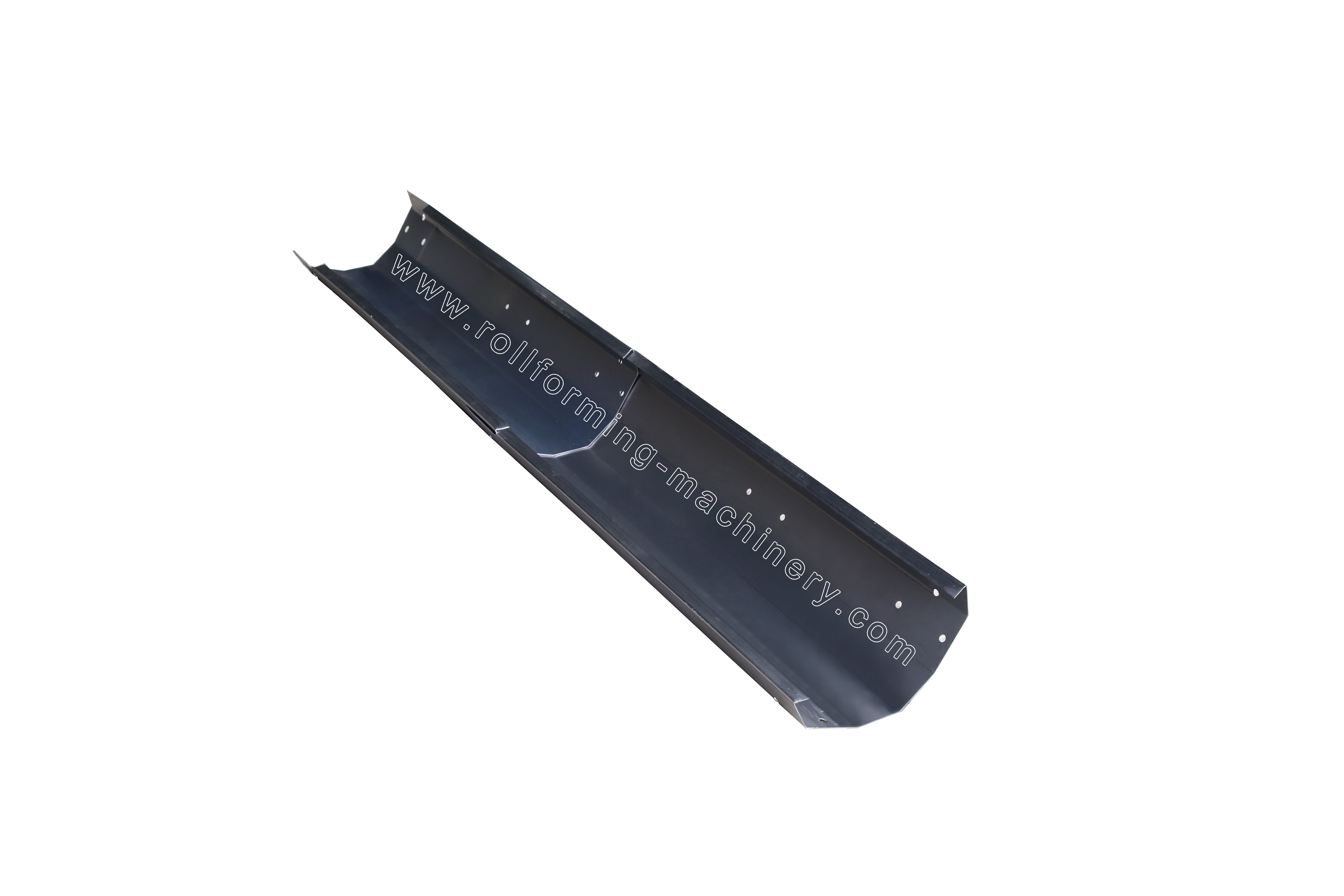
Inspect the cut end and the full length
Agree the drawing dimensions, tolerances and finish criteria before the trial. Use the intended coil specification and representative order lengths, including the longest run you expect to handle.

Section dimensions
Measure width, depth and the specified edge details against the approved drawing. Check sections taken from more than one piece.
Cut length
Compare specified and measured cut lengths across repeated cuts and after a restart. Record the measuring method and the agreed acceptance tolerance.
Cut end & holes
Inspect burrs, local flattening and distortion at the shear. For punched orders, measure hole location and spacing relative to the cut end.
Full-piece condition
Inspect bow, twist and surface marks along the supported piece and after removal. Include the normal carrying and stacking method in the trial.
Keep a usable trial record. Record the coil specification, profile, specified and measured lengths, accepted and rejected pieces, accepted metres, stop reasons and elapsed batch time. Define when timing starts and ends, including coil changes and piece removal. Use the approved drawing and recorded measurements to accept the trial batch.
The equipment around the line
Related coil-handling equipment
Select coil supply around the actual coil and feed interface. Then treat long-piece support as a separate requirement at the outlet.

Hydraulic decoiler with coil car and clamp arm
An independent candidate when the coil-loading plan needs a coil car and hydraulic decoiler. Match capacity, coil inside/outside diameter, strip width and the feed interface to the selected gutter line.
Include the loading footprint and how sheet is presented to the entry guide. Specify this equipment separately in the package scope.
Review the Hydraulic Decoiler →
Match the reel and the receiving area
A compact reel arrangement and a coil-car arrangement answer different loading needs. Use coil mass, dimensions and the planned loading method to compare them.
The Easy Installation workflow lists exit racks. Specify the support length and arrangement for your longest finished piece, plus the removal and storage route. Include any additional support equipment in the quotation scope.
Review the Gutter Line and Exit Racks →Working-space preparation
Prepare the complete working space
The machine footprint is only one part of the production cell. Draw the coil-loading zone, feed path, service access and finished-length lane on the same layout.
- Coil loading and feed alignmentShow reel or coil-car access, loading equipment and the strip path into the guide. Include room for coil replacement.
- Output, removal and storageDraw the longest finished piece at the outlet. Include its support, the carrying route and where completed batches will be stacked.
- Power and commissioning suppliesState destination, voltage, frequency and phase. Arrange trial coil, hydraulic fluid where required by the selected equipment, and lifting assistance for setup.
- Operators and handoverAssign the people who will operate and maintain the line. Include training, the machine-specific manual and the agreed commissioning and acceptance sequence.

For a relocated or site-based setup, repeat the layout review for the actual working position. Review the BMS installation preparation FAQ for commissioning inputs.
Preparation resources
Related buying and operation resources
Use these BMS resources to prepare the trial, operator handover and support scope. Apply the general guidance to the gutter machine and order mix you select.
Prepare machine acceptance
The BMS acceptance guide covers product dimensions, continuous trial production, cutting and punching dies, surface finish and straightness. Use it to build your gutter-specific acceptance record.
Read the Cold-Forming Machine Acceptance Guide →Plan operator continuity
The operator article explains the role of trained personnel, routine checks and familiarity with the forming process. Assign the people responsible for daily operation and handover.
Read the Cold-Forming Machine Operator Guide →Review installation and support
The service page describes guarantee conditions, overseas installation arrangements and optional remote support. Include the selected services and buyer responsibilities in the agreed equipment scope.
Review BMS Machine Service Terms →Prepare custom-profile inputs
The equipment FAQ covers custom drawings or samples and installation preparation. Start here for the information needed before a profile and configuration discussion.
Read the BMS Equipment and Installation FAQ →Production questions
Seamless production questions
The machine forms a straight gutter run continuously from coil and cuts it to the required length. Corners, end caps, outlets and connections belong to the installed drainage system. Specify these separately when defining the finished product.
Continuous coil forming does not establish non-stop cutting. The Easy Installation line lists a hydraulic post cutter and PLC control; the portable model lists an easy cut shear. Specify whether feeding stops for cutting and how forming restarts, then include the cut cycle in the timed trial batch.
Treat vehicle mounting as a separate installation scope. Supply the selected machine dimensions and mass, loaded-coil mass, mounting layout and operating supply for an installation review. Include loading access, transport restraint, a level working position and support for the longest finished run.
List the required cross-sections and dimensions on separate drawings. Different lengths can use the same section; a different size or shape may need guide adjustments, forming tools and a matching cutting die. Define the tooling and changeover steps for the proposed profile family in the equipment scope.
The Easy Installation model offers optional punching holes. Provide hole size, position, pitch and the distance from the cut end on the drawing, together with the required gutter lengths. Include punched pieces in the trial and cut-end inspection.
Include the commissioning location, training, trial material, lifting assistance, travel responsibilities and selected remote support in the equipment scope. BMS publishes a two-year guarantee from successful installation and commissioning at the buyer’s site, subject to correct operation and maintenance. Review the current BMS service terms alongside that scope.
Your production brief
Plan your gutter production with BMS
Send the profile and the order lengths you need to make. BMS can review the forming route, cut arrangement and equipment scope around your production setup.
Back to Gutter Machine for Sale →- Profile: dimensioned drawing, edge details and any holes.
- Coil: material/grade, thickness, width and coil size.
- Orders: shortest, typical and longest lengths; pieces per batch.
- Handling: output support, carrying/storage route and available layout.
- Site: destination, voltage/frequency/phase and workshop or relocation needs.