


BMS Machinery · Metal rainwater products
Rain Gutter Machine
A rain gutter machine roll forms coil strip into open metal roof gutters. Select a BMS configuration by the complete section, material and edge details.
For rainwater-product manufacturers and roofing or sheet-metal workshops producing metal roof gutters.
A section drawing, material specification and reference sample make the first discussion more useful.
Profile first
Start with the finished rainwater product
For a metal roof rain gutter, select machinery around the open drainage section and its attachment details. “Gutter” alone is not a tooling specification.
The section must fit the roof-edge system, hangers, joints and outlets used in your product range. Drainage capacity and installation design remain requirements for the finished system.
Define your complete cross-sectionAn open metal channel collecting roof runoff. Its front edge, back flange and wall geometry define both forming and fitting requirements.
An eave channel can serve rainwater drainage. Send its section and greenhouse attachment details; the use name does not establish a matching machine.
A planting or growing channel has its own support, drainage and end-use requirements. Keep its drawing separate from the roof-gutter specification.
A closed rainwater pipe introduces a seam or closure and associated fittings. Give it a separate equipment scope from the open gutter.
Concrete curb and gutter production uses a different process. This page covers metal rain gutter machinery.
Geometry → forming & fit
A complete section defines the tooling
Show every wall, bend and edge—not just an overall width. Identify the dimensions that control how the gutter meets its hangers, joints and roof-edge components.
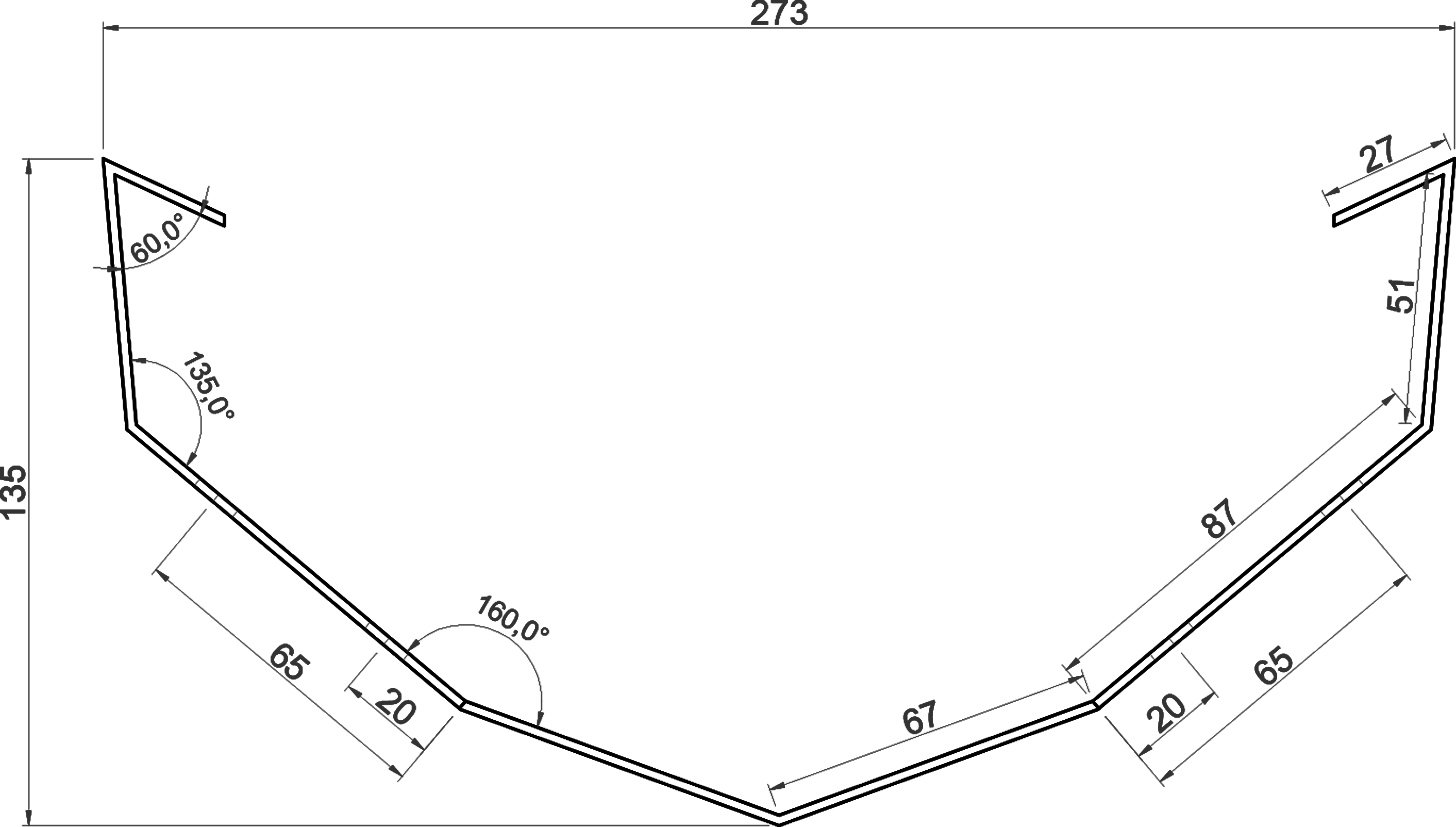

Dimension the top opening, base shape and total depth separately. Mark inside or outside dimensions and the measurement datum; the nominal size leaves these relationships undefined.
Show each wall height, slope and transition. A taller back wall or angled front wall changes the section and the support needed during forming.
Define curved bases and every bend angle or radius. These affect roller contours, the forming progression and the final shape after springback.
Draw the full return, hook or rolled edge, including its opening and orientation. Small edge differences affect tool access and hanger or joint fit.
Identify critical fitting dimensions and their tolerances. Locate holes from a datum, with size and spacing, and show the mating part or a sample when fit is important.
Material → configuration
Match the coil to the profile
A thickness range alone does not establish compatibility. The material grade, coating and finished shape together determine the forming and cutting requirements.
| Your requirement | What changes in the setup | Useful input |
|---|---|---|
| Material & strength | Different forming resistance and springback affect roll design, support and final bend correction. | Grade, temper or yield-strength information; a coil specification. |
| Thickness | Roll gaps, bend radii and the cutting arrangement must suit the actual range used for that section. | Minimum/maximum thickness; distinguish base metal from coated thickness. |
| Coating & finish | Exposed surfaces and tight folds need suitable contact and a finish check after forming. | Coating type, painted side, protective film and acceptable surface appearance. |
| Coil width | Developed width includes straight lengths, bend allowances and edge returns. Material, thickness and bend radii affect those allowances. | Complete section, inside bend radii, thickness and hems; an existing strip width, if used. |
| Holes & folded edges | Position relative to bends affects punching sequence, tool access and the finished edge. | Hole pattern, reference datum, fold or bead detail and mating part. |
On smaller screens, swipe the table to see all three columns. Use the approved section and trial material to establish the production strip width before a bulk coil order.

Material-specific starting points
Selected BMS rain gutter machine configurations
Shortlist a configuration by its section and feedstock. A shared product name does not make these machines interchangeable across all K-style, half-round or box profiles.

YX132-172 Spanish gutter machine
201 stainless steel · 0.5–0.8 mm
The BMS YX132-172 configuration is specified for 201 stainless steel, 0.5–0.8 mm thick, with yield strength of 260–310 MPa.
- Match your contour and edge details to the proposed tooling.
- Other stainless grades or a different section require a separate material and tooling evaluation.

Portable gutter machine
GI / PPGL / aluminum · 0.3–0.6 mm
The BMS portable configuration specifies galvanized steel (GI), PPGL or aluminum at 0.3–0.6 mm. The reference gutter is 144 mm wide and 90 mm high.
- Compare the complete curved section, walls and edge shape with your drawing.
- Choose by the proposed profile and material configuration; a shape-family name alone cannot define its tooling.
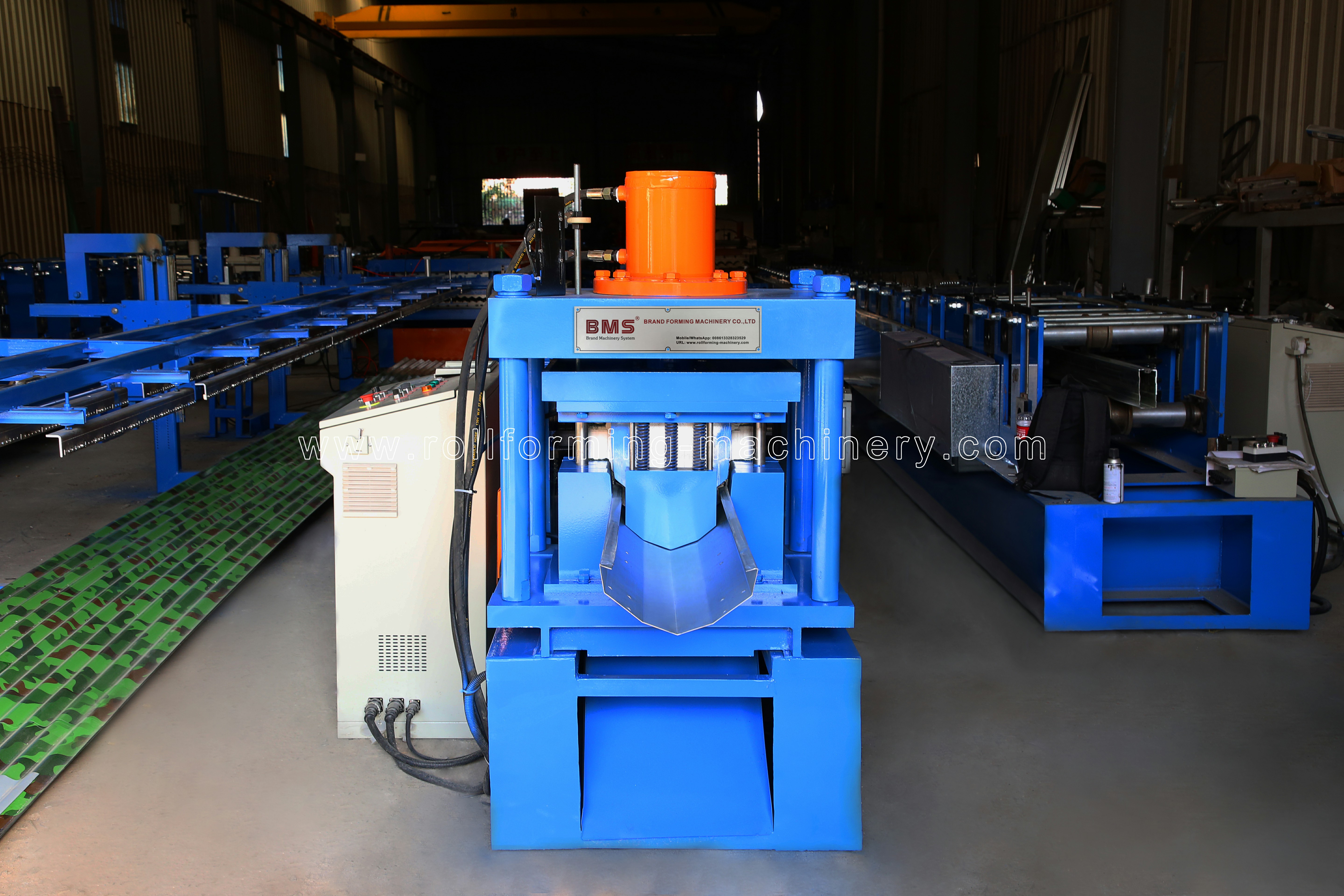
Gutter machine with optional punching
Galvanized sheet · 0.25–0.55 mm
The BMS optional-punching configuration specifies galvanized sheet at 0.25–0.55 mm. Feeding width is set from the proposed section drawing.
- Define hole size, pattern and location relative to the folds.
- Specify whether holes support overlapping joints or another interface, and include punching in the equipment scope when needed.
Sample → acceptance
Inspect the shape, edge and surface
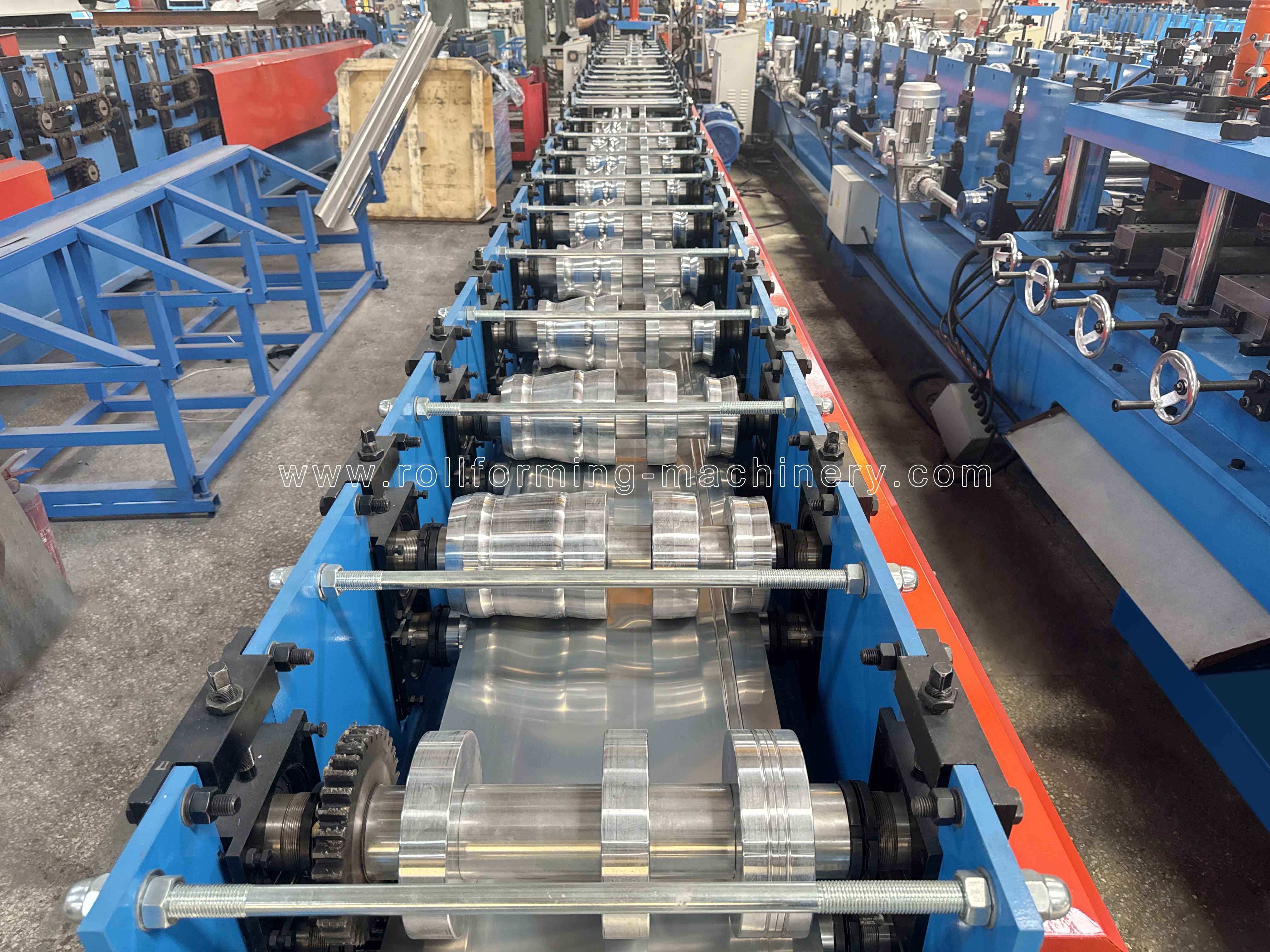
Use a finished sample to make the discussion concrete. A photograph helps identify the shape and visible defects; dimensions, fitting and repeatability need an agreed measurement or trial method.
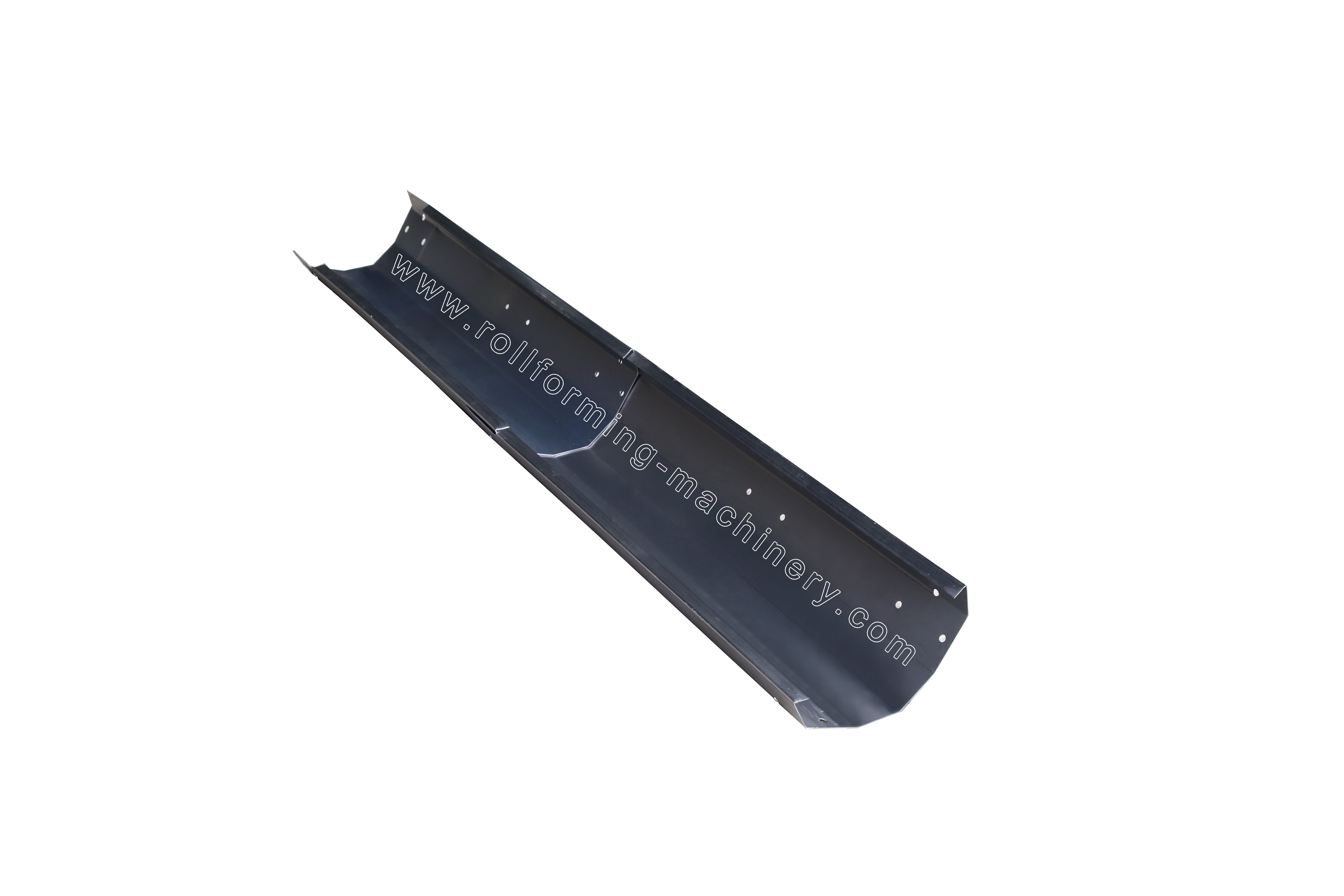
Shape & springback
Look for uneven walls, twist, bow or an edge that opens after forming.
Measure or trialMeasure opening, depth, wall angles and radii using agreed datums. State whether the cut sample is free or fixture-supported, then check critical dimensions and fit with the actual mating component.
Edges & cut ends
Inspect folds or beads for splits and irregular closure. Examine the cut for burrs, crushed edges and end distortion.
Measure or trialAgree the cut-end condition, hole positions and edge-fit criteria. Include the selected profile, material and cutting arrangement in the trial.
Surface & coating
Inspect the exposed face for scratches, roller marks and coating damage at bends.
Measure or trialUse the intended coated coil and state which face remains visible. Agree acceptable appearance and any required coating checks before acceptance.
Keep each sample linked to its drawing revision, material grade, thickness, coil specification and setup. Agree sampling locations, quantities and acceptance limits for your order.
One profile or a product range?
Treat each additional profile as a tooling decision
For several order profiles, provide a separate section and material specification for each. Grouping them under one gutter style does not establish a common set of rollers or a common cutter.
Same section, different cut length
Keep the contour, edge details and material within the agreed configuration. A control setting for cut length does not change the roller shape.
A size, radius or edge variant
Changing the opening, depth, back wall, hem or bead can alter roll contact and tool clearance. Define the variants to evaluate adjustment, additional tooling or a separate machine scope.
A new material or hole pattern
A material change can alter springback and finish; a hole-pattern change can affect the punching and forming sequence. Include both in the profile comparison and trial plan.
Related equipment
Plan coil handling and strip preparation
Add equipment for a defined production task. Match its coil limits, feed direction and controls to the proposed gutter line, and keep auxiliary scope clear in the quotation.

Hydraulic decoiler with coil car
The BMS 5–7T decoiler is a coil-handling option to evaluate when your incoming coil and loading method call for powered handling.
Send coil weight, width, inside/outside diameter and loading method. Check feed and control integration rather than selecting by capacity alone.
View the hydraulic decoiler
Cut-to-length and slitting equipment
When purchasing wide steel coils, slitting prepares narrower feed strips for gutter, flashing and ridge-cap production.
Define master-coil material, thickness, target strip widths and edge condition. Establish the gutter's developed width before committing to bulk slit coil.
View strip-preparation equipmentA useful first enquiry
Build a profile requirement pack
Make one clear record for every profile you want to manufacture. Prioritize the main order section, then identify the variants so the machine and tooling discussion stays specific.
Define the finished section
Send a dimensioned drawing with units and revision, front/back orientation, inside bend radii, folded or rolled edges, hole details and critical interface tolerances. Mark inside/outside dimensions and add end-view and side-view sample photos.
Describe the actual feedstock
Provide grade, yield strength or temper information, minimum/maximum thickness, coating and visible face, protective film, supplied coil width and coil dimensions. State base-metal and coated thickness separately where relevant.
Prepare the trial and fitting check
Identify the intended trial coil, mating parts or gauges, measurement datums and acceptance criteria. Agree feed width, trial material quantity and supply responsibility before arranging the run.
For a new profile, BMS's customization service includes feasibility studies and profile sketching. Use your requirement pack to discuss the section before finalizing the machine scope.
Send profile requirementsRelated resources
Continue the right selection task
Production scope & purchasing
Compare broader machine configurations, supporting equipment and quotation preparation after defining your rain gutter profile.
Review BMS gutter purchasing optionsCustomization & inspection
Read BMS answers on profile-development services, pre-delivery inspection and the preparations needed at your factory.
Read BMS machinery FAQInstallation & support planning
Use the BMS service route to discuss commissioning, training and support arrangements for the selected configuration.
Review BMS machinery servicesRain gutter machine selection FAQ
Similar machine names alone do not establish section compatibility. Compare the complete drawing, material and roller/cutter scope. Portable, Spanish and seamless describe different aspects of a machine; continuous gutter production and roof-rainwater production can use the same equipment when the specified profile and material match.
No. Coil width is the developed strip width calculated from the complete section, including straight lengths, bend allowances and folded or rolled edges. Material, thickness and inside bend radii affect the calculation. Establish the feed width through tooling design and trial material before purchasing bulk strip.
A copper order or a different stainless-steel grade needs its own material and tooling assessment. BMS YX132-172 specifies 201 stainless steel; the BMS portable configuration specifies GI, PPGL or aluminum; the BMS optional-punching configuration specifies galvanized sheet. Send the intended grade, thickness and coating with the section drawing.
Use the photograph alongside a dimensioned drawing. It shows the contour, edge and finish but does not define radii, angles, tolerances or measurement datums. Identify the critical mating part when fit is part of acceptance.
List each section with its drawing revision, material and thickness range, edge and hole details, and order priority. Identify which dimensions vary. This allows a discussion of adjustment, tooling changes or separate equipment; a profile list alone does not establish a universal changeover capability.
Prepare the selected machine’s site power, trial material, personnel and handling equipment; include hydraulic oil where the configuration uses hydraulics. Plan any buyer or third-party pre-delivery inspection with agreed trial criteria. Define commissioning, training and support scope in the order, alongside site power and destination-document requirements.
Your next production decision
Send your section.
Discuss a BMS configuration.
Tell BMS which metal rain gutter you manufacture and which coil you plan to use. Build the discussion around the finished product, its interfaces and the tooling scope for your orders.
- Section drawing with dimensions and revision
- Material grade, thickness and coating
- Sample photos and key fitting or edge requirements