

BMS Machinery · Profile-led production
Box Gutter Machine
Choose the forming route around your box profile.
For metal roofing and rainware manufacturers: compare coil-fed roll forming with sheet bending using your section geometry, edge details and order mix.
BMS sheet-bending tooling
01 · Start with the section
Define the finished box gutter profile
A box gutter is an open rectangular or near-rectangular channel. The base, wall heights and top opening can differ; a size name alone does not define the tooling.
Opening and base width. Measure O between the inside wall faces at height D. Define the inside/outside and corner basis for B on your drawing; dimension the top lips separately.
Front and back walls. Give back height Hb and front height Hf from the same base datum to their stated edge datums. Show straight or inclined walls and their angles separately.
Radii and angles. Specify inside bend radii, finished wall angles and their tolerances. Corner radii affect fit and developed width; sharp-looking corners are not a zero-radius specification.
Edges and interfaces. Dimension returns, hems or curls. Include the mating bracket, end cap, outlet and joint detail where they control fit.
Plain edge
Specify the cut edge and its finishing requirement.
Return lip
Its direction and width affect tool access and attachment fit.
Hem or curl
Give the edge section and gap or diameter, not only its name.
02 · Match the order pattern
Box gutter machine choices: coil or sheet?
Evaluate coil-fed roll forming when one box section repeats across many orders. Evaluate sheet bending when sections and blanks change frequently. Geometry, tooling and the complete production cycle decide the fit.
Coil-fed roll forming
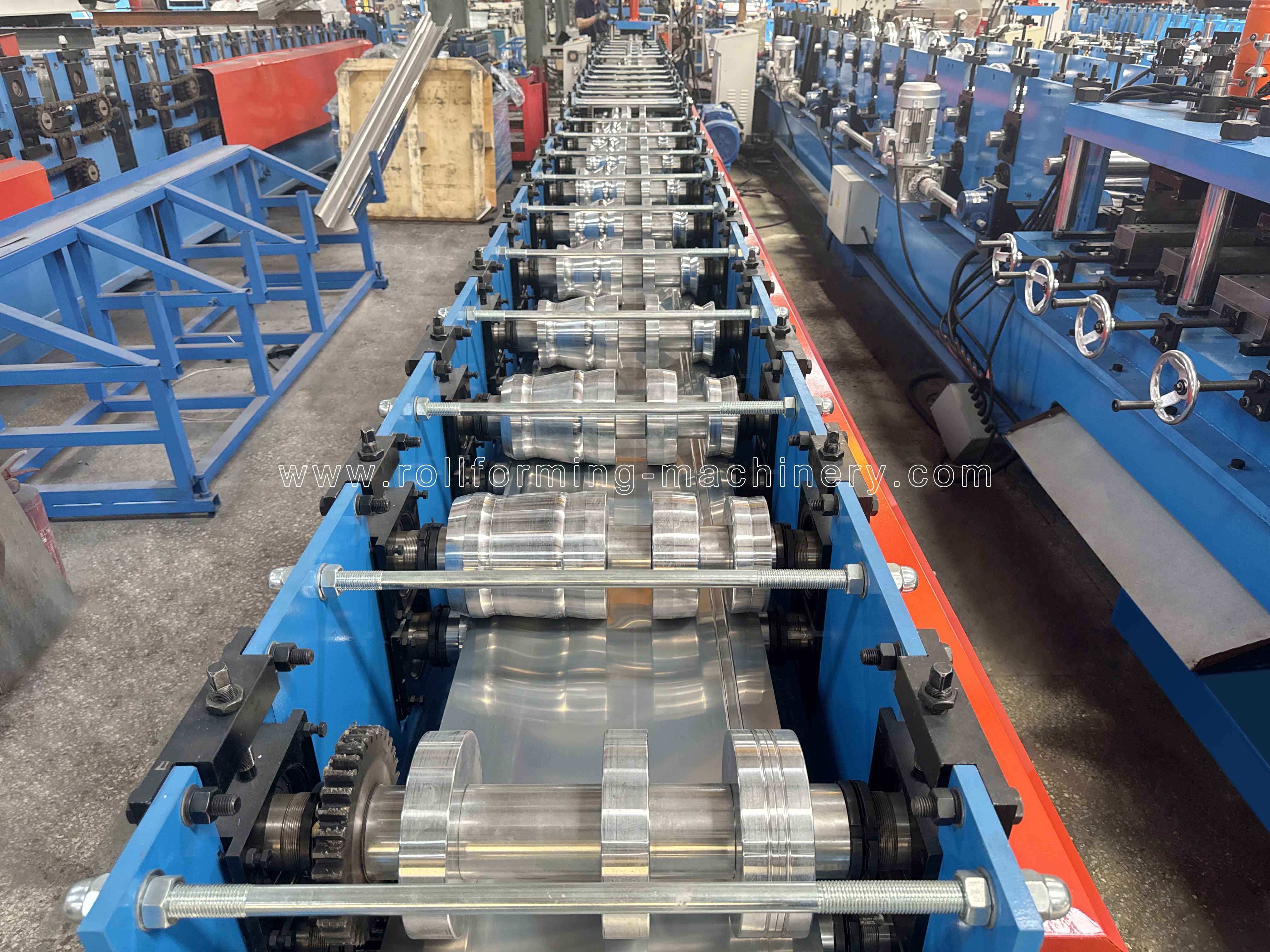
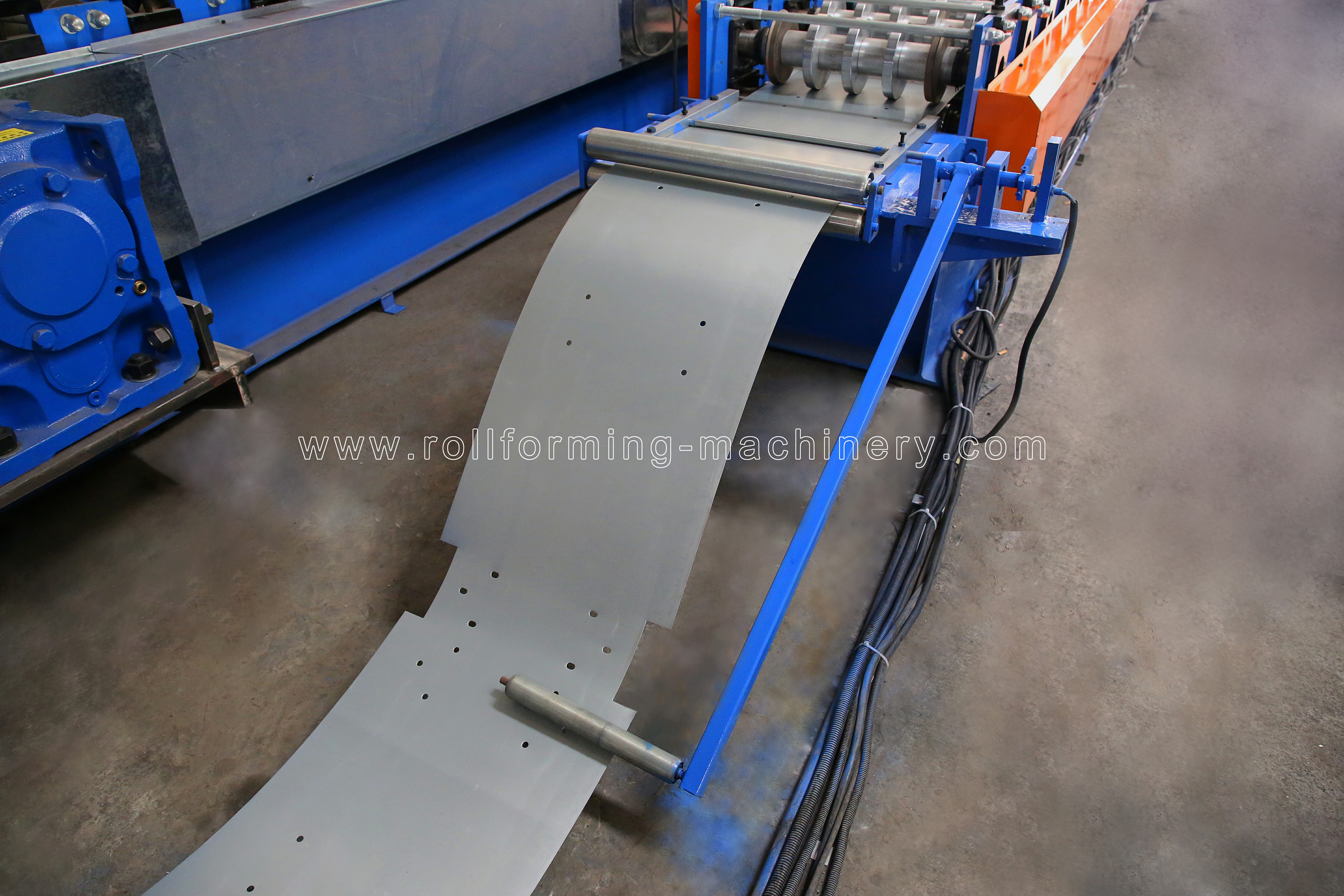
Consider it for recurring sections and long runs. A roll sequence forms the same cross-section continuously; the cutoff sets the finished length. Base, walls and edges must suit the proposed rolls and cutter.
Weigh coil loading, setup scrap, cut cycles and supported unloading against the repeat-order pattern. A new section may need different tools.
Coil handling → feeding and forming → profile cutting → supported collection

Cut-sheet bending
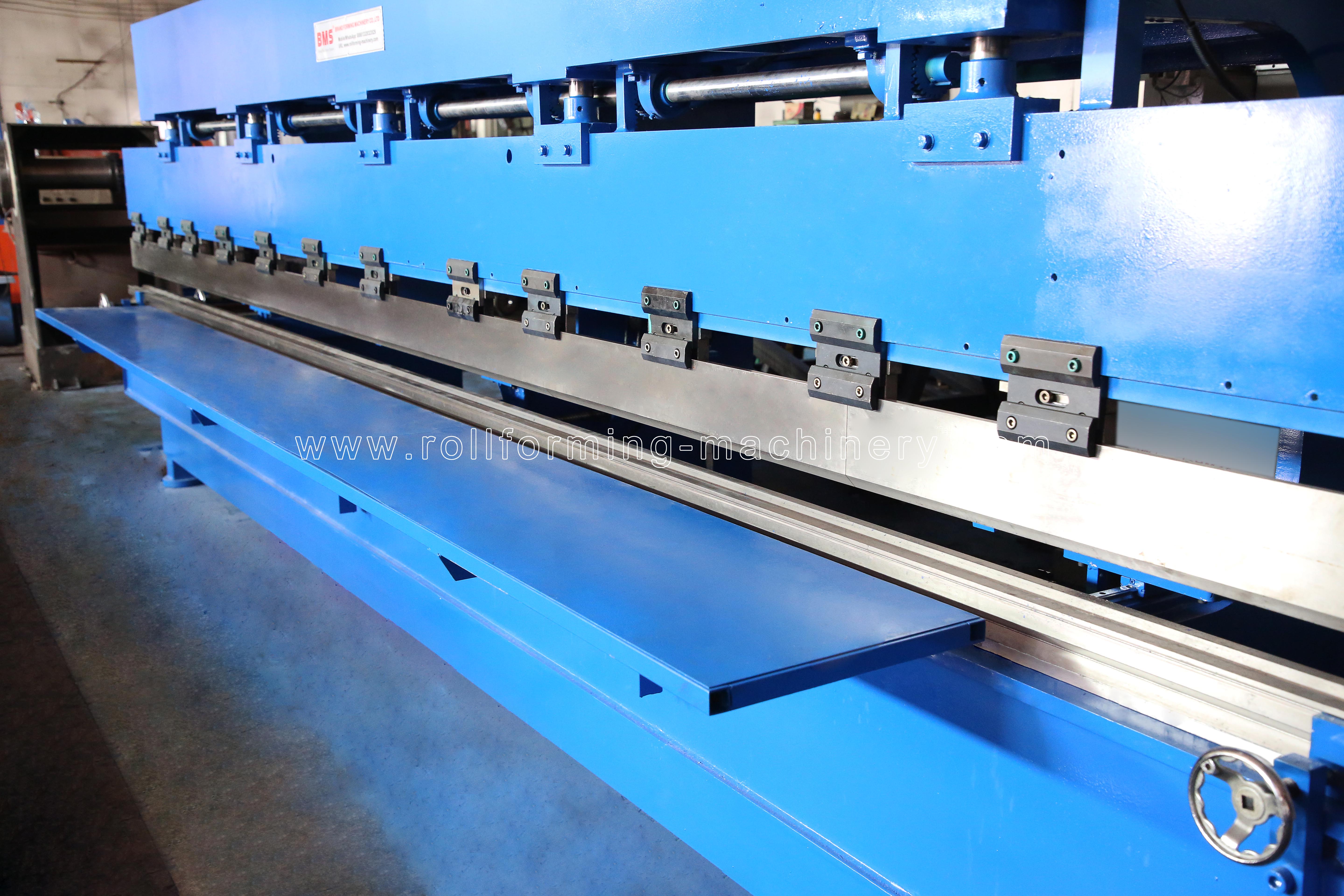
Consider it for varied blanks and changing sections. A press brake forms the blank through a sequence of punch-and-die bends. Changing setups can accommodate different work, but wall depth, returns and completed bends must leave room for tooling and part removal.
Include blank preparation, gauging, repositioning and long-part support. More bends and handling can limit accepted output even when the geometry is feasible.
Blank preparation → gauge and bend sequence → inspection → supported handling
Scroll the table to compare both routes.
| Decision | Roll-forming route | Sheet-bending route |
|---|---|---|
| Profile changes | Assess roll sets, edge stations, guide settings and cutoff compatibility for each section. | Assess tools, gauge positions, bend sequence and extraction clearance for each part. |
| Length and ends | Match cut-length range, section support and end quality to the finished part. | Match blank and bend length, end preparation and support to the selected equipment. |
| Accepted output | Count saleable output after loading, setup, cut cycles, inspection and unloading; feed speed alone is not shift output. | Count saleable output after blank cutting, every bend, repositioning, inspection and handling; stroke speed alone is not shift output. |
A mixed workshop can use both. Repeated gutter lengths and varied end caps or transitions need not use the same forming route. Define the main section and secondary parts separately.
03 · Check the tool path
The edge detail can change the forming route
Wall depth, inward returns and closed edges affect how a part approaches the tool, forms and comes out. Review the complete section and bend sequence before fixing the equipment scope.
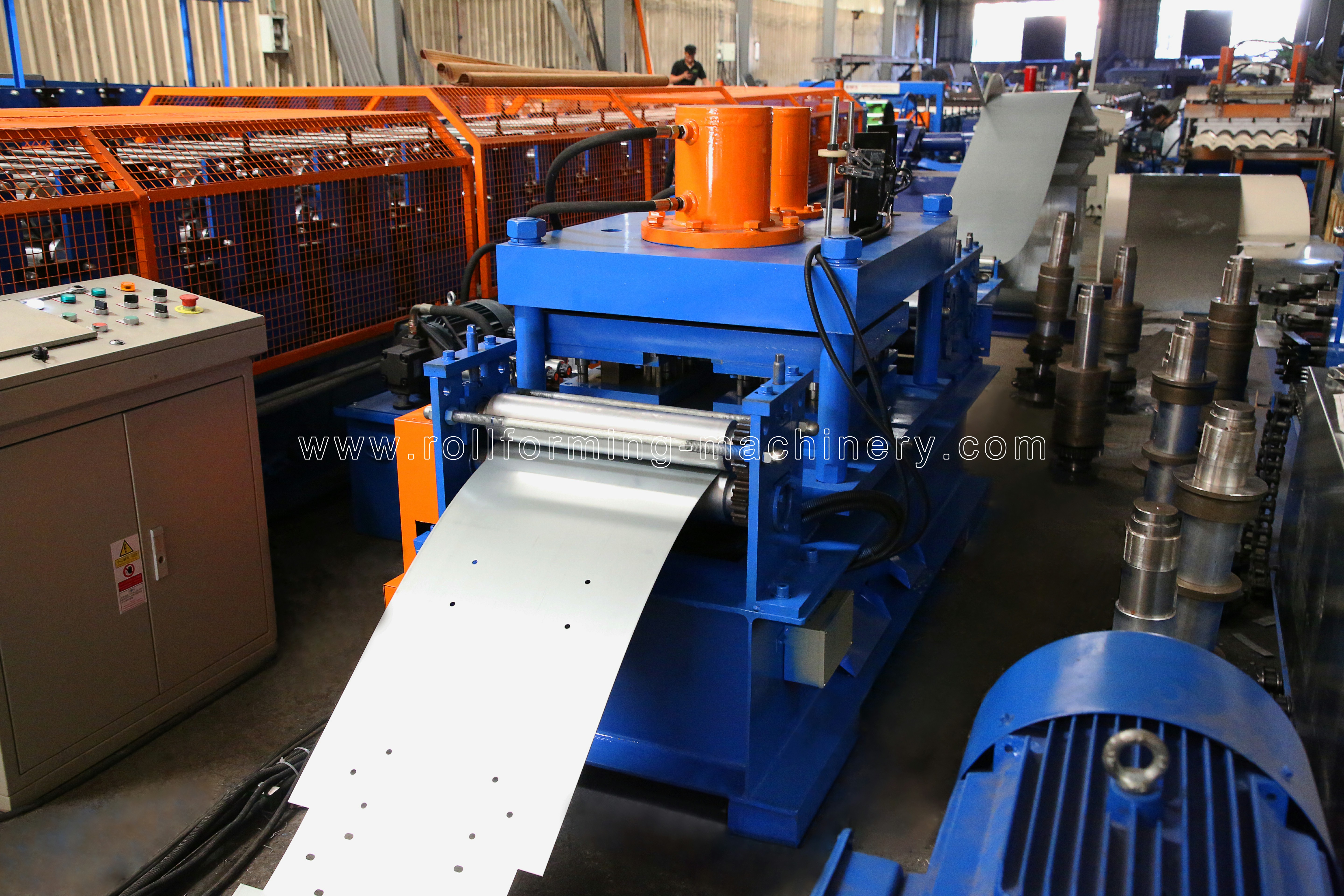
Returns, hems and curls
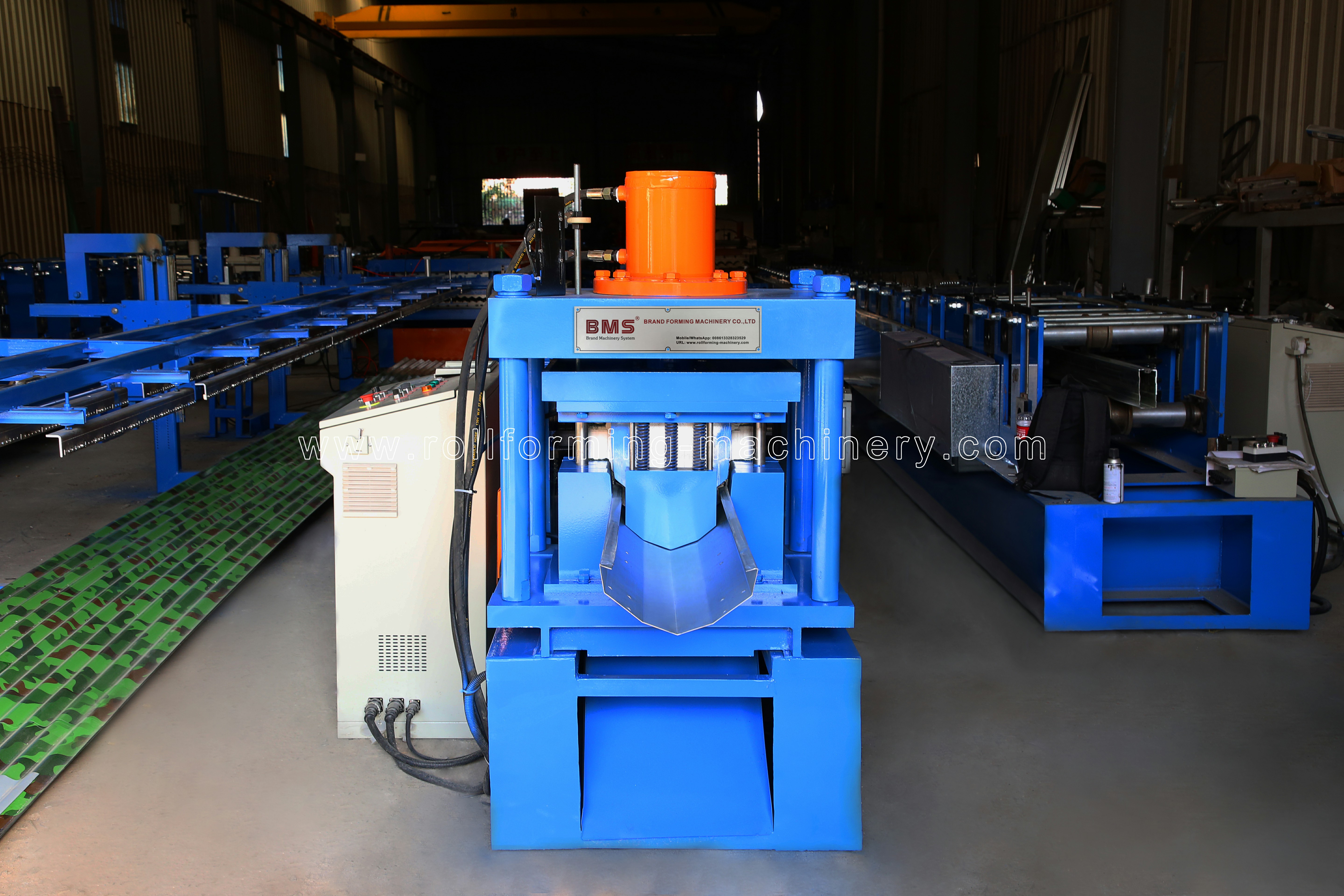
A hem adds an initial bend and a closing step; a curl needs suitable forming tools. An inward return can block later bends or part removal. Review whether the edge must form before the walls close. Roll forming also needs an edge sequence, stations and clearances suited to the detail.
Deep or inclined walls
Already-formed walls occupy the tool space. Check clearance at each bend and during extraction, including gauging and part rotation. On a press brake, force and long-part support must suit the material, thickness and working length; wall height alone is not a capacity check.
Cutting and secondary parts
A cutoff must support the section without crushing corners or deforming its edge. State whether outlet holes, notches, end caps, corners and joint pieces need separate operations or specified inline equipment.
04 · Define the metal
Specify the material and the visible face
Thickness alone is not a forming specification. Give the metal grade, mechanical properties and finish together with the section.
Grade and thickness basis
Give thickness in mm or inches, its tolerance, and whether it is base metal or total coated thickness. A gauge name also needs its material-specific thickness. Identify steel grade or alloy/temper: equal thickness does not mean equal bending force, radius or springback, the elastic recovery after unloading.
Coil or cut-sheet preparation
State the supplied format and available stock dimensions. Calculate developed strip or blank width using bend allowances or deductions for the chosen material, radii and tool process. Include all walls and edge details; finished box width is not coil width.
Coating and tool contact
Identify the cosmetic face, coating and any protective film. Assess guide, roll, die and support contact using the actual finish. Review coating damage, scoring and film behavior after the full forming and cutting sequence, including any hem closure.
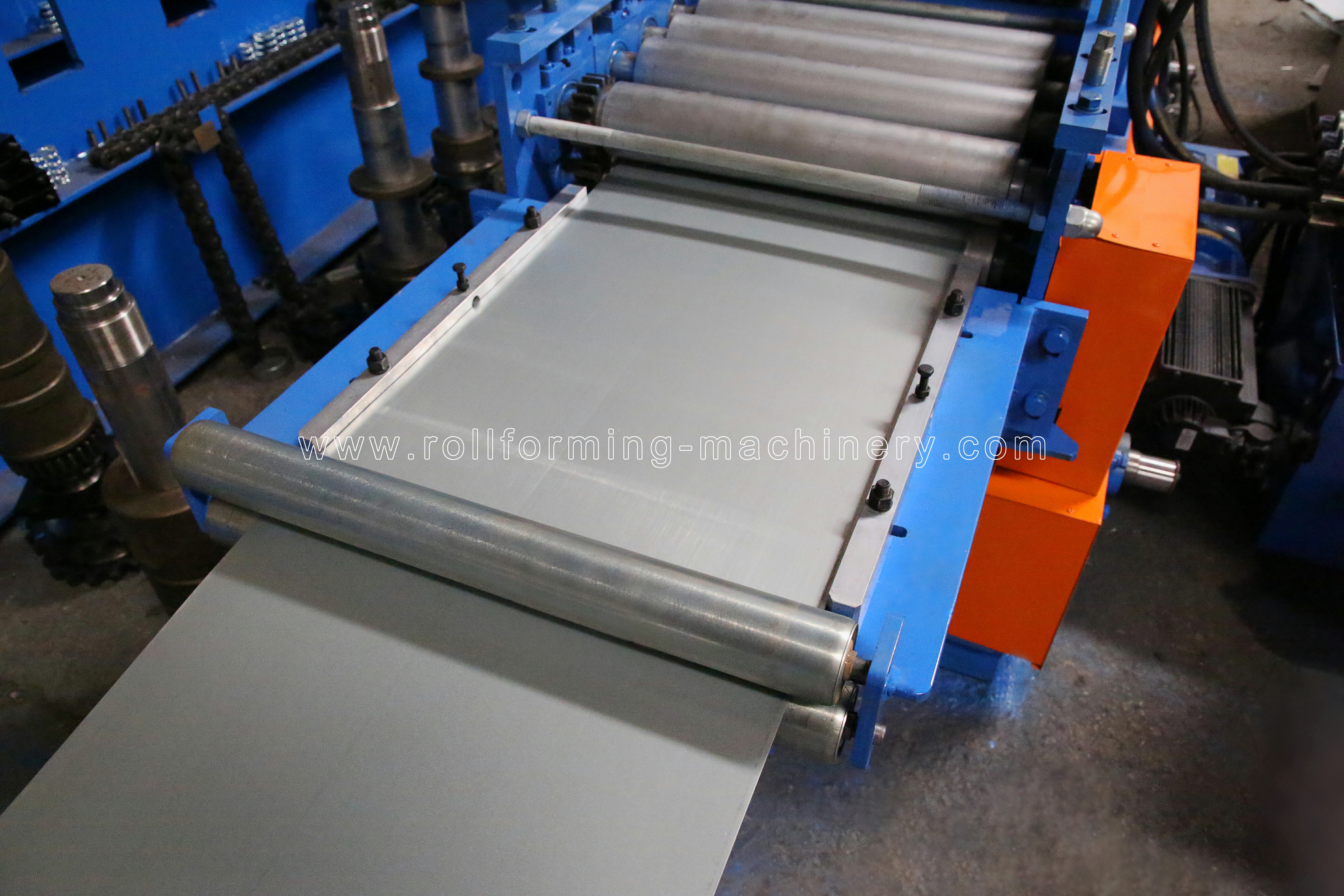

05 · Define the profile family
A new length is not a new cross-section
Give each section its own profile ID and dimensioned drawing, with a revision. Custom tooling for one profile does not establish an unrestricted size range or a changeover method for every other profile.
Length changes
With the cross-section unchanged, compare cut-length settings, end preparation and support. The sheet route also needs a blank and bending length that fit the equipment.
Supply: finished lengths and their repeat quantities.
Base, wall or angle changes
For coil production, review guides, rolls and cutter geometry. For sheet production, review tools, gauge positions, bend sequence and extraction clearance.
Supply: separate dimensioned sections and change frequency.
Edge or material changes
A different return, hem or curl may need another tool path. A different grade, thickness or finish can change radius, springback and contact conditions.
Supply: edge enlargements and a material record for each section.
For a multi-profile proposal, define the included sections, tools, cutoff parts, setup work and sample acceptance for each configuration.

06 · Review a finished part
Measure the sample, not just its nominal size
Accept the finished part against its drawing using the specified stock and agreed supports after unloading. Check cross-section and full-length condition; one good end view cannot describe the whole part.
- Section geometry
Measure base and clear opening widths, both wall heights, angles and inside radii at defined positions near both ends and mid-length. Assess the released section, not the angle while the tool is loaded.
- Edges and connections
Check return width, hem gap or curl shape. Trial-fit the relevant bracket, joint and end-cap sample without forcing the section.
- Cut ends and surface
Inspect length, end squareness, burrs and local distortion. Examine the cosmetic face for scoring, coating cracks and handling marks.
- Full-length handling
Assess bow and twist on a defined support arrangement. Plan discharge supports, lifting and packing so thin walls and edges retain their shape.
Agree the drawing revision, stock record, support arrangement and sampling plan before the trial. Include startup, steady production and each proposed profile/material combination in the acceptance scope.
07 · Review the equipment
Selected BMS forming equipment
Start with the relevant forming route, then review the named equipment. Your box section and material define the tooling required for the proposed configuration.
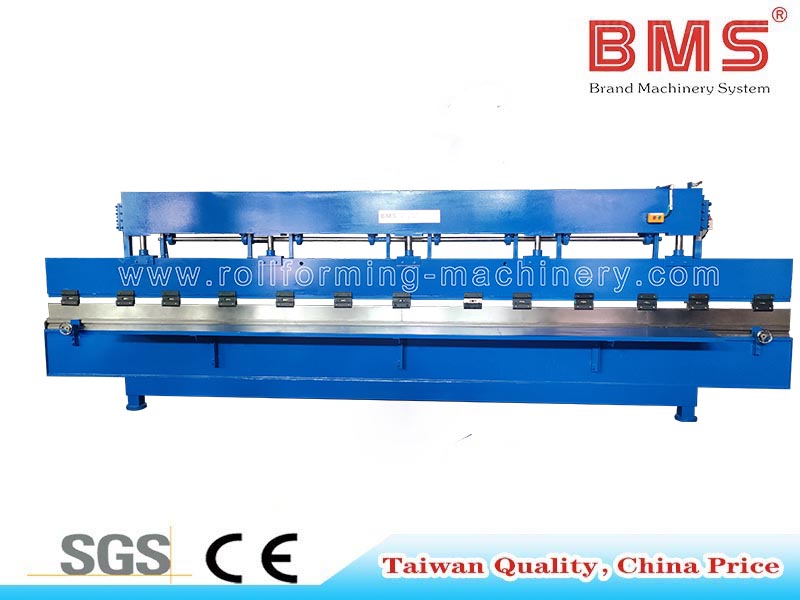
Cut-sheet route
6.2M Metal Sheet Bending Machine
BMS press-brake equipment for simple gutter sections and roofing trims. Evaluate punch/die geometry, bend sequence, working length, force and part clearance for your box section.
View BMS sheet-bending equipment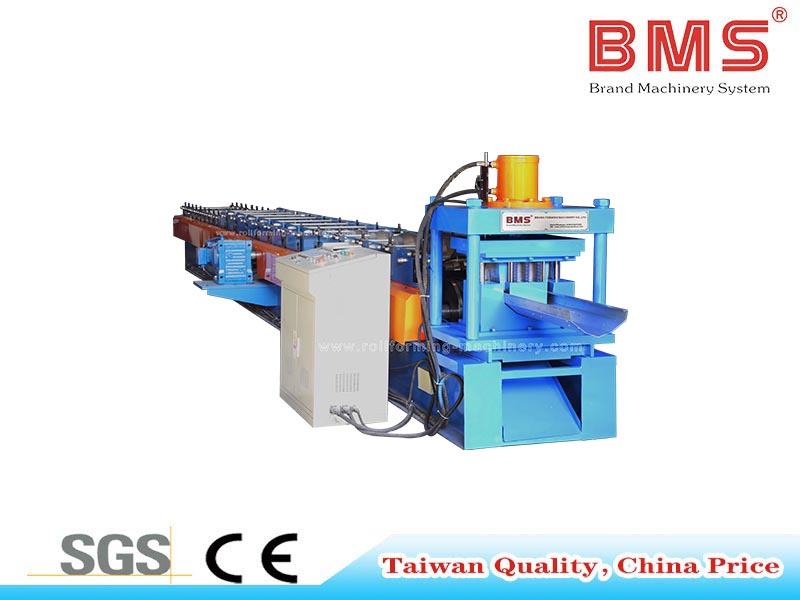
Coil-fed route
Seamless Gutter Line with Optional Punching
A BMS coil-fed gutter-line reference with optional hole punching. Match your box section to the proposed roll tooling, cutoff, hole operations and supported output in the configuration brief.
View the optional-punching gutter line08 · Continue the evaluation
Related buying and production resources
Broader equipment and quote scope
Compare general gutter-machine configurations, coil handling and quotation preparation on the BMS purchasing page.
Review broader gutter purchasing optionsGeneral roll-forming acceptance checks
Prepare product measurements, contract component checks, trial production and surface-finish questions.
Read the equipment acceptance guideBMS technical and setup FAQ
Review profile feasibility, sketching and the factory preparation needed for installation and commissioning.
Read BMS feasibility and setup FAQ09 · Prepare a useful discussion
Send a box-profile production brief
Show what you need to make and how the orders repeat. These inputs connect your section to the forming route and equipment scope.
For production in the United States, Saudi Arabia, Russia, India or Mexico, include the actual factory location, electrical supply and required machine documentation in the same brief.
- 1. Finished section and interfaces
Dimensioned drawing or sample; inside/outside basis, units, wall angles, radii, edge details, mating parts and drawing revision.
- 2. Material and finish
Grade or alloy/temper; thickness in mm or inches, its base-metal/coated basis and tolerance; mechanical properties, coating, film and visible face.
- 3. Lengths and acceptance
Required lengths, drawing tolerances and the section, cut-end, surface and fit checks needed for saleable parts.
- 4. Repeat orders and variants
Demand per profile, batch size, variant frequency and saleable pieces or metres per shift; include shift duration, staffing and handling assumptions.
- 5. Stock and extra operations
Coil or cut-sheet supply, available widths if known, and the required outlet, end-cap, corner or joint operations.
- 6. Site and handling
Working area, long-part support and lifting; actual voltage, frequency and phase; destination, installation needs and project-required machinery documents.
Box gutter machine questions
The terms describe different aspects and can overlap. Box describes the cross-section; seamless gutter production forms lengths from coil without a joint along each formed run; rain gutter describes the use. Outlets, corners and joined runs still need connection details. Select by section, material and process, not by the label alone.
No. State which dimension the name refers to and give actual dimensions in inches or mm. Profiles sharing a nominal seven-inch name can differ in clear opening, base width, wall heights, angles and edges.
Yes. Start with a dimensioned sketch and photos of a physical sample. Mark units, inside/outside dimensions, material and edge details. BMS offers feasibility studies and profile sketching as part of its custom roll-forming service.
Identify these parts separately. A main gutter-forming route does not by itself define outlet, end-cap, corner or joining operations. Put the required secondary tools or processes in the equipment scope.
Set limits for section dimensions, wall angles, length, bow/twist, cut ends, finish and mating fit on the finished-part drawing. Define support and measurement conditions with the supplier. Nominal machine size or a single generic tolerance cannot define acceptance for every box profile.
From section to production
Turn your box profile into a production brief
Share the complete section, metal specification and repeat-order pattern with BMS. Start a focused discussion about the forming route, tooling and equipment scope for your gutter production.