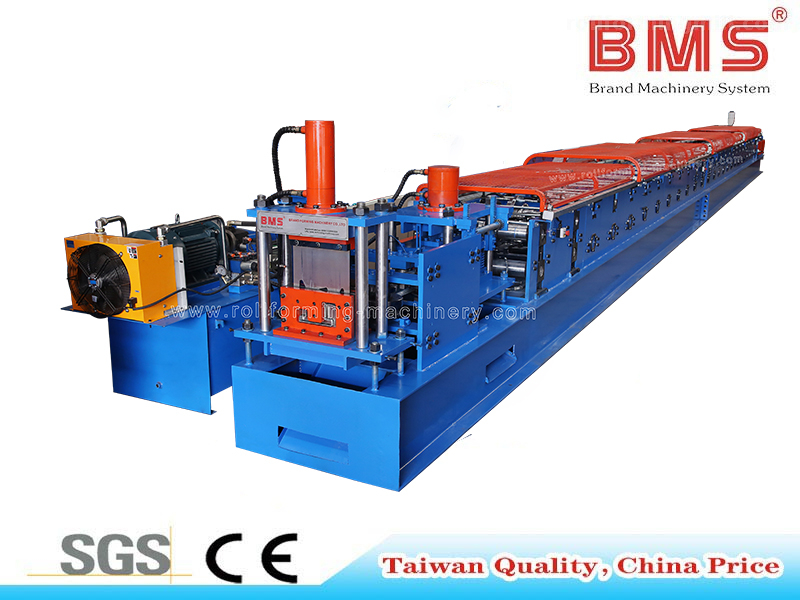
You watch a roll forming machine take a flat metal coil. The machine moves the coil through many rollers. Each roller bends and shapes the metal a bit more. At the end, you get a finished C Beam or Box Beam. The beams have exact sizes. When you use a roll forming machine, you control the whole process. You turn raw metal into strong and useful profiles. These profiles are used in building and factories. Knowing how the roll forming machine works is important. It helps you work faster, make better products, and stay safe at work.
Aspect | Impact on Production Efficiency | Impact on Product Quality | Impact on Workplace Safety |
Material Inspection | Makes sure materials are the same, so there are fewer stops for problems | Stops problems before they happen | Lowers the chance of using bad materials |
Process Monitoring | Lets you change things quickly to work better | Keeps products the right size and shape | Makes sure the machine is safe to use |
Dimensional Verification | Checks if sizes match the plan, so work is faster | Makes sure the final products are good | Lowers mistakes that could cause accidents |
Surface Quality Assessment | Cuts down on fixing mistakes, so work is faster | Makes sure products look and work well | Stops injuries from sharp or broken parts |
You can count on BMS ROLL FORMING MACHINERY to give you a beam rolling machine that follows world rules, like CE safety certification.
Key Takeaways
Learn how roll forming works to make better beams faster. This helps you build strong beams in less time.
Check materials often and watch the process to stop problems. Doing this keeps everyone safe and cuts down on waste.
Set up your machine right for each beam type. Good setup makes sure shapes and sizes are correct. This saves time and materials.
Use quality checks during production. Sensors help find problems early and keep standards high.
Take care of your machine often to keep it working well. Regular checks and cleaning help your machine last longer and stop breakdowns.
Roll Forming Machine Principles
Continuous Roll Forming Explained
You see a roll forming machine turn a flat metal coil into a strong beam. The process uses a series of roller stations. Each station bends the metal a little more. This gradual shaping keeps the metal smooth and reduces stress. You get a precise profile at the end. Here is how the process works:
You unroll a metal coil and feed it into the roll forming machine.
The metal moves through several roller stations. Each station makes a small bend.
You can add steps like punching, notching, or welding during the process.
The machine cuts the finished profile to the size you need.
You inspect and package the final product.
This method gives you high-quality beams with exact shapes. The roll forming machine works without stopping, so you get consistent results and save time.
Profile Creation for C and Box Beams
When you use a roll forming machine for C beams or box beams, you need special features. Adjustable stands let you change the roller positions quickly. You can make different sizes and shapes without much delay. Gearbox drives help you set the rollers with high accuracy. You get the right profile every time.
Gearbox drives allow you to fine-tune the roller stands for each box beam.
Adjustable stands make it easy to switch between beam types.
These features give your roll forming machine more flexibility and precision.
You can trust this process to deliver strong, reliable beams for many uses. The roll forming machine helps you meet different project needs with speed and accuracy.
Key Components of Beam Rolling Machine
A beam rolling machine has many important parts. Each part does a special job. You should know these parts to use the machine well. This also helps you stay safe at work.
Decoiler and Feeding System
The decoiler holds the metal coil. It lets the coil unwind slowly and smoothly. Guides help feed the metal into the roll forming machine. These guides keep the metal straight. They stop the metal from moving out of place. Some feeding systems have sensors. The sensors adjust the metal as it moves. This helps stop mistakes. It keeps the beam rolling machine working without trouble.
Component | Role in Roll Forming Process |
Uncoiler | Holds and unwinds the metal coil for a steady feed. |
Feeding Guides | Align the metal strip and prevent misalignment. |
Roll Forming Stations
Roll forming stations are the main part of the machine. The metal goes through many roller dies. Each roller bends the metal a little more. This keeps happening until you get the final shape. For C-shaped steel, there are parts like the left and right body. There is also a connecting rod and a chassis cover. These parts make the machine strong and steady.
Component | Contribution to Performance |
Left/Right Body | Gives the machine structure and reduces vibrations. |
Connecting Rod | Moves the slider for precise up and down motion. |
Chassis Cover | Protects the inside parts and keeps the machine clean. |
Cutting and Control Systems
After shaping, the machine cuts the beams to the right length. Many machines use flying cutoff dies. This means you do not need to stop the machine to cut. The control system lets you set up the machine. It helps you save material. Some systems can handle up to 50 rows. This helps you work faster.
Feature | Description |
Control System | Lets you program the machine and save material. |
Cutoff Equipment | Cuts beams to size without stopping the machine. |
Safety Mechanisms
Safety is very important when using the machine. Safety blocks protect you and the machine if something goes wrong. These blocks break if there is too much force. Other safety features are covers and emergency stops. You should check these before you start the machine.
Tip: Always check safety blocks and covers before you start the beam rolling machine. This keeps you and your team safe.
All these parts must work together. This helps your machine make good beams. When you know each part, you can fix problems faster. This keeps your machine running well.
Roll Forming Process Steps
Material Preparation
You begin by getting the metal coil ready. This step helps the machine work well and makes good beams. Here is how you prepare the coil:
Pick the right coil for your job. Put it on the uncoiler.
Send the coil through a flattener. This makes the metal straight.
Cut the front edge of the coil. A clean edge stops jams in the machine.
Watch the tension and speed as you feed the coil. This keeps the metal safe and steady.
Tip: Always look for rust, dents, or other damage before loading the coil. Good coils mean fewer problems later.
Machine Setup for C Beams
Setting up the roll forming machine for C beams needs care. You want the beams to be the right shape and size. Use this checklist to help you:
Plan where to put the machine. Make sure there is enough space.
Choose the best equipment. Pick the machine, uncoiler, and cut-off station for your beam size.
Set up and line up the machine. Check all wires and hydraulic parts.
Put the coil you prepared onto the uncoiler.
Install the right tools for C beams. Adjust the roller stations for the shape you want.
Run a test piece. Measure it and check if it is correct.
Teach your workers the steps. Make sure everyone knows how to watch the process.
Make a schedule for maintenance. Regular checks keep the machine working well.
Note: Careful setup saves material and helps you work faster. Take your time to line up and set the machine.
Machine Setup for Box Beams
Box beams need a different setup. You must change the machine to handle the closed shape and extra bends. Here is how you do it:
Make sure you have the right tools for box beams.
Adjust the roller stands for the width and height of the box beam.
Check the gearbox drives. Fine-tune them for smooth movement.
Line up the entry guides to keep the metal straight.
Run a short test. Look at the first pieces for shape and size.
Make small changes if needed. Even tiny changes can affect the final beam.
You should always watch the process closely during the first run. This helps you find problems early.
Step Beam Adjustments
Step beam adjustments help you get the right shape and size. You use these changes to make each beam better. The table shows how different settings change the beam:
Parameter | Effect on Beam Profile and Dimensional Accuracy |
Cone Angle | Small changes can move the profile off-center. |
Cone Radius | Changes fit for profiles far from the middle. |
Off-Axis Softening Parameter | Controls differences at shallow spots. |
Beam Modifier Scatter | Changes the angle for wedged areas. |
Jaw Transmission | Matches profiles at the biggest off-center spot. |
Gaussian Height | Changes the slope in low-dose places. |
Gaussian Width | Changes the edge slope of the beam profile. |
Tip: Change one setting at a time. Check what happens before changing another. This keeps your machine steady and your beams correct.
Quality Control
Quality control helps you make good beams every time. You use sensors and checks to keep high standards. The table shows common sensors and their uses:
Sensor Type | Benefit | Example Use Case |
Laser Sensors | Keep beams the same with real-time data | Keep sizes right for roofing panels |
Temperature Sensors | Find problems and stop accidents | Protect hydraulic systems from getting too hot |
Proximity Sensors | Make sure the metal keeps moving | Keep drywall machines working without stops |
Photoelectric Sensors | Find defects early and waste less | Make sure cuts are right in panel production |
You should also measure the finished beams for length, width, and thickness. Write down your results and compare them to your standards. If you see a problem, stop the machine and fix it before you keep going.
Note: Good quality control keeps customers happy and saves money on fixes.
Now you know how to run the roll forming process from start to finish. Careful prep, good setup, smart changes, and strong quality checks help you get the best beams. This way, you can make metal profiles fast and reliably.
Beam Rolling Machine Comparison
C Beam vs. Box Beam
You must pick the right beam for your job. C beams and box beams are not the same. They have different strengths and uses. The table shows how they are different in shape, strength, and where you use them:
Feature | C Beam | Box Beam |
Design | Open "C" shape | Closed rectangular shape |
Structural Soundness | Good for light to medium loads | Best for heavy loads |
Application | Shelving, light racking, framing | Heavy-duty racking, industrial supports |
Nominal Speed (m/min) | approx. 18 | 10-20 |
Thickness Range (mm) | 0.7-1.8 | 1.5-2.0 |
Yield Strength (MPa) | 245-550 | 250-350 |
C beams are made faster. Box beams are stronger for hard jobs. Choose the beam that fits your load and speed needs.
Step Beam Overview
Step beams have a special shape for storage racks. There is a raised step across the beam. This makes the beam light but strong. Step beams are good for warehouse racks. Welded end connectors help you attach them quickly. You see step beams in stores, warehouses, and storage places.
Characteristic | Description |
Lightweight but strong | Roll-forming makes the beam sturdy and light |
Good load capacity | Handles most warehouse needs |
Welded end connectors | Fast and secure installation |
Best For | FMCG, retail, e-commerce, general storage |
Tip: Pick step beams if you want fast setup and strong support for daily goods.
BMS ROLL FORMING MACHINERY Features
BMS ROLL FORMING MACHINERY uses smart technology for making beams. You get CNC automation for quick changes. The machines let you switch between C, box, and step beams fast. Real-time monitoring helps you find problems early and keep quality high. The cold-forming process saves material and energy, so you spend less.
Feature | Description |
Advanced Automation | CNC controls for quick, precise adjustments |
Flexibility | Makes many profiles with short changeover times |
Cost-Effectiveness | Reduces waste and energy use |
Real-time Monitoring | PLCs give instant feedback and process control |
Custom Profile Production | Software creates complex shapes with high accuracy |
You can count on BMS machines for steady results. The technology helps you do well in a busy industry.
Troubleshooting and Solutions
Feeding Issues
Feeding problems happen a lot with beam roll forming machines. These problems can make work slow and cause mistakes. You need to check the feeding tracks and guide rolls often. Clean tracks help the metal go in easily. Tight entry guides keep the coil straight. This stops camber or twist. Look at the guide rolls for any damage. If the slitted coil moves, adjust the guides.
Common Feeding Issues | Recommended Solutions |
Dirty feeding tracks | Clean tracks for smooth entry |
Damaged guide rolls | Replace or repair rolls |
Loose entry guides | Tighten guides |
Coil movement | Adjust guides to prevent twist |
Make sure guide rolls are not broken.
Keep entry guides tight and secure.
Stop the coil from moving to avoid camber or twist.
Tip: Check the feeding system before each shift. Fixing problems early keeps things running well.
Profile Inaccuracy
Sometimes beams come out with wrong shapes or sizes. This happens if rollers are not lined up or settings are wrong. Use an analytical model to find out how the metal stretches. The model helps you see and fix mistakes. Inline tools let you check bow and twist while you work. Change the roll gap right away to make beams more accurate.
Evidence Description | Details |
Analytical Model | Calculates longitudinal strains for better accuracy |
Validation | Shows minor deviations from simulations |
Application | Allows knowledge-based adjustments |
Control System | Inline measurement enables real-time corrections |
Note: Use sensors to spot errors fast. Adjust rollers as soon as you see a problem.
Machine Jams
Machine jams stop work and waste metal. Jams often happen when the coil reel or entry guides are not lined up. Bad setup and skipping test runs also cause trouble. Clean and oil the machine often. Use the right tools for each beam.
Line up the coil reel and entry guides.
Run test pieces before making lots of beams.
Clean and oil the machine parts.
Use the correct tools for each beam type.
Alert: Do not skip maintenance. Small checks stop big jams.
Electrical Errors
Electrical errors can make the machine stop or be unsafe. Check wires and control panels often. Look for loose wires or broken cables. Reset the control system if you see error codes. If the problem does not go away, call a trained technician.
Check wires for damage.
Tighten any loose connections.
Reset the control system if needed.
Call experts for hard-to-fix problems.
Tip: Write down electrical problems in a log. Keeping records helps you find patterns and stop future errors.
Maintenance Tips
Routine Checks
You should check your beam roll forming machine often. Do checks every day, week, and month. These checks help keep your machine safe. They also help your machine work well. Use the table below to help you remember what to do:
Frequency | System / Component | Action | Details |
Daily | Coolant System | Check Coolant Concentration | Use a refractometer to match the oil-to-water ratio with specifications. |
Daily | Hydraulic System | Check Oil Level | Make sure the oil level stays within the sight gauge. |
Daily | Pneumatic System | Check Air Line Pressure | Confirm PSI levels are correct. |
Monthly | Lubrication | Grease Shaft Bearings | Apply grease to bearings under heavy loads. |
Monthly | Hydraulics | Inspect Hoses and Lines | Look for leaks or abrasion along hoses. |
Monthly | Machine Alignment | Check Basic Alignment | Visually inspect shafts and tooling stands for shifting. |
Tip: Write down all your checks in a logbook. This helps you see problems early and fix them fast.
Lubrication and Cleaning
You need to keep your machine clean and use the right lubricant. This stops breakdowns and helps your machine last longer.
Pick the lubricant the manufacturer suggests.
Lubricate moving parts on a regular schedule.
Use the right amount so you do not cause friction or dirt.
Maintenance Practice | Impact on Lifespan and Reliability |
Lubrication | Lowers wear and friction, keeps the machine working well. |
Cleaning | Stops dust and metal bits from causing problems. |
Parts Replacement
Check your machine for broken or worn parts often. Change any part that looks damaged or old. This keeps your machine safe and stops bigger problems.
Look at all parts during your checks.
Replace bad parts right away.
Only use approved parts for your machine.
Note: Changing bad parts quickly helps you avoid long stops.
Preventive Maintenance
You can stop most breakdowns with preventive maintenance. Regular care helps your machine work better and saves money. If you notice small changes, you can fix problems before they get worse.
Plan regular maintenance tasks.
Teach workers to spot and report changes.
Write down all maintenance work for later.
Preventive care helps your machine stay reliable and keeps production going.
You can make your C Beam and Box Beam roll forming machines work well by doing these things: Clean the rollers and feeding area every day so dirt does not build up. Put oil on all moving parts to help them move easily. Check the rollers to make sure they are set right and working well. Plan for a professional to look at your machine so problems are found early.
Taking care of your machine helps it last longer and keeps you safe. BMS ROLL FORMING MACHINERY gives you help you can trust, like a warranty, help with setup, and remote service:
Service Type | Description |
Warranty | You get 2 years where the machine is fixed if it breaks |
Installation Assistance | A technician helps you set up and shows you how to use it |
Remote Control Service | You can get help fast if something goes wrong |
You can also join training classes to learn more and do better in your job.
FAQ
What materials can you use in a C Beam or Box Beam roll forming machine?
You can use steel, galvanized steel, or aluminum coils. Always check the coil’s thickness and width. The machine works best when you use materials listed in your manual.
How often should you perform maintenance on your roll forming machine?
Check and clean your machine every day. Do bigger inspections once a month. Change worn parts right away. Regular care keeps your machine safe and working well.
What safety steps should you follow before starting the machine?
Look at all safety covers and emergency stops.
Check for wires that are loose or parts that are broken.
Only let trained workers use the machine.
How do you fix a profile inaccuracy during production?
Step | Action |
1. Stop production | Check if rollers are lined up |
2. Measure output | Compare sizes to the manual |
3. Adjust settings | Test again before you restart |
Change one setting at a time to get the best results.

 日本語
日本語 한국어
한국어 ไทย
ไทย 繁體中文
繁體中文 العربية
 فارسی
فارسی Français
 Русский
 Español
 Português
 English
 Deutsch
 italiano
 Nederlands
 Tiếng Việt
 Polski
 Türkçe
 አማርኛ
አማርኛ ພາສາລາວ
 ភាសាខ្មែរ
 Bahasa Melayu
 ဗမာစာ
ဗမာစာ தமிழ்
தமிழ் Filipino
 Bahasa Indonesia
 magyar
 Română
 Čeština
 Монгол
 қазақ
қазақ Српски
 हिन्दी
 Kiswahili
 Slovenčina
 Slovenščina
 Norsk
Norsk Svenska
 українська
 Ελληνικά
 Suomi
Suomi Հայերեն
 עברית
עברית Latine
 Dansk
Dansk اردو
اردو Shqip
Shqip বাংলা
বাংলা Hrvatski
 Afrikaans
 Gaeilge
 Eesti keel
 Māori
Māori සිංහල
සිංහල नेपाली
 Oʻzbekcha
 latviešu
 অসমীয়া
 Беларуская мова
 Esperanto
 मराठी
मराठी پښتو
پښتو


