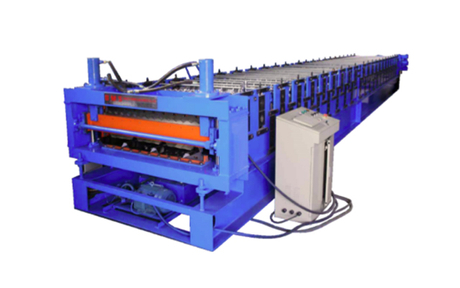


Springback in roll forming should be discussed before tooling approval because roll forming bends strip incrementally through successive roller dies and springback control depends on material, geometry, tooling, lubrication, coil condition, and equipment rigidity. Buyers should ask suppliers to connect those inputs to the pass schedule, overbend strategy, correction-roll approach, and validation plan instead of accepting a general assurance that springback will be handled.
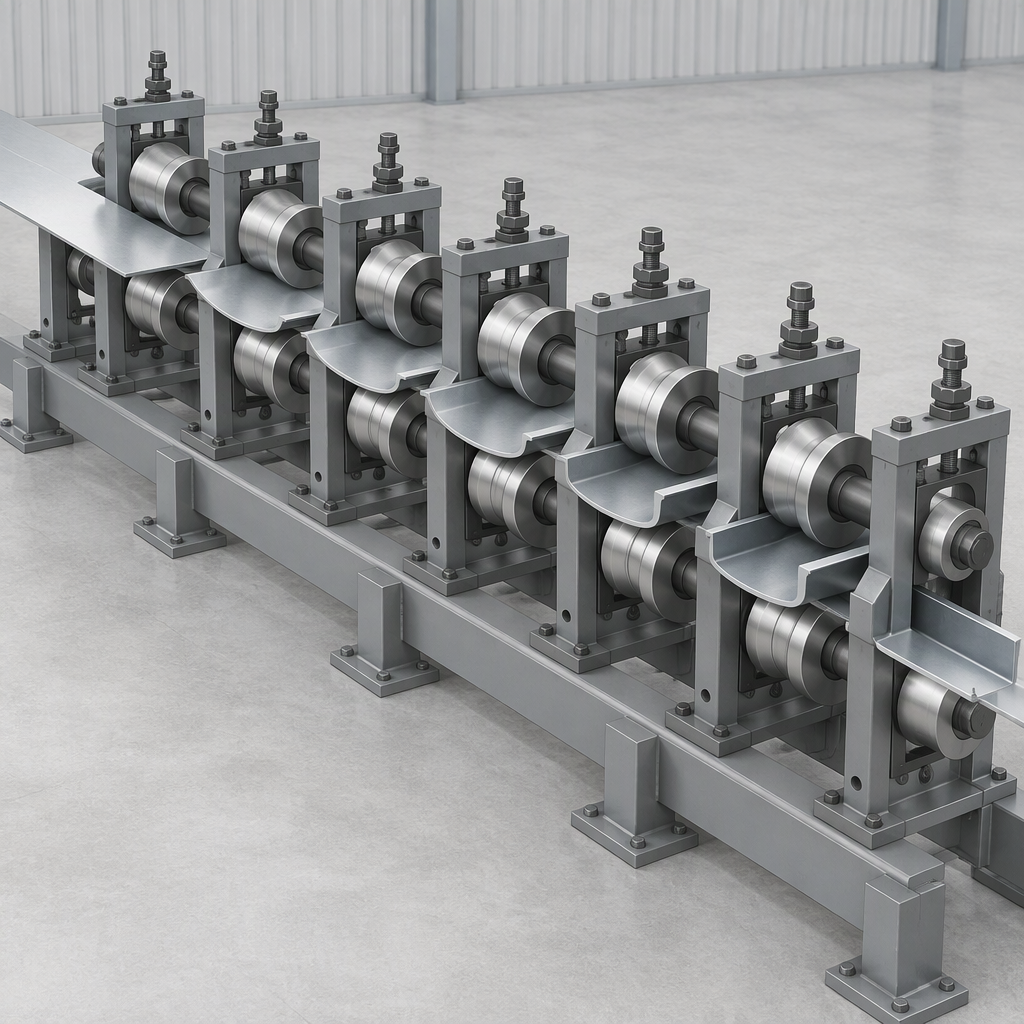
What springback means in roll forming procurement
In procurement terms, roll forming springback is the dimensional recovery that has to be anticipated when a strip is bent through a sequence of roll stands, so the supplier discussion should start with how the process will compensate for the profile, material, and production conditions.
The AHSS roll forming guidance describes roll forming as incremental bending by successive paired roller dies and notes that the incremental approach can help compensate for springback when the process is designed around the material and profile.
A peer-reviewed roll forming springback study identifies forming angle increment, sheet thickness, material yield strength, number of passes, and correction rolls as variables that can affect the resulting springback angle.
For a buyer, the practical issue is not whether springback exists; it is whether the supplier can explain the assumptions behind tooling design, pass layout, measurement points, and acceptance criteria for the profile you intend to make. A good technical review treats springback as a shared design-control topic, not as a last-minute adjustment after the line is built.
The factors buyers should put on the table first
Before a supplier discusses springback control, buyers should provide or request discussion of yield strength, thickness, bend radius, number of forming passes, overbend distribution, tooling condition, lubrication, coil imperfections, and equipment rigidity.
| Input to review | Why it belongs in the first supplier meeting | Buyer question |
|---|---|---|
| Material strength and thickness | Research reports that springback angle increased with material yield strength and decreased with increased sheet thickness in the studied conditions. | Which material certificate values or grade ranges will be used for the tooling and pass-design assumptions? |
| Bend radius and profile geometry | AHSS guidance identifies bend radius and profile requirements as factors in springback discussions for roll formed sections. | Which bends in the profile are expected to need the most compensation or measurement attention? |
| Pass count and forming sequence | The published study reports that increasing the number of passes reduced springback under its tested conditions. | How does the proposed pass schedule divide the total forming angle, and what changes if the material range changes? |
| Tooling condition, lubrication, and line rigidity | AHSS guidance includes tooling condition, lubrication, and equipment rigidity among practical process factors that can influence formed dimensions. | How will the supplier define inspection, lubrication, and setup conditions during acceptance trials? |
For metal building products such as channels, purlins, framing members, roofing profiles, or trim sections, these inputs should be connected to the actual drawing and tolerance stack. Avoid reviewing springback as a single angle value if the part includes multiple bends, asymmetric flanges, embossing, holes, or downstream cut-off operations.
Questions to ask about overbend, passes, and correction rolls
Buyers should ask how the supplier will distribute forming angle, where overbend is expected, whether correction rolls are proposed, and how those choices will be verified for the specified material and profile.
- Start with the profile drawing. Ask the supplier to identify the bends, radii, and dimensions most sensitive to springback instead of discussing compensation in general terms.
- Review the forming-angle distribution. A peer-reviewed study links forming angle increment and pass count to springback behavior, so the pass schedule should be part of the technical conversation.
- Ask where overbend is used. AHSS guidance describes overbend distribution as a springback-related process factor in roll forming.
- Discuss correction rolls. Research reports that correction rolls reduced springback in the studied roll forming conditions, so buyers should ask what they correct, where they are placed, and how adjustment limits are controlled.
- Define measurement and acceptance. Ask which sections, angles, widths, and twist or bow checks will be measured during trial runs, and confirm that the method matches the product drawing.
Do not treat a higher pass count, heavier overbend, or correction-roll proposal as automatically better. The right approach depends on the material range, profile shape, line layout, tooling design, and acceptance method. Ask the supplier to explain the tradeoff in terms of your profile, not as a universal rule.
How to discuss simulation and validation without overclaiming
Simulation is useful when the material model and validation method fit the material being formed; buyers should ask what material assumptions are used and how the prediction will be checked against trials or sample parts.
An open-access study on AZ31 magnesium alloy roll-forming springback reports that anisotropy and tension-compression asymmetry can materially affect finite element springback prediction, and that relying only on conventional tensile-property assumptions can create prediction errors for that alloy.
The Journal of Mechanical Science and Technology article page supports discussion of process variables such as forming angle, thickness, yield strength, number of passes, and correction rolls, but buyer decisions should still be tied to the supplier's validation method for the actual part.
For steel building profiles, the magnesium-alloy simulation finding should be used as a caution about material modeling, not as proof that every steel profile needs the same material model. Ask whether the supplier's simulation inputs match the specified grade, thickness range, coil variability, and measured trial results.
Useful validation questions include: What material data will be entered? Are properties taken from a certificate, a supplier database, or tests? Which dimensions will be compared after forming? What is the plan if the first trial part springs back outside the target? These questions keep simulation in its proper role: a design and risk-reduction tool, not a standalone guarantee.
Do not ignore incoming material and coil condition
Incoming coil condition matters because AHSS guidance identifies coil imperfections and material variability, along with residual stress-related issues such as coil set, crossbow, and camber, as influences on roll formed dimensions.
| Incoming condition | What it can change in the springback conversation | Buyer action |
|---|---|---|
| Coil set or crossbow | Pre-existing strip shape can affect how the profile tracks and how dimensions appear after forming. | Ask how incoming coil shape will be inspected and separated from tooling-related springback issues. |
| Camber | Camber can influence line tracking and dimensional consistency in roll formed products. | Define incoming coil limits and decide who evaluates out-of-limit material before trials. |
| Residual stresses and material variability | AHSS guidance includes residual-stress-related effects and material variability among practical considerations for roll forming. | Ask whether the proposal assumes a narrow material range or covers the full purchasing specification. |
| Unclear material specification | A supplier cannot responsibly convert an unknown grade, thickness tolerance, or coating condition into a reliable springback-control plan. | Provide the grade, thickness range, coating, drawing, and tolerance requirements before asking for final tooling assumptions. |
Procurement teams should align purchasing, process engineering, and quality control before the supplier review. If the production coil range is broader than the sample coil used for trials, ask how that difference will be handled in setup instructions and acceptance criteria.
Buyer checklist for supplier technical reviews
Red flags include a proposal that does not ask for material data, does not discuss pass schedule or overbend, ignores coil condition, treats simulation as a guarantee, or offers a tolerance promise without profile-specific validation.
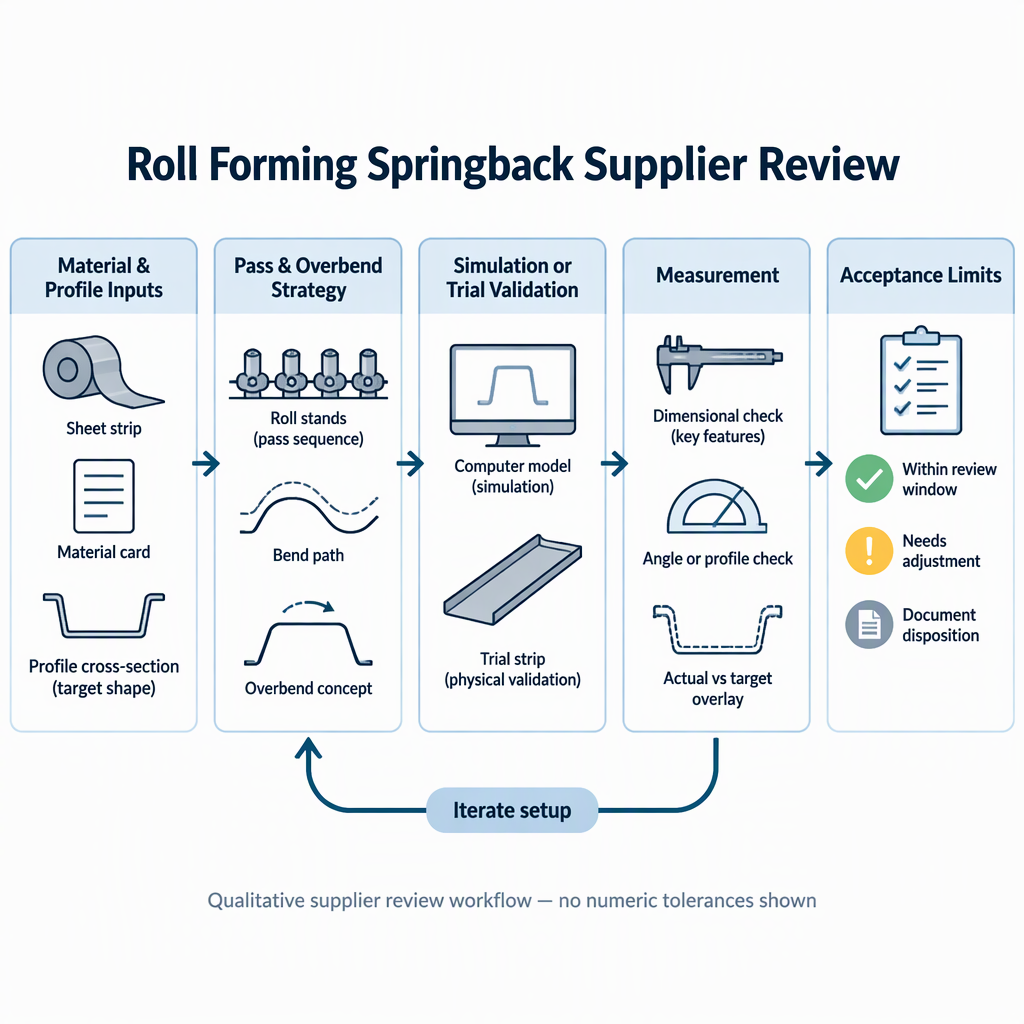
- Provide the profile drawing, bend radii, thickness range, grade range, and required dimensional checks before requesting a springback-control proposal.
- Ask how forming angle increment, pass count, and correction rolls are considered in the supplier's proposed process.
- Ask how overbend is distributed and how the tooling design will be adjusted if trial parts do not meet the drawing.
- Ask how lubrication, tooling condition, and equipment rigidity are managed during trial and acceptance runs.
- Ask how incoming coil set, crossbow, camber, residual stress, and material variability will be evaluated before blaming the tooling.
- If simulation is used, ask which material model is used and how simulation output will be validated with measurements.
- Record who owns each decision: buyer material specification, supplier tooling design, trial measurement, and acceptance sign-off.
| If the supplier says... | Ask next... | Why it matters |
|---|---|---|
| “Springback will be compensated in tooling.” | Which bends receive overbend, and how is that linked to material strength, thickness, bend radius, and pass design? | Compensation should be traceable to the profile and material range. |
| “More passes will solve it.” | What pass schedule is proposed, and how will the number of passes be validated for the selected material? | Research supports pass count as a springback variable, but it is not a standalone guarantee. |
| “Simulation predicts the result.” | What material assumptions are used, and how will measured samples confirm or correct the prediction? | Material modeling can affect prediction reliability, especially where anisotropy or asymmetric behavior is relevant. |
Conclusion
A useful springback review ends with clear inputs, a reasoned process proposal, and a validation plan the buyer and supplier can both measure against the finished profile.
- Start with material grade, thickness, bend radius, profile geometry, coil condition, tooling condition, lubrication, and line rigidity.
- Discuss forming-angle distribution, pass count, and correction rolls as process variables, not as generic promises.
- Use simulation carefully by asking about material assumptions and measured validation.
- Do not approve final tooling assumptions until drawing requirements, trial measurements, and responsibility for material variation are clear.
FAQs about roll forming springback
These questions help buyers turn springback concerns into practical supplier-review topics.
Does roll forming always reduce springback compared with press bending?
No. AHSS guidance supports roll forming as an incremental bending process that can help compensate for springback, but that does not prove a universal advantage over every press-bending case or every profile.
Which inputs should I send before asking for a springback answer?
Send the drawing, material grade, thickness range, bend radii, tolerance requirements, expected coil condition, and any downstream operations that affect dimensional acceptance.
Is a higher number of passes always better?
Not automatically. A peer-reviewed study reports that more passes reduced springback in its studied conditions, but buyers should still ask how the selected pass schedule fits the actual profile, material, and line layout.
Should every line use correction rolls?
Correction rolls can be part of springback control, and research reports reduced springback with correction rolls under studied conditions, but their need and placement should be justified by the supplier's process design.
Can simulation replace a trial run?
Simulation should not replace measured validation for a purchasing decision. Material assumptions can affect prediction, so buyers should ask how simulated results will be checked against formed samples.
Why discuss coil condition if the issue is tooling?
Coil set, crossbow, camber, residual stresses, and material variability can influence formed dimensions, so incoming material should be reviewed before assigning all dimensional deviation to tooling.
Can a supplier guarantee a specific springback tolerance before seeing my profile?
Buyers should be cautious. A specific tolerance commitment needs the drawing, material specification, tool design assumptions, measurement method, and validation plan for the part being purchased.