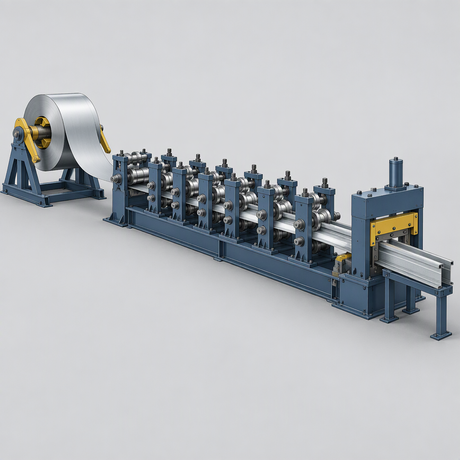
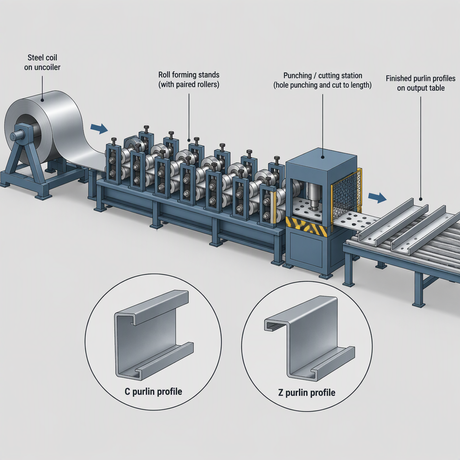
Preventing surface scratches on prepainted steel panels starts with treating the coated face as the finished visible surface, then controlling contact, sliding friction, temporary protection, lubrication compatibility, storage, and downstream handling before changing equipment.
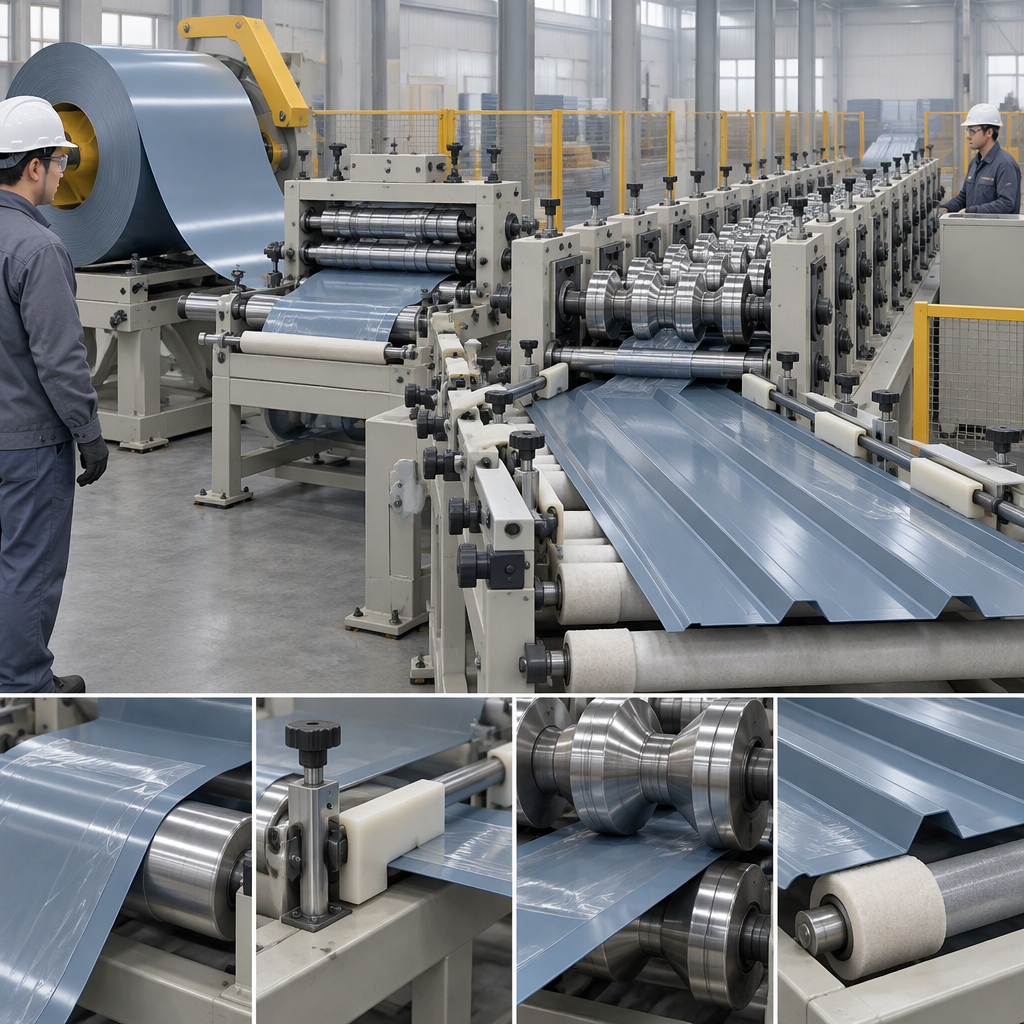
What Counts as Scratch Prevention on Prepainted Steel Panels?
Scratch prevention means preserving the factory-applied prepainted surface through forming, cutting, stacking, and handling, because prepainted metal is produced by coil coating and is already intended to deliver the required surface appearance for applications including building products, appliances, transport, and general industries.
The European Coil Coating Association coil-coating overview explains how prepainted metal is made; use that context to plan the roll-forming line around protecting the finished surface rather than assuming damage can be corrected later.
For metal building-product manufacturers, the practical boundary is simple: prevent contact marks before panels leave the line, and ask the coil supplier for the approved handling and repair rules for the exact coating system instead of applying a generic touch-up assumption.
Diagnose Where the Scratch Is Introduced
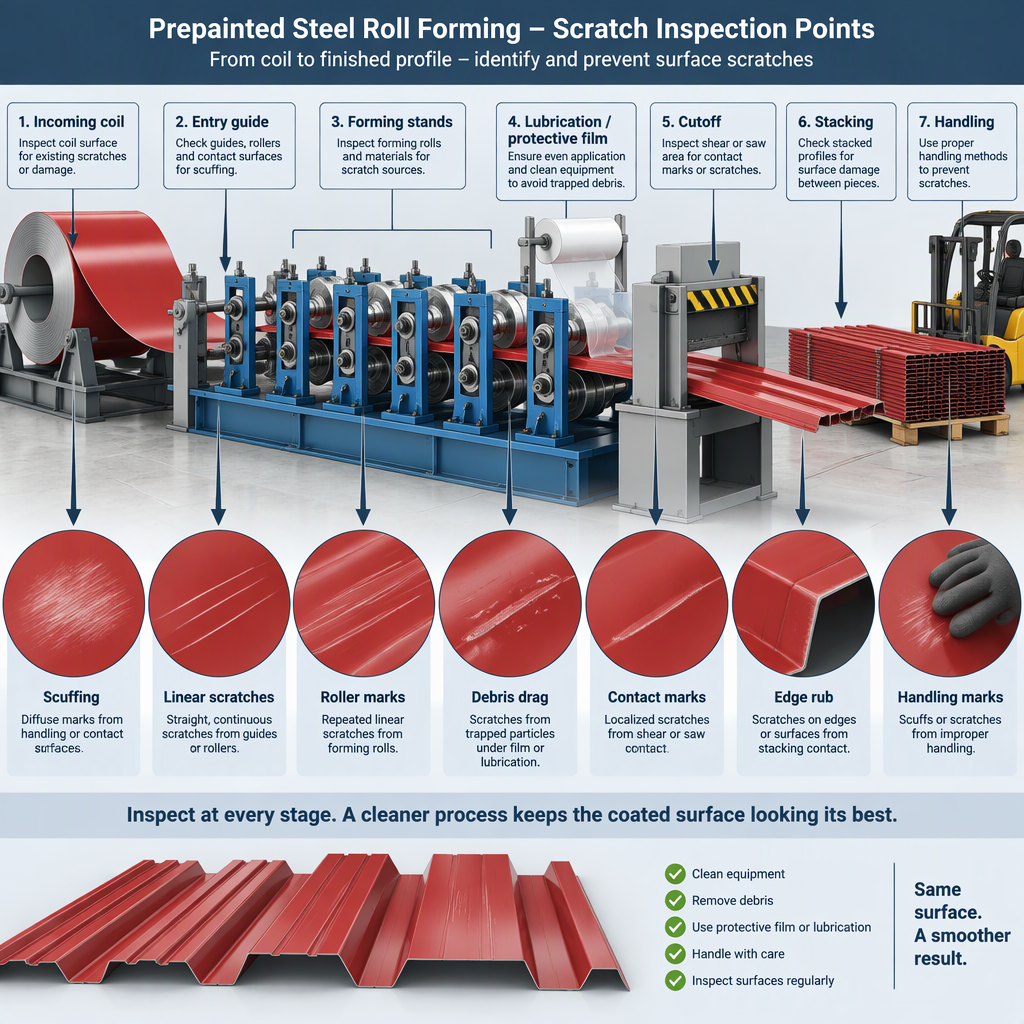
Start by locating the first point where a scratch appears, because sheet forming damage can be driven by contact pressure, sliding contact, friction, heat, lubricant starvation, and the way lubricant is applied.
| Observed pattern | Likely inspection zone | Buyer action |
|---|---|---|
| Long, repeated lines that follow the strip direction | Guides, rolls, or any sliding contact point where pressure and friction are concentrated | Inspect the contact path, remove debris only after safe energy isolation, and check whether the mark begins before or after each stand. |
| Scoring that worsens during longer runs | Tooling surfaces, lubricant starvation zones, heat build-up, or galling-related contact | Review lubrication application consistency and surface cleanliness before changing machine speed or tooling geometry. |
| Marks that appear mainly after forming | Cutoff, stacking, packaging, or handling areas where coated surfaces can rub during production and assembly | Evaluate temporary protective film, separator materials, transfer methods, and handling rules for coating compatibility. |
| Unclear marks during forming trials | General forming-lubrication variables that need validation on the actual coated strip | Treat press-forming lubrication resources as background, then validate the chosen control with the coil, coating, lubricant, and line supplier. |
Do not assume one universal cause. A scratch may come from incoming coil condition, a single guide, insufficient lubrication at one stand, a dirty transfer surface, or a downstream handling step, so the investigation should isolate one contact zone at a time.
Use a Controlled Scratch-Investigation Workflow
Use a controlled workflow that separates incoming material condition, forming contact, lubrication, protective film, cutoff, stacking, and handling rather than changing several variables at once.
- Record where the first visible mark appears: before entry, after a guide, after a forming stand, after cutoff, or after stacking.
- Before any manual access to guides, rolls, cutoff areas, guards, or trapped debris, switch off the line and disconnect the relevant electrical, hydraulic, pneumatic, or battery power source according to the site lockout procedure; then use only access methods allowed by the machine manual.
- Inspect sliding contact points for pressure, debris, and friction paths, because forming lubrication guidance identifies pressure, sliding, friction, heat, and lubricant starvation as important forming variables.
- Check lubricant delivery as an application problem, not only as a lubricant-brand problem: uneven application can leave high-friction zones even when a suitable lubricant is present.
- If the coated face is exposed to rubbing during processing or assembly, trial a compatible temporary protective film with the film and coating supplier before making it a production rule.
- Change only one controlled variable per trial and keep marked sample panels so engineering, production, quality, and purchasing teams can compare the same evidence.
- Keep a marked sample from the incoming coil and from each major line zone.
- Separate surface dust, embedded debris, coating damage, and handling rub marks in the defect log.
- Ask the coil supplier which cleaners, films, lubricants, and repair methods are permitted for the coating.
- Confirm that any trial lubricant or film will not interfere with downstream assembly, cleaning, adhesive bonding, packaging, or site installation.
Choose Protective Film and Lubrication With Compatibility Checks
Protective film and lubrication can both help control scratch risk, but they solve different problems and must be checked against the coating, forming route, removal conditions, and downstream handling.
| Control option | What it can address | Compatibility checks before production |
|---|---|---|
| Temporary protective film | Protects coated metal surfaces from scratches and other damage during production, processing, and assembly. | Confirm adhesion, removal, surface finish compatibility, processing conditions, and whether the film can remain in place through the required steps. |
| Lubrication | Reduces friction-related forming risk where sliding contact, contact pressure, heat, and lubricant starvation are relevant. | Match the lubricant to the forming application, delivery method, coating, cleaning plan, operator safety requirements, and any downstream assembly process. |
| Film plus lubrication | May be considered when forming friction and post-forming handling rub are both present. | Test the combined system for residue, slipping, wrinkling, removal behavior, and finished-surface appearance before approving it for production. |
Require protective-film supplier data and written coating compatibility confirmation for the actual coating, profile, process conditions, adhesive and removal behavior, finished-surface appearance, and customer specification before approving the film for production.
Set Handling and Storage Boundaries Before Production
Set storage and handling rules from the current coil supplier, coating specification, and project documents; ECCA treats storage as a dedicated guidance topic, so it should be part of the prevention plan rather than an afterthought.
- Ask for the current storage guideline or handling instruction that applies to the specific prepainted metal supplied for the project.
- Define how coils, slit coils, formed panels, and finished bundles may be supported, separated, moved, and stacked without rubbing coated faces together.
- Specify who may remove protective packaging or film, when removal is allowed, and how the surface must be inspected afterward.
- Reject wet, dirty, or abrasive handling conditions at the roll-forming area and hold suspect material for inspection before it enters production.
- Align warehouse, line-side, packing, and site-handling instructions so the finished panel is not protected on the line and damaged after the line.
Do not set storage temperature, humidity, dwell-time, or stacking limits from guesswork. Put the supplier’s current written requirements into the production router and purchase specification, then train receiving, line, packing, and dispatch teams to follow the same limits.
What Equipment Buyers Should Verify Before Purchase
Ask the supplier to show how the proposed roll-forming line protects a finished prepainted surface across entry, guiding, forming, cutoff, exit, and handling, and require trial evidence before relying on scratch-free claims.
- Confirm that the supplier understands the material as prepainted, coil-coated metal with a finished visible surface, not only as bare forming stock.
- Ask how contact pressure, sliding contact, lubrication delivery, heat, debris, and lubricant starvation are controlled or inspected during trials.
- Ask whether protective film is compatible with the proposed guides, forming stands, cutoff, stacker, and packaging process.
- Request trial criteria: sample length, surface-inspection method, acceptable mark definition, and who signs off the finished face.
- Require written limits for material grade, coating system, profile geometry, line speed range, lubricant or film use, cleaning, and maintenance access.
- Separate machine capability claims from project-specific validation; a supplier should document what was tested on the buyer’s material and what remains the buyer’s responsibility.
| Procurement question | Why it matters | Acceptable buyer evidence |
|---|---|---|
| Where can the coated face touch the machine? | Scratches often relate to pressure and sliding contact. | Contact map, trial panels, and inspection points. |
| How is lubrication selected and applied? | Lubricant selection should match the forming application. | Documented lubricant, application method, and compatibility approvals. |
| Will protective film be used? | Coated-metal films are marketed for protection during production, processing, and assembly. | Film data, coating approval, removal plan, and trial result on the buyer’s material. |
Conclusion
The best next step is a disciplined scratch map: identify the first damage point, isolate one process variable, confirm coating compatibility, and require suppliers to document the controls they can support.
- Treat the prepainted face as the finished surface from coil entry to final packaging.
- Investigate pressure, sliding contact, friction, heat, lubrication, and debris before changing equipment settings.
- Use protective film only after checking fit with the coating, profile, process, and removal conditions.
- Put storage, handling, and inspection rules into purchasing and production documents so every team works to the same boundary.
FAQs About Scratches in Prepainted Steel Forming
These answers help production, engineering, and procurement teams turn a surface-defect complaint into practical checks.
Are scratches on prepainted steel mainly a material problem or a machine problem?
They can be either. Start by finding the first point where the mark appears, then separate incoming coil condition from guide contact, forming pressure, lubrication, cutoff, stacking, and handling.
How should buyers judge lubrication claims for roll-formed panels?
No. Lubrication is important where friction, sliding contact, contact pressure, heat, and lubricant starvation are involved, but it cannot solve damage caused by dirty handling, incompatible film, rough supports, or poor stacking.
Should protective film always be specified for prepainted panels?
Not always. Protective films are used to protect coated metal during production, processing, and assembly, but the film must be compatible with the surface, process route, removal conditions, and finished appearance requirements.
What should be checked before touching rolls or guides during troubleshooting?
Before manual access, switch off the line and disconnect the relevant power source under the site lockout procedure, then follow the machine manual for permitted access. Do not bypass guards or improvise disassembly to reach a suspected scratch point.
What storage rule should a factory use for prepainted steel coils?
Use the current written rule from the coil supplier and project specification. Storage is a recognized guidance topic for prepainted metal, so receiving, warehousing, production, packing, and dispatch teams should all work from the same document.
What should equipment buyers ask before accepting a scratch-prevention claim?
Ask for a contact map, trial panels, inspection method, lubricant and film compatibility records, operating boundaries, and a clear statement of what was tested on the buyer’s material. Do not accept unsupported guarantees or percentage-improvement claims.