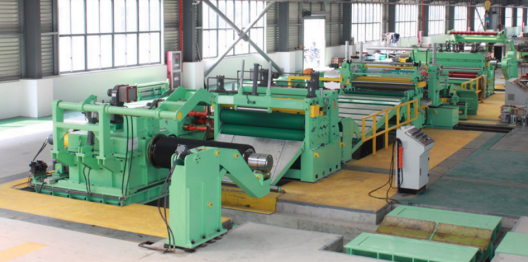
You should know the main difference between a slitting machine and a Cut To Length Line. A slitting machine cuts big metal coils into thin strips. These strips are used for more work later. A Cut To Length Line makes flat sheets in certain lengths. These sheets are ready to use right away. If you understand these differences, you can pick better machines. Think about these things:
Slitting lines make thin strips for jobs like making tubes.
Cut To Length Lines give finished sheets for building and car companies.
Knowing which machine you need helps you work better and waste less.
Key Takeaways
Slitting Line Overview
How a Slitting Line Works
When you use a slitting line, you start by putting a big coil of metal on the uncoiler. The hr coil slitting machine unwinds the coil and makes the metal flat with rollers. Then, sharp round blades cut the metal into thin strips. The blades are set carefully so each strip is the right size. After cutting, the hr coil slitting machine rolls the strips up again. This makes it easy to move and use them. The slitting line works fast and cuts very accurately. These things are important when working with metal.
Slitting Line Output
A slitting line makes many narrow coils that are all the same width. You can use coils that are 300mm to 2200mm wide. The metal can be as thin as 0.10mm or as thick as 10.0mm. The hr coil slitting machine can hold coils that weigh up to 40 MT. It can also work at speeds up to 230 meters per minute. The slitting line keeps running, so you do not have to stop often. This helps you make more strips in less time. The strips are even and ready for more work or making things.
Tip: The slitting process gives you smooth edges and strips that are the right size. This helps you get a nice finish on your metal.
Materials for Slitting Lines
A slitting line can cut many kinds of metal. Some common ones are A36 and A1011 carbon steel, 304 and 316L stainless steel, and aluminum. The hr coil slitting machine can work with different thicknesses and types of metal. This means you can use it for many jobs. It helps you meet what your customers want and follow industry rules.
Slitting Line Applications
Slitting lines are used in lots of places. Car factories use them to get metal ready for car parts and panels. The electrical industry uses slitting machines to make transformer cores and motor parts. Appliance companies use the hr coil slitting machine to make pieces for fridges and washing machines. In building, slitting lines make metal for window frames, beams, and ceiling grids. The packaging industry uses slitting lines to make strips for cans and boxes.
Advantage | Description |
Cost Efficiency | Buying metal in coils costs less than buying cut sheets. |
Material Utilisation | The slitting process cuts metal to the right size, so there is less waste. |
Flexibility and Customisation | You can change the hr coil slitting machine quickly for different jobs. |
Improved Production Speed | Automatic slitting machines help you work faster and do less by hand. |
Enhanced Quality | Good straightening makes sure you get high-quality strips for more metal work. |
Cut To Length Line Explained
Cut To Length Process Steps
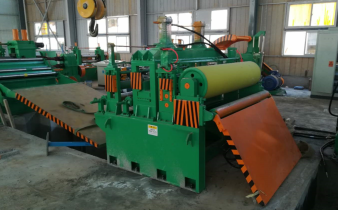
You use a cut to length machine to turn metal coils into flat sheets. The cut to length process follows clear steps. First, you uncoil the metal and feed it into the machine. Next, straighteners remove any bends or curves, making the metal flat. You measure the sheet length with precision tools. Then, the cut to length machine cuts the metal to the exact size you need. Finally, the machine stacks the sheets for easy handling.
Tip: Following each step in the cut to length process helps you get sheets with perfect dimensions and flatness.
Steps in the cut to length process:
Uncoiling
Straightening
Measuring
Cutting
Stacking
Cut To Length Machine Output
A cut to length machine gives you flat sheets with precise dimensions. You can set the machine to cut sheets from 500 mm up to 9000 mm in length. The width depends on your coil and machine setup. The output stacks neatly, ready for shipping or further use.
Here is a quick look at typical output ranges:
| Sheet Length | 1500 - 9000 mm | | Cut Length | 500 - 3000 mm |
You control the finished sheet length, thickness, and flatness. This flexibility makes cut to length machines ideal for many metal processing jobs.
Materials for Cut To Length Lines
You can use cut to length machines for many types of metal. Steel is common because it is strong and versatile. Aluminum works well for lightweight jobs. Alloys give you special properties for unique needs.
The table below shows popular materials:
Material | Characteristics |
Steel | Strength, versatility, ideal for various applications |
Aluminum | Lightweight, good strength-to-weight ratio |
Alloys | Enhanced properties for specific applications |
Your choice of metal affects how fast the cut to length machine works and what tools you need. You get the best results when you match the material to your job.
Cut To Length Machine Applications
You find cut to length machines in many industries. These machines help you make parts for agricultural equipment, grain bins, and industrial fans. You also use them for medical cabinets and office furniture.
Note: Using a cut to length line improves your production speed and accuracy. You reduce waste and get sheets ready for downstream metal processing.
Cut to length machines offer high processing speeds, precision, and efficiency. You get exact sheet sizes with less manual work. This helps you keep your production on schedule and improves quality control.
Key Differences: Slitting Line vs Cut To Length Line
Output Comparison
It is important to know how the output from slitting lines and cut to length lines is different. Slitting lines keep the coil shape and cut it into thin strips. These strips are rolled up and saved for later. Cut to length lines turn coils into flat sheets with exact lengths. You get single sheets that are ready to use right away. If your company needs a lot of narrow strips, slitting lines are best. If you need flat sheets in certain sizes, a cut to length line is better for you.
Feature | Slitting Lines | Cut-to-Length Lines |
Output Type | Narrow strips | Individual sheets of specific lengths |
Production Volume | Higher volume | Lower volume, specific lengths |
Application Suitability | High demands for narrow products | Precision and efficiency for specific lengths |
Tip: Pick the right machine for your needs to work faster and better.
Cutting Methods
Slitting lines use blades to cut metal coils the long way. This is called longitudinal cutting. You can set the blades to make strips as wide as you want. Cut to length lines use shearing tools to cut across the coil. This is called transverse cutting. You can control the length of each sheet very well. The way you cut changes the shape of the final product and how you use it.
Slitting lines make more narrow strips.
Cut to length lines make single sheets in set lengths.
Pick the cutting method that matches your job.
Main Components
Slitting lines and cut to length lines have different main parts. Slitting lines have an uncoiler, a slitter head with blades, tension controls, and a recoiler. These parts help you cut and roll up strips fast. Cut to length lines have an uncoiler, a feeding system, a straightener, a shearing unit, and stacking tools. These machines flatten, measure, cut, and stack sheets so you can handle them easily.
Component Type | Slitting Lines Features | Cut-To-Length Lines Features |
Cutting Mechanism | Blades | Shearing mechanisms |
Coil Handling | Unwind and rewind mechanisms | Feeding systems |
Control Systems | Tension control systems | Stacking equipment |
Note: The right parts help you work better and cut more accurately.
Precision and Tolerances
You want every cut to be just right. Slitting lines control strip width very well. You get smooth edges and strips that are always the same size. Cut to length lines focus on getting the sheet size perfect. You get sheets with straight edges and the same length every time. Both machines are accurate, but each is best at something different. Slitting lines cannot make fancy shapes, but cut to length lines give you sheets in exact sizes.
Process | Precision Control | Tolerances |
Slitting | Controls width well | Cannot form complex outlines |
Blanking | Best control for dimensional tolerance | High repeatability due to dies |
Shearing | Moderate tolerances on straight edges |
|
Tip: Use slitting for thin, even strips. Use cut to length for sheets that must be flat and the right size.
Automation Features
Modern slitting lines and cut to length lines use smart machines. You get CNC systems that let you change cutting widths and speeds quickly. These features help you work faster and make fewer mistakes. High automation lets you use almost all your material, so you save money. Leveling machines with special rolls make sheets flatter and reduce stress in the metal. New shearing technology gives you very accurate cuts with servo controls. You can also change machines to fit your material and cutting needs.
Feature | Description |
High Automation | Advanced technologies for efficient production. |
Leveling Machine | Individually driven work rolls for improved flatness. |
Advanced Shearing Technology | High cutting accuracy with servo control systems. |
Customization and Flexibility | Solutions tailored to material and cutting requirements. |
Full auto cut to length lines make flat, accurate sheets fast.
New slitting lines use robots to change tools quickly and work better.
Strong motors and smart controls in slitting lines help save energy.
Note: Automation helps you work faster and keeps your cuts very accurate every time.
Choosing the Right Solution
When to Use a Slitting Line
Pick a slitting line if you need narrow strips from wide coils. This machine is good when you want different strip widths and less waste. Use a slitting line for these jobs:
You must cut metal sheets into strips of many sizes.
Your products are metal strips, seals, or decorations.
You want to use each coil well and waste less.
A slitting line lets you change quickly for new orders. You can make materials for tube mills, roll forming, and other jobs.
When to Use a Cut To Length Line
Choose a cut to length line if you want flat sheets with exact sizes. This machine is best for jobs that need high accuracy and good quality. You should use a cut to length line if:
You need materials cut to exact sizes for better products.
You want to work faster with quick and accurate cuts.
You hope to save money by wasting less and doing less by hand.
This machine helps you give finished sheets for building, cars, and appliances.
Factors to Consider
When you pick between a slitting line and a cut to length line, think about a few things. The table below helps you compare:
Factor | Description |
Product Requirements | Choose if you want many strips or flat sheets. |
Material Width | Use slitting lines for wide coils; cut to length lines for narrow coils. |
Material Thickness and Type | Make sure your material fits the machine’s limits. |
You should also check your material’s thickness and width. Most machines can work with coils up to 1250 mm wide and thickness from 0.3 mm to 1.5 mm. Always match your machine to your job for the best results.
Tip: Think about your product needs, material type, and what you want to make before you choose.
Now you know how slitting machines and cut to length lines are not the same.
Think about what you want to make and what metal you have before you buy a machine. Picking the right one helps you work faster and make better products.
FAQ
What is the main difference between a slitting line and a cut to length line?
A slitting line cuts wide coils into thin strips. A cut to length line makes flat sheets in set lengths. These machines do different jobs.
Can one machine handle both slitting and cut to length tasks?
No, you cannot use one machine for both jobs. A slitting line only makes strips. A cut to length line only makes sheets. Each machine has its own special parts and ways of working.
Which industries use slitting lines most often?
Slitting lines are used in car, electronics, and building industries. These places need thin strips for things like making tubes or stamping parts.
How do I choose the right machine for my operation?
Tip: Think about what you want to make. Pick a slitting line if you need strips. Pick a cut to length line if you need sheets. Also, check your metal type, how thick it is, and how much you need to make.
What materials can I process with these machines?
Machine Type | Common Materials |
Slitting Line | Steel, stainless, aluminum |
Cut to Length Line | Steel, aluminum, alloys |
You can use these machines for many metals. Always look at your machine’s guide to see what metals work best.

 日本語
日本語 한국어
한국어 ไทย
ไทย 繁體中文
繁體中文 العربية
 فارسی
فارسی Français
 Русский
 Español
 Português
 English
 Deutsch
 italiano
 Nederlands
 Tiếng Việt
 Polski
 Türkçe
 አማርኛ
አማርኛ ພາສາລາວ
 ភាសាខ្មែរ
 Bahasa Melayu
 ဗမာစာ
ဗမာစာ தமிழ்
தமிழ் Filipino
 Bahasa Indonesia
 magyar
 Română
 Čeština
 Монгол
 қазақ
қазақ Српски
 हिन्दी
 Kiswahili
 Slovenčina
 Slovenščina
 Norsk
Norsk Svenska
 українська
 Ελληνικά
 Suomi
Suomi Հայերեն
 עברית
עברית Latine
 Dansk
Dansk اردو
اردو Shqip
Shqip বাংলা
বাংলা Hrvatski
 Afrikaans
 Gaeilge
 Eesti keel
 Māori
Māori සිංහල
සිංහල नेपाली
 Oʻzbekcha
 latviešu
 অসমীয়া
 Беларуская мова
 Esperanto
 मराठी
मराठी پښتو
پښتو


