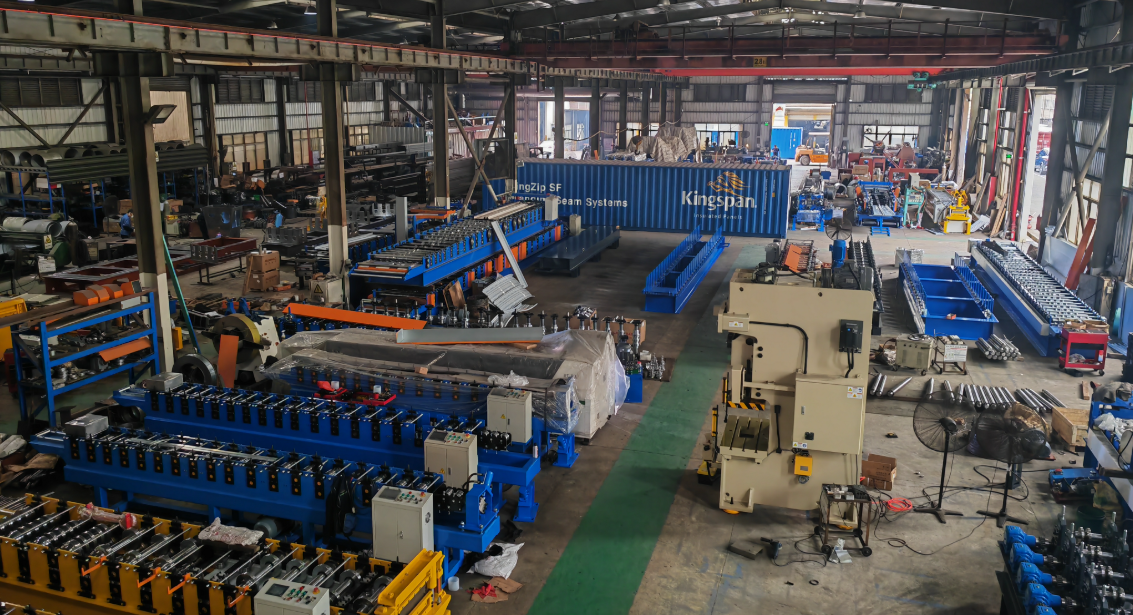
You use metal rollforming to shape long metal strips. The strips go through many rollers. This makes them into exact shapes. A metal roll forming machine does this job fast and well. It makes parts for buildings, cars, and factories. In 2026, these machines help important industries. They also help fast growth around the world.
Year | Market Size (USD) | CAGR (%) | Industries Utilized |
2026 | 1.00 billion | 10.83 | HVAC, automotive, construction, energy |
Key Takeaways
Metal roll forming changes long metal strips into exact shapes. It uses many rollers to do this.
The world market for metal forming machine tools will be $65.92 billion by 2026. It grows by 5.1% every year.
Metal roll forming is great for making long, even parts fast and right. It makes things like roofing panels and car beams.
Important parts of roll forming machines are uncoilers, entry guides, roller stations, and cut-off machines.
Roll forming is quick, accurate, and saves money. It works well for making lots of parts.
The process lets you change designs. You can make special shapes and sizes, not just regular ones.
It helps the environment because it wastes little material. It uses metals like steel that can be recycled.
Automation and digital tools in roll forming machines help make more parts. They also help check quality.
Metal Rollforming Defined
What Is Metal Rollforming?
Metal rollforming shapes metal strips into exact profiles. Long coils of metal move through many rollers. Each roller bends the metal a bit more. The final shape comes after all the rollers. This process happens at room temperature. The metal stays strong and flexible. Metal rollforming is not like stamping or press brake forming. It is best for making long, even parts in large amounts. You see it used for roofing panels and wall studs. It is also used for automotive beams. Metal rollforming is fast and gives the same results every time.
Tip: When you need many metal parts that look the same, metal rollforming is quick and accurate. Other methods are not as fast or exact.
Key Terms and Concepts
You will find many special words in metal rollforming. Knowing these words helps you understand the process. It also helps you talk to experts. Here is a table with important ideas:
Key Term | Definition |
Off Alignment | Tooling design using spacers of different lengths to minimize tool steel usage. |
Straight Roller Alignment | Tooling design with uniform inboard spacer lengths for consistent width. |
Finish Pass | The final pass that sets the product’s exact dimensions. |
Over Bend Pass | Passes that bend material beyond the design to control spring back. |
Roll Stops or Traps | Components that hold metal in place during each pass. |
Flower Pattern | Design concept for the number of passes and forming amount in each pass. |
Roll Splits | Where two rolls join together. |
Form Angle | Method to decide forming passes and bending amount. |
Lift Angle | Degree of bending in each pass. |
Stationary Die | Fixed die needing slack material for operation. |
Flying Die | Die that moves with the material for piercing and cutting. |
Die Stops | Steel blocks inside the die for setup and shut height. |
Die Tracks | Slides for a flying die to move with the material. |
Punches and Buttons | Parts that pierce features into the metal. |
Guide Pins and Bushings | Mechanisms for die set alignment. |
Shut Height | Fully closed position of the die. |
Open Height | Maximum opening of the die. |
Die Clearance | Space between punch and button, based on thickness. |
Die Set | Complete die assembly. |
Die Shoe | Top or bottom part of the die set. |
Gag Die | Die with movable punch backer plate for selective piercing. |
Stock Guides | Keepers for material location. |
Stripper | Removes material from punches after piercing. |
Pick Up | Locator for die positioning. |
Crop or Slugless Cut-Off | Cuts parts without making a slug. |
Blade Style Cut-Off | Cuts parts and creates a slug. |
You use these words when you set up machines. You also use them when you design tools or fix problems.
Origins and Evolution
Metal rollforming started a long time ago. Here is how it changed over time:
Early Origins: Blacksmiths shaped metal by hand with simple tools.
Industrial Revolution: Factories made basic roll forming machines. This made work faster.
Early 20th Century: The first real roll forming machines made roofing and siding.
World War II: People needed more metal parts. Rollforming technology improved.
Post-War Growth: Companies saw that metal rollforming could help many industries.
Computerization and Automation: Computers made rollforming more exact and quicker.
Advancements in Materials: Now, you can use metal rollforming for steel and aluminum.
Modern Roll Forming: Today’s machines make complex shapes for many uses.
You use metal rollforming because of years of new ideas. The process keeps getting better. It lets you design and make new things.
Metal Roll Forming Process
The metal rollforming process changes flat metal into strong, useful shapes. You use this process to make parts for buildings, cars, and many other products. Each step in metal rollforming matters. You get high-quality results when you follow the right steps.
Continuous Bending Steps
You shape metal by moving it through a series of rollers. Each roller bends the metal a little more. You can see how the process works in these steps:
Coil Handling and Staging
You start by choosing the right coil of metal. You load it onto the uncoiler. The coil must match the size and type you need for your project.
Strip Entry and Preparation
The metal strip unwinds from the coil. You guide it into the machine. The entry guide keeps the strip straight and centered.
The Core Forming Stations
The strip moves through many roller stations. Each station bends the metal a bit more. You control the shape by adjusting the rollers. You can make simple or complex profiles.
Component Integration
You can add holes, slots, or notches as the metal moves through the machine. These inline operations save time and make the process efficient.
Cut-Off/Separation
The finished profile reaches the cut-off machine. You cut the metal to the right length. You can use a shear or a flying die for this step.
Outfeed and Handling
The cut pieces move out of the machine. You handle them carefully to keep the shape and surface smooth.
Stacking and Packaging
You stack and package the finished profiles. This keeps them safe and ready for shipping.
Note: You can add many features during the rollforming process. You can punch holes, make slots, or emboss patterns without stopping the line.
Material Feeding
You begin with a large coil of metal. You place it on the uncoiler. The uncoiler feeds the strip into the entry guide. You must keep the strip straight. If the strip is not straight, the final product will not have the right shape.
Roller Stations
You use a series of roller stations to bend the metal. Each station has a pair of rollers. The rollers press and shape the metal. You can have many stations for complex shapes. More stations mean smoother bends and better quality.
Cutting Methods
You need to cut the metal to the right length. You can use two main methods:
Pre-cutting: You cut the metal before it enters the rollers. This gives a clean edge but limits the length.
Post-cutting: You cut the metal after it passes through all the rollers. This method lets you make any length you want.
You can use a shear, a guillotine, or a flying die. The flying die moves with the metal and cuts without stopping the line.
Cold Rolling Explained
You use cold rolling in metal rollforming. This means you shape the metal at room temperature. You do not heat the metal. Cold rolling gives you a smooth, shiny surface. The metal becomes stronger and harder. You get tight tolerances and sharp edges.
Here is a table that shows the difference between hot rolling and cold rolling:
Characteristic | Hot Rolling | Cold Rolling |
Processing Temperature | Above recrystallization temperature | Below recrystallization temperature |
Surface Quality | Rough edges, needs treatment | Smooth, shiny surface |
Material Hardness | Lower strength and hardness | Higher strength and hardness |
Internal Stress | Lower internal stress | Higher internal stress |
Applications | General applications | Precise applications |
You use cold rolling when you need a smooth finish and exact size. Cold rolled steel is up to 20% stronger than hot rolled steel. You see cold rolled parts in cars, appliances, and building materials.
Profile Formation
You can make many shapes with metal rollforming. You can create slotted, angular, cap, Z-shaped, V-shaped, square, and rectangular profiles. You can also make sheet piles, corrugated panels, and tile plates.
You see these profiles in many industries:
Automotive: You use them for car frames, trim, and reinforcements.
Construction: You use them for building facades, roofing, and wall studs.
Aerospace: You use them for aircraft parts and supports.
Renewable Energy: You use them for solar panel frames and wind turbine parts.
Tip: You can add features like holes, notches, or embossing during the rollforming process. This makes your parts ready for use right off the line.
The roll forming process gives you strong, precise, and beautiful metal parts. You can trust metal rollforming to deliver the shapes you need for any project.
Metal Roll Forming Machine Types & Parts
When you learn about metal rollforming, you see many machine types and parts. Each metal roll forming machine does a special job. You pick the right machine for what you want to make. Knowing about these machines and their parts helps you get good results from your rollforming equipment.
Common Machine Types
You find several main metal roll forming machine types in factories and job sites. Each type works best for a different job.
Cantilevered Mill
A cantilevered mill holds rollers on one side only. You use this machine for sheets with different widths. It is good for making wall panels and roof trims. You can change the setup fast, so you save time.
Duplex Mill
A duplex mill has two cantilevered mills on one base. This design lets you shape both edges of the metal strip at once. You use a duplex mill for profiles needing edge forming on both sides, like door frames or window sashes. This machine works faster and keeps profiles even.
Portable Roll Formers
Portable roll formers are easy to move from job to job. You use these machines to make long panels right where you need them. They are great for roofing and siding projects. You save money on shipping and cut panels to the exact length on site.
We can also Classified by forming type as follows: single-pass mills (simple profiles), multi-pass mills (complex profiles); by automation: manual, semi-automatic, and fully automatic (with robotic stacking).”
Tip: Always pick the machine type that fits your project. This helps you get good quality and saves time.
Here is a table showing common rollforming equipment types and what they make:
Type of Roll Forming Machine | Primary Applications |
Coil and Sheet Processing Rollformers | Cut-to-length coil and sheets, metal roofing panels, gutters, downspouts |
Automotive Components Rollforming Equipment | Bumpers, safety doors, framing parts for vehicles, drip rails, flooring |
Structural Framing Rollforming Machinery | Purlins, door and window framing, roof trusses, flooring |
Tube & Pipe Mills/Rollforming | Mechanical tubing, structural tubing, automotive tubing, energy pipes, standard pipes |
Other Rollforming Equipment | Garage doors, metal scaffolding, shelving units, lockers, elevator components, silos, railings |
Essential Components
Every metal roll forming machine has important parts. These parts work together to shape the metal. You need to know what each part does to run your rollforming equipment well.
Uncoiler
The uncoiler holds the coil of metal. It feeds the strip into the machine. You need a steady supply of material for smooth work. Some uncoilers use hydraulic power for faster loading.
Entry Guide
The entry guide keeps the metal strip straight as it goes into the rollers. If the strip is not centered, your product will not have the right shape. You adjust the entry guide to match your material’s width.
Roll Stands/Rollers
Roll stands hold the rollers. The rollers bend and shape the metal. Each station bends the metal a little more. More stations let you make more complex shapes. Rollers are made from hard steel to last longer.
Cut-off Machine
The cut-off machine cuts the finished profile to the right length. You can use a shear, guillotine, or flying die. Some machines use hydraulic tanks to power the cutting system. This makes cutting faster and more exact.
Controller & Automation
The controller lets you set and watch how the metal rollforming machine works. Many machines use a PLC with a touch screen. You can set the length, number of pieces, and speed. Automation helps you make more parts with less work. Safety features like emergency stops and guards keep you safe.
Note: Modern rollforming equipment often has stackers or collectors. These parts gather finished products for easy handling and shipping.
Here is a list of important parts and what they do:
Uncoiler/Decoiler: Feeds the metal coil into the machine.
Feeding and Leveling System: Straightens and prepares the strip.
Roller Stations: Shape the metal into the profile you want.
Drive System: Moves the metal through the machine.
Profile Cutting: Cuts the profile to the right length.
Hydraulic Tanks: Make production faster and automate cutting.
Control System: Lets you set and check machine settings.
Stacker/Collector: Collects finished parts.
Safety Features: Protect you while you work.
You should also look at technical parameters when you pick a metal roll forming machine. Here is a table with important parameters:
Parameter | Description |
Material Characteristics | Type, thickness, width, and strength of the metal you use. |
Production Volume | High-volume jobs need dedicated lines. Low-volume jobs need flexible systems. |
Operational Requirements | Think about floor space, power needs, and how the machine fits with your other equipment. |
Specialized Machines
Some rollforming machines do special jobs. You use these machines for unique shapes or tough materials.
Ridge Cap Roll Forming Machine
A ridge cap roll forming machine makes ridge caps for metal roofs. You use these caps to cover the top of a roof. The machine shapes metal coils into the exact profile you need. It uses rollers and a hydraulic cut-off system. You get clean cuts and smooth edges. The controller lets you set the length and number of pieces. This machine works with steel, aluminum, and coated metal. You can use it for factories, warehouses, and homes.
Louver Roll Forming Machine
A louver roll forming machine makes metal louvers for building walls. Louvers let air in and keep rain out. The machine shapes strong steel or aluminum into special profiles. It uses many roller stations for complex bends. The cut-off system uses strong blades for clean cuts. The controller supports different languages and lets you set all the main settings. You can add a film to protect the surface during production. This machine is great for factories, power stations, and places that need good airflow.
In 2026, you see many special metal rollforming machines for unique jobs. Some companies make machines for heavy-duty steel. Others focus on thin sheets or complex shapes. New technology lets you go from coil to finished product in one line. Multi-profile machines can make several shapes without changing the setup. Custom rollforming equipment helps you meet special needs in construction, automotive, and other industries.
Alert: Always check the technical parameters and automation features before you pick a metal roll forming machine. This helps you get the right machine for your job and lets you work safely and easily.
Applications of Metal Rollforming
Construction Products
You see metal rollforming used a lot in building work. This process shapes metal into strong parts for buildings. You use metal rollforming to make products that last long and look nice. You can pick from many shapes and finishes for your project.
Construction framing
Railings
Siding
Roofing
Windows and doors
You also find rollformed parts in ships, trains, and planes. These products help you build things that stand up to weather and time. You get the same quality every time and fast production with metal rollforming. This method lets you make long, straight pieces that fit together well.
Tip: If you need tough building materials, metal rollforming gives you choices for both strength and style.
Automotive Components
You use metal rollforming to make important car parts. This process helps you make light and strong pieces that keep cars safe. You can shape metal into hard profiles for new car designs.
Metal rollforming makes production quick and easy. You can add holes and notches while making the parts. This saves work and time. Companies spend less money, and people get cars they can trust.
Component Type | Examples |
Door Components | Window channel guides |
Sunroof Components | Metal rails |
Structural Components | Front and rear headers, roof bows, beams, braces |
Bumper Components | Front and rear bumpers |
You use metal rollforming to make chassis parts, body panels, trim, and seat tracks. This method helps you meet safety rules and design needs. You get parts that fit together and last a long time.
Note: Adding holes and notches during production makes car building faster and cheaper.
HVAC and Industrial Uses
You use metal rollforming for HVAC and industrial jobs. This process lets you make lots of exact and custom metal parts. You use metal rollforming to make ducts, louvers, and air conditioner cases. These parts help systems work well and stay strong.
Metal rollforming helps you make both pretty and strong parts. Engineers design custom shapes with smooth finishes. You get parts that work well and look good in cooling and ventilation systems.
Metal rollforming is important for making HVAC parts.
You make ducts, louvers, and cases for air conditioners.
Metal rollforming lets you design custom parts with exact sizes and smooth surfaces.
You see rollformed products in factories, offices, and big buildings. This method helps you make parts fast and with the same quality every time. You can trust metal rollforming to give you the parts you need for big projects.
Alert: If you want good and fast HVAC solutions, metal rollforming gives you the freedom to meet any design need.
Miscellaneous Products
You find metal rollforming in many industries. It is not just for construction, automotive, or HVAC. This process helps make lots of products. These products help people every day and use new technology. You can trust rollforming to make strong and light parts. The parts are exact and fit special needs.
Solar panel mounting systems and frames help build energy projects. These parts must be strong in all kinds of weather.
Container frames and railroad siding help move things. Rollforming makes these parts tough and dependable.
Airplane wing edges and aircraft parts need exact shapes. They also need smooth finishes. Rollforming gives you the right quality for safety.
Panels for farm buildings, animal feeders, and grain silos help farmers. These products last a long time and work well.
Storage racks, shelves, and lockers organize places like factories and schools. Rollforming lets you pick the size and shape you want.
You can use metal rollforming for elevator walls and fencing parts. You can also use it for solar panel supports. The process lets you add slots, holes, or embossing while making the part. This saves time and cuts out extra work.
Tip: If you need parts that fit together just right, rollforming gives you the same results every time.
Metal rollforming is important for making products that must meet strict rules. You can count on rollforming to help with problems in farming, moving things, energy, and storage. As industries get bigger, you will see even more ways to use this smart and fast process.
Benefits of Metal Roll Forming
Efficiency and Productivity
You want your factory to work fast and well. Rollforming helps you do this. It makes parts quickly and does not stop often. The machine keeps running, so you do not waste time. You can make thousands of parts in one day.
Here is how rollforming helps you work better:
Unmatched Efficiency & Speed: Rollforming makes parts nonstop. You do not need to stop between each part. This fast process makes each part cost less.
Exceptional Consistency & Precision: Every part looks the same. You do not worry about mistakes or wasting metal.
Material Conservation & Reduced Waste: Rollforming uses almost all the metal. You only lose a little at the start and end. Other ways, like stamping, waste more metal.
When you pick rollforming, your factory works faster and better. You save time, use less metal, and spend less money.
Precision and Consistency
You need every part to fit just right. Rollforming helps you get exact and even parts. The machine, rollers, and controls all work together. They help you get the same results every time.
Key Element | Contribution to Precision and Consistency |
Roll Tooling & Roller Stations | Shapes the metal with accuracy and smooth flow |
Frame & Structural Components | Keeps the machine stable and reduces vibration |
Drive System & Motor Power | Controls speed and energy for even results |
Cutting & Punching Mechanism | Makes sure holes and cuts are always in the right spot |
Control System & Automation | Uses PLC and sensors for real-time adjustments |
New tools help you watch the process as it happens. Special sensors check for problems right away. You can fix things before they get worse. This means you get good parts that meet tough rules every time.
With rollforming, you know each part will match your plan. You do not have to worry about mistakes or bad shapes.
Cost-Effectiveness
You want to spend less money making things. Rollforming helps you save money. The process is fast and repeats the same steps. You also waste less metal, so you buy less raw material.
Advantage | Description |
Efficiency | Rollforming repeats steps fast, saving you time. |
Reduced Scrap Rates | You only lose a tiny bit of metal, much less than other ways. |
Combined Operations | You can punch, cut, and shape in one line, so you need fewer workers and machines. |
Rollforming is best when you need to make lots of parts. You save more money as you make more.
The tools may cost more at first, but you save money later when you make many parts.
Compared to stamping or extrusion, rollforming saves you time and money.
When you use rollforming, you get more parts for your money. Your factory works better and wastes less.
Design Flexibility
You want your products to be different from others. Metal roll forming lets you make special shapes and sizes. You do not have to use only basic profiles. You can design parts that fit your ideas and needs.
With metal roll forming, you can:
Make custom stud and track shapes for special jobs.
Create closed tubular profiles for more strength and style.
Use fewer joints and waste less metal, even with hard designs.
You can make framing members as long as you want. The machine cuts each piece very accurately. You do not need to buy custom shapes from other companies. You control the whole process from start to finish.
Here is a table that shows how metal roll forming helps you with design flexibility:
Advantage | Description |
Complex Profiles | You can make tricky designs with bends close together. |
Custom Lengths | You can make framing members any length with exact cuts. |
Supplier Independence | You can make custom shapes without using only standard profiles. |
You get a lot of freedom in design. You are not stuck with what others sell. You can make special shapes for unique jobs. This helps you do more projects and make more customers happy.
Tip: Use metal roll forming to turn your creative ideas into real products. You can shape metal into almost any profile you want.
Sustainability
You care about the earth and want to help the future. Metal roll forming helps you use every bit of material. The process uses steel, which you can recycle again and again. Steel does not lose its strength when recycled. This helps make a circular economy.
Rollforming also helps you waste less. The machines cut steel to the exact size you need. You waste less than 1% of the metal as scraps. This means you use almost all the metal you buy.
You also get strong and long-lasting products. Steel framing does not get ruined by bugs or rot. Your buildings last longer and need fewer fixes. This means you use fewer new materials and save resources.
Here are some ways metal roll forming helps the environment:
Steel is 100% recyclable and stays strong after recycling.
Rollforming makes exact parts, so you waste less metal.
Strong steel framing means buildings last longer and need fewer repairs.
When you pick metal roll forming, you help the planet. You use resources smartly and make products that last a long time.
Choosing a Metal Roll Forming Machine
Picking the right metal roll forming machine in 2026 is important for your business. You need to make sure the machine fits your goals and the materials you use. Think about what you want to do now and in the future. This section will help you with the main steps.
Assessing Production Needs
First, think about what you want to make and how many parts you need. Look at the types of metal you will use and the shapes you want. Think about how fast you want to make parts. In 2026, new machines can work with strong alloys and light metals. Some machines can cut and weld in one line. This saves time and makes work easier.
Here is a table to help you look at key things:
Factor | Description |
Advancements in technology | Hybrid systems combine multiple forming processes. |
Material requirements | Machines now form high-strength, lightweight alloys. |
Market demands | Focus on green materials and eco-friendly production. |
Automation | Robotics handle material and post-processing tasks. |
Quality control | AI-Powered Quality Inspection |
Sustainability | Scrap reduction and sustainable material use are priorities. |
Versatility | Machines adapt to many profiles and jobs. |
Software | IoT,Real-Time Data Monitoring ,Virtual prototyping and process simulation improve planning. |
Laser technologies | Integrated laser cutting and welding boost efficiency. |
Tip: Pick a machine that fits what you need now. But also think about what you might need later.
Evaluating Features and Automation
Next, look at the features that matter most for your work. Automation is very important in new roll forming machines. You want a machine that works with your other systems. Automation helps you save money and make parts faster. Advanced roll forming machines in 2026 integrate IIoT, real-time data analytics, and AI-driven vision systems for predictive maintenance and 100% quality inspection.”
Use this table to compare important features:
Feature/Option | Description |
Integration Capabilities | Connects with your current systems for better workflow. |
Automation Benefits | Streamlines tasks and boosts output. |
Precision and Accuracy | Delivers uniform, high-quality parts every time. |
Flexibility and Adaptability | Lets you switch setups quickly for different jobs. |
Quality Control | Automated checks catch problems right away. |
Cost Considerations | Look at long-term savings, not just the price tag. |
Maintenance and Support | Good support keeps your machine running smoothly. |
Note: Pick a machine with good automation and support. This helps you keep up with changes in the market.
Scalability and Support
Think about how your business could get bigger. You want a machine that can do more work if you get more orders. Scalability means you can add new parts or make more products without buying a new machine. Good support from the company is also very important. Support helps you fix problems fast and keeps your machine working well.
Scalability helps you meet new needs and grow your business.
Vendor support helps your machine work better and last longer.
Companies that care about these things do well when things change.
When you pick a metal roll forming machine, choose one that can grow with your business and comes with expert help. This way, you protect your money and help your business do well for a long time.
Trends in Metal Rollforming for 2026
Automation and Digital Integration
Automation is changing how people use metal rollforming machines. Companies now use smart automation to make tricky parts with steady quality. Youdeli’s way of making things shows that better planning gives better results. Today’s machines can do more jobs and switch tasks fast. You control them with digital systems that help you work faster and more accurately.
Here is a table showing the main automation trends:
Trend | Description |
Advancements in Automation | Machines work faster and smarter, raising productivity. |
Digital Controls | You use digital panels to set up jobs and track progress. |
Real-time Monitoring | Sensors watch the process and help you fix problems before they stop production. |
Predictive Maintenance | Systems tell you when to service machines, so you avoid breakdowns and keep working. |
New high-precision roll forming machines can be up to 25% more efficient than old ones. This is easy to see in roofing jobs. Faster machines help you finish work sooner and make buildings better.
Tip: Using digital controls and real-time monitoring helps you stop problems before they get big. This means less waiting and better results.
Advanced Materials and Sustainability
Now, you use advanced materials like high-strength steel and aluminum alloys. These metals help you make lighter and stronger products. More people want custom shapes and sizes. Machines can handle these new materials, so you can keep your tools working longer and meet what customers want.
Caring for the planet is more important now. You follow ESG rules to make your work better for the earth. You try to waste less and use less energy. This helps you reach climate goals and get customers who care about the environment.
People who run metal rollforming machines focus on saving energy and making less pollution. Higher energy prices make you look for ways to use less power. Companies using new forming technology do better and get more jobs.
You help the earth when you pick machines that use less energy and make less waste.
Market Growth and Industry Outlook
The metal forming market gets bigger every year. The market will grow from USD 222.21 billion in 2025 to USD 233.64 billion in 2026. This is a growth rate of 5.96% each year. By 2032, experts think the market will reach USD 333.45 billion.
More companies are buying new machines.
There is more need for metal rollformed products in building, car, and energy jobs.
You find more chances to grow as the market gets bigger.
Note: If you learn about new trends and buy new technology, your business will stay strong and ready for the future.
In 2026, metal rollforming machines help make new things. These machines help many industries and protect the planet. You can use them with many metals and make special shapes. New technology like automation, AI, and IoT makes work faster and better.
Metal rollforming machines help make things in a green way.
They work with new metals and tricky shapes.
Smart controls and automation make jobs simple.
Trend or Feature | Impact on Your Choice in 2026 |
AI and IoT integration | Watch machines live and fix problems early |
Energy-efficient motors | Save money and help the environment |
Advanced materials and processes | Give you more choices for your work |
Pick a metal roll forming machine that is new and flexible. In 2026, these machines help you do better work, faster, and help the earth too.
FAQ
What metals can you use in a roll forming machine?
You can use steel, aluminum, copper, and stainless steel. Most machines work with coils that are 0.3 mm to 0.8 mm thick. Always check your machine’s guide for the best results.
How do you maintain a metal roll forming machine?
You need to clean the rollers often. Check if everything lines up right. Oil the moving parts so they work well. Look at the control system and safety parts every week. Have a professional check the machine once a year.
Can you make custom profiles with roll forming?
Yes, you can make special shapes with custom rollers. New machines let you change shapes fast. This helps you do different projects easily.
How fast does a roll forming machine work?
Most machines move at 10 to 15 meters each minute. Some new machines go even faster. Speed changes with the metal, shape, and how much automation you use.
What safety features should you look for?
You should have emergency stops and safety guards. Automatic shut-off systems are important too. Sensors help stop accidents. Always follow safety rules when using the machine.
Is roll forming better than stamping for long parts?
Yes, roll forming is best for long, straight shapes. You waste less metal and get more exact parts. Stamping is better for short or tricky shapes but makes more scrap.
How does automation help in roll forming?
Automation lets you set the length, number, and speed on a screen. You get the same quality every time and make parts faster. Automated machines also help you spend less on workers.

 日本語
日本語 한국어
한국어 ไทย
ไทย 繁體中文
繁體中文 العربية
 فارسی
فارسی Français
 Русский
 Español
 Português
 English
 Deutsch
 italiano
 Nederlands
 Tiếng Việt
 Polski
 Türkçe
 አማርኛ
አማርኛ ພາສາລາວ
 ភាសាខ្មែរ
 Bahasa Melayu
 ဗမာစာ
ဗမာစာ தமிழ்
தமிழ் Filipino
 Bahasa Indonesia
 magyar
 Română
 Čeština
 Монгол
 қазақ
қазақ Српски
 हिन्दी
 Kiswahili
 Slovenčina
 Slovenščina
 Norsk
Norsk Svenska
 українська
 Ελληνικά
 Suomi
Suomi Հայերեն
 עברית
עברית Latine
 Dansk
Dansk اردو
اردو Shqip
Shqip বাংলা
বাংলা Hrvatski
 Afrikaans
 Gaeilge
 Eesti keel
 Māori
Māori සිංහල
සිංහල नेपाली
 Oʻzbekcha
 latviešu
 অসমীয়া
 Беларуская мова
 Esperanto
 मराठी
मराठी پښتو
پښتو


