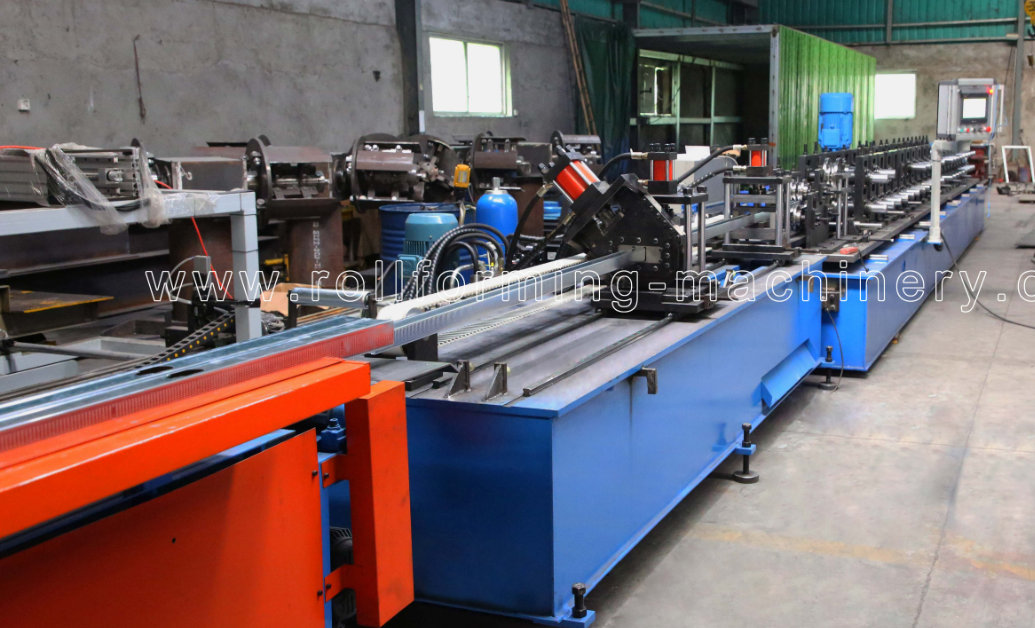
Cold roll forming technology shapes metal strips into continuous profiles through progressive forming at room temperature, with precise control over springback to ensure dimensional accuracy. You see this technology used when car and building companies need things made very accurately and quickly. Cold roll forming is special because it makes parts with tighter measurements and smoother surfaces than hot rolling. Many companies pick cold roll forming because it works faster, saves time, makes accurate parts, keeps close measurements, and gives more strength and hardness.
Metric | Value |
Market Valuation (2025) | USD 12.93 billion |
Projected CAGR (2026-2033) | 9.68% |
Projected Market Size (2033) | USD 22.51 billion |
This new method uses a cold roll forming machine to make strong parts for many industries. The growing world market shows that cold roll forming is very important in making things today.
Key Takeaways
Cold roll forming technology bends metal strips into exact shapes at room temperature. It makes parts quickly and with very accurate sizes.
This method makes the metal stronger and gives it a smoother surface. It is great for car and building industries.
Cold roll forming machines do the work automatically. This means less workers are needed and every part is made the same way.
The technology uses less material and energy. This helps protect the environment when making things.
Cold roll forming machines need regular care to work well and last longer. This keeps production running smoothly.
Cold roll forming machine operation
When you use a cold roll forming machine, you work with a system that shapes steel into strong, accurate parts. This machine uses a series of steps and special equipment to make sure every piece meets your needs. Let’s look at the main parts and how the process works.
Key machine components
You will find several important parts in every cold roll forming machine. Each one has a special job:
Decoiler
The decoiler holds a large coil of steel.
It feeds the steel strip into the machine at a steady speed.
You can control the tension to keep the strip smooth and even.
Feeding table
Roll stands
Roll stands are the heart of the cold roll forming machine.
Each stand has rollers that slowly bend the steel into the shape you want.
The rollers work in steps, so the steel changes shape a little at a time.
Cut-off press
The cut-off press cuts the finished steel profile to the right length.
It works while the machine keeps moving, so you get fast, nonstop production.
Control system
The control system lets you set up and watch over the whole machine.
You can adjust speed, check measurements, and make sure everything runs smoothly.
Modern control systems use software to help you get the best results.
Tip: Good control systems help you avoid mistakes and keep every part the same size.
Process workflow
You can follow these steps to see how a cold roll forming machine works from start to finish:
Material loading and alignment
You load a coil of steel onto the decoiler. The feeding table and guides make sure the strip goes in straight.
Straightening and pre-processing
The steel passes through rollers that flatten it. This step removes any bends or twists from the coil.
Progressive roll forming
The steel moves through a series of roll stands. Each set of rollers bends the steel a little more. This gradual process keeps the steel strong and prevents cracks.
Cutting to length
The cut-off press slices the steel profile to the size you need. The machine does this while everything keeps moving, so you get high-speed results.
Product collection and inspection
The finished pieces move to a conveyor or stacker. Here, you can check each part for size and shape before sending it out.
Note: Cold roll forming uses no heat, so you avoid warping or changing the steel’s properties.
Dimensional accuracy
You want every part from your cold roll forming machine to be the right size. Here’s how you make sure of that:
Roller design and calibration
You use custom-designed rollers for each shape.
Regular calibration keeps the rollers in the right position.
This step helps you get the same size every time.
Material properties and thickness control
You start with high-quality steel.
The thickness and hardness of the steel affect the final size.
Using the right material helps you avoid problems with strength or fit.
Tension and speed regulation
You control the speed of the machine and the tension on the steel strip.
If you go too fast, you might lose accuracy.
Keeping the right speed and tension gives you better results.
Automated measurement and feedback systems
Modern machines use sensors and software to check the size of each part as it is made.
These systems can adjust the machine in real time.
You get tight tolerances, sometimes as close as ±0.01 mm, which is important for industries like automotive.
Remember: Automation and digital controls help you make more accurate parts with less effort.
You can choose small-scale roll forming machines for simple jobs or industrial-level machines for big projects. Small-scale roll forming machines work well for custom or short runs. Industrial-level machines handle large volumes and complex shapes. Both types of equipment use the same basic process, but industrial-level machines offer more power and speed.
If you want to keep your cold roll forming machine working well, you should clean the rollers and guides every day. You also need to check oil levels, air pressure, and safety stops. Regular checks and maintenance help your equipment last longer and keep your production running smoothly.
Benefits of cold roll forming technology
When you use cold roll forming technology, you get many good things for your factory. This way helps you make strong and exact products. It also helps the environment. Let’s look at the main benefits and some things to think about.
Efficiency and productivity
High-speed continuous production
Cold roll forming lets you make parts very fast. The machine shapes steel coils into finished pieces without stopping. You can make a lot of products quickly. Many companies use this method when they need lots of parts fast.
Reduced labor requirements
Cold roll forming machines work by themselves. You do not need many people to run them. Automation means fewer mistakes. Companies save money on workers and can do other jobs.
Consistent output quality
You get the same good quality every time. The machine uses special rollers and controls. Each part is the same size and shape. Companies trust this process for cars and buildings.
Tip: Good quality means you do not have to fix mistakes. Customers are happy when they get the right parts.
Material strength and versatility
Enhanced mechanical properties
Cold roll forming makes steel stronger and harder. The process changes the inside of the metal. Cold-rolled steel is stronger than hot-rolled steel. You also get a smooth surface. This is important for parts that need to look nice and fit well.
Cold rolling makes steel stronger and harder.
It gives a smooth surface.
These features help when you need exact sizes and good looks.
"Cold rolling makes the surface better and makes steel stronger and harder."
Compatibility with various metals
You can use many kinds of metal in cold roll forming. Cold-rolled steel is strong and accurate. Mild steel bends easily and does not crack. Aluminum is light and bends well. You can pick the best metal for your product.
Cold-rolled steel: Very accurate, strong, hard, smooth surface.
Mild steel: Bends easily, does not crack.
Aluminum: Bends easily, good for cold forming.
Customizable profiles and shapes
You can make many shapes and sizes with cold roll forming. The rollers can be made for simple or hard shapes. Companies use this to make things for cars and buildings. You can even make special strong steel shapes for tough jobs.
Environmental impact
Minimal material waste
Cold roll forming helps you use almost all your metal. The process shapes the metal without cutting away much. You waste less material. Companies save money and use expensive metals better.
Cold forming makes parts fast and wastes little metal.
It makes stronger products because of work hardening.
You throw away less metal than with old ways of making parts.
Energy-efficient process
Cold roll forming saves energy because it works at room temperature. You do not need to heat the steel. This uses less electricity and fuel. You spend less money and help the planet.
Cold forming uses less energy because it does not need heat. This saves a lot of energy. Cold forming also wastes less metal and makes parts more exact. This makes it better than other ways to shape metal.
Recyclability of materials
Most metals used in cold roll forming can be recycled. Companies collect and reuse leftover metal. This helps the environment and saves resources. Cold-formed steel lasts a long time and can be recycled.
Note: Cold roll forming in steel making is good for the environment. It uses less energy because it works at room temperature. Hot rolling needs a lot of heat and energy. Cold roll forming uses less energy and makes less pollution.
Limitations
Material thickness constraints
You need to think about how thick your metal is. Cold roll forming machines can process metal strips from 0.1 mm (ultra-thin) to 10 mm (thick), depending on the machine’s design and material properties.Thicker metal needs stronger machines. Very thin metal needs special care.
Complexity of profile design
Some shapes are easy to make. Simple shapes like C and U channels need fewer steps. Harder shapes need more steps. Tall shapes may need many stations. You must plan your design to get good results.
Initial equipment investment
Cold roll forming machines cost more at first than some other machines. You pay for the machine and special rollers. But if you make a lot of parts, you save money later. Companies find the cost is worth it for big jobs.
Limitation Description |
Machines and tools cost a lot at first |
It takes time to make special rollers |
Not good for making only a few parts |
Machine size limits what you can make |
You need skill to design rollers right |
Metal can get scratched during forming |
Machines can be noisy and need quieting |
You need metal in coil form and set widths |
Remember: If you plan well and use the right machines, you can solve most problems in cold roll forming.
If you know these benefits and limits, you can choose if cold roll forming is right for you. Companies that use this way get fast work, strong and flexible products, and help the environment.
Cold roll forming applications
Cold roll forming technology helps many industries make products. Widely used in automotive (e.g., bumper beams, door frames), construction (e.g., C/Z purlins, roof panels), and machinery (e.g., guide rails, structural frames). Let’s see how cold roll forming is used in cars, construction, and factories.
Automotive industry
Cold roll forming is used to make car parts every day. This technology helps you make parts that are light, strong, and exact. You can shape steel into many forms for cars and trucks.
Structural components (e.g., bumpers, door beams, chassis rails)
Cold roll forming makes strong parts for vehicles. These parts include bumpers, door beams, and chassis rails. You need these parts to keep cars safe and strong. You can make body panels that are light and last a long time. You also make engine parts that fit well and work for a long time. Suspension parts are strong and do not break easily. Chassis parts are tough and hold the car together. You can even make special car parts for different needs.
Safety and reinforcement parts (e.g., side impact beams, seat tracks)
Every car needs safety parts. Cold roll forming helps you make side impact beams and seat tracks. These parts keep people safe in crashes and make the car frame stronger.
Lightweight solutions for electric vehicles
Electric cars need to be light and use less energy. Cold roll forming lets you use strong steel that does not weigh much. This helps electric cars go farther on less power.
Compliance with automotive standards and tolerances
Car companies have strict rules for parts. Cold roll formed parts have smooth surfaces and exact sizes. The table below shows how these rules match what cars need.
Tip: Cold roll forming helps you follow safety and quality rules when making cars.
Construction sector
Cold roll forming is used in building to make strong parts. This process shapes steel for homes, offices, and factories.
Building frameworks (e.g., purlins, girts, studs)
Steel frames help hold up buildings. Cold roll forming makes purlins, girts, and studs. These parts support walls and roofs. You can also make panels, decking, roof trusses, and steel walls. There are special machines for making shelves, downspouts, and double layers.
Roofing and cladding profiles
Cold roll forming makes roofing panels and cladding. These steel parts protect buildings from rain and wind. They also make buildings stronger.
Infrastructure elements (e.g., guardrails, cable trays)
Roads and bridges need guardrails and cable trays. Cold roll forming makes these parts fast and with little waste. You can use different metals like stainless steel or aluminum for special jobs.
Fire resistance and corrosion protection requirements
You want buildings to last a long time. Cold-formed steel does not shrink or split. It does not warp, get eaten by bugs, or burn. Zinc coating on steel keeps it from rusting for many years. Sometimes you need extra fire protection. You can add gypsum board or special coatings to help stop fire. These steps help you follow building rules.
"Gypsum sheathing is put on CFS members for fire safety. CFS walls and floors can stop fire from spreading because they do not burn."
Cold-formed steel frames are thinner than hot-rolled steel, so they feel fire more. But they do not burn and are safer than wood frames.
General manufacturing
Cold roll forming is used to make many things in factories. This process helps you make machine parts, storage, and appliances.
Storage and shelving systems
Warehouses and stores need strong shelves and racks. Cold roll forming makes these products with steel that lasts a long time. You can also make bridges, storage racks, grain bins, train cars, towers, and even firearms.
Electrical enclosures and panels
Cold roll forming makes electrical boxes and panels. These steel parts keep wires and equipment safe in homes and factories.
Custom profiles for machinery and equipment
You can make special shapes for machines and tools. Cold roll forming lets you create custom profiles for many jobs. You can use this for fridges, washing machines, dryers, dishwashers, water tanks, fans, and microwaves.
Adaptability to diverse production volumes and specifications
You can change your designs and how much you make easily. Cold roll forming uses strong steel and wastes little metal. You can make hard shapes with high accuracy. This technology works with many materials, so you can make many different parts for many industries. You save steel and money by using material well. You can make hard shapes to meet safety and design rules. Cold roll forming is flexible and works for many products.
Note: Cold roll forming helps you make products for building, cars, and factories. This process gives you strong, exact, and reliable steel parts for many uses.
Cold roll forming technology is changing how products are made. It helps you make strong and exact parts. This process makes work faster and better. New tools like robots and AI help a lot. Robots move and cut metal coils by themselves. AI uses sensors to check machines and find problems. These tools make work safer and help machines last longer. The market for cold roll forming keeps getting bigger. You will see more smart machines soon.
Innovation Type | Description | Benefits |
Robotics | Robots move and cut coils | More parts, safer jobs |
AI Maintenance | Sensors check machines | Fewer breaks, longer use |
Cold roll forming will keep helping factories in the future.
FAQ
What metals can you use in cold roll forming?
You can use steel, aluminum, and copper alloys. Each metal gives you different strength and flexibility. You pick the metal based on your product needs.
How does cold roll forming improve material strength?
Cold roll forming bends metal at room temperature. This process makes the metal harder and stronger. You get better durability without adding heat.
Can you make custom shapes with cold roll forming?
Yes, you can design rollers for almost any shape. You create simple or complex profiles for many industries. Custom shapes help you meet special project needs.
Is cold roll forming energy efficient?
Cold roll forming uses less energy because it works without heat. You save power and lower costs. This process helps you protect the environment.
How do you check quality in cold roll forming?
You use sensors and control systems to measure each part. Automated checks help you catch mistakes early. You get consistent size and shape every time.

 日本語
日本語 한국어
한국어 ไทย
ไทย 繁體中文
繁體中文 العربية
 فارسی
فارسی Français
 Русский
 Español
 Português
 English
 Deutsch
 italiano
 Nederlands
 Tiếng Việt
 Polski
 Türkçe
 አማርኛ
አማርኛ ພາສາລາວ
 ភាសាខ្មែរ
 Bahasa Melayu
 ဗမာစာ
ဗမာစာ தமிழ்
தமிழ் Filipino
 Bahasa Indonesia
 magyar
 Română
 Čeština
 Монгол
 қазақ
қазақ Српски
 हिन्दी
 Kiswahili
 Slovenčina
 Slovenščina
 Norsk
Norsk Svenska
 українська
 Ελληνικά
 Suomi
Suomi Հայերեն
 עברית
עברית Latine
 Dansk
Dansk اردو
اردو Shqip
Shqip বাংলা
বাংলা Hrvatski
 Afrikaans
 Gaeilge
 Eesti keel
 Māori
Māori සිංහල
සිංහල नेपाली
 Oʻzbekcha
 latviešu
 অসমীয়া
 Беларуская мова
 Esperanto
 मराठी
मराठी پښتو
پښتو


