You can find many kinds of gutter machines. Some types are K-Style, Fascia, Box, Half-Round, and Combo. It is important to pick the right gutter machine for your job. The right machine makes installation faster. It also helps gutters last longer. Seamless gutters are good for commercial jobs. They stop leaks and protect buildings. You need a gutter roll forming machine that fits your material and size. For example, the BMS Spanish Gutter Roll Forming Machine has smart features. These features help it work better.
Picking the right gutter system makes work easier.
Strong materials stop water from causing damage.
Proper sizing keeps gutters working in big storms.
Key Takeaways
Types of Gutter Machines
K-Style Gutter Machine
Profiles and Uses
Most houses have K-Style gutters. These machines bend metal to make a shape like crown molding. K-Style gutter machines are popular because they make seamless gutters. These gutters look nice on both old and new homes. You can use them for homes or businesses. If you want gutters that work well and look good, this type is a good pick.
Here’s a simple chart to show how K-Style gutter machines compare to others:
Gutter Machine Type | Notable Features | Gutter Styles/Profiles | Starting Price |
K-Style | 360° rotatable reel stands, electric motor options, forward-pulling manual shear | 5” and 6” with bottom bead, alcoa hook, straight back | Starting at $8,000 |
Box | Runs aluminum or steel, hydraulic drive, gutter recognition safety system | 7” box gutter with hook, straight back | Starting at $62,000 |
Fascia | Handles heavy rainfall, modern design | Various profiles including Half Round | N/A |
K-Style gutter machines do not need much care. You just need to clean and oil them sometimes.
Common Sizes
You can choose from different gutter sizes with a K-Style gutter machine. The most common sizes are 5-inch and 6-inch. These sizes are good for houses and small stores. Big buildings may need 7-inch gutters for more water. K-Style machines can use different coil widths and make gutters fast.
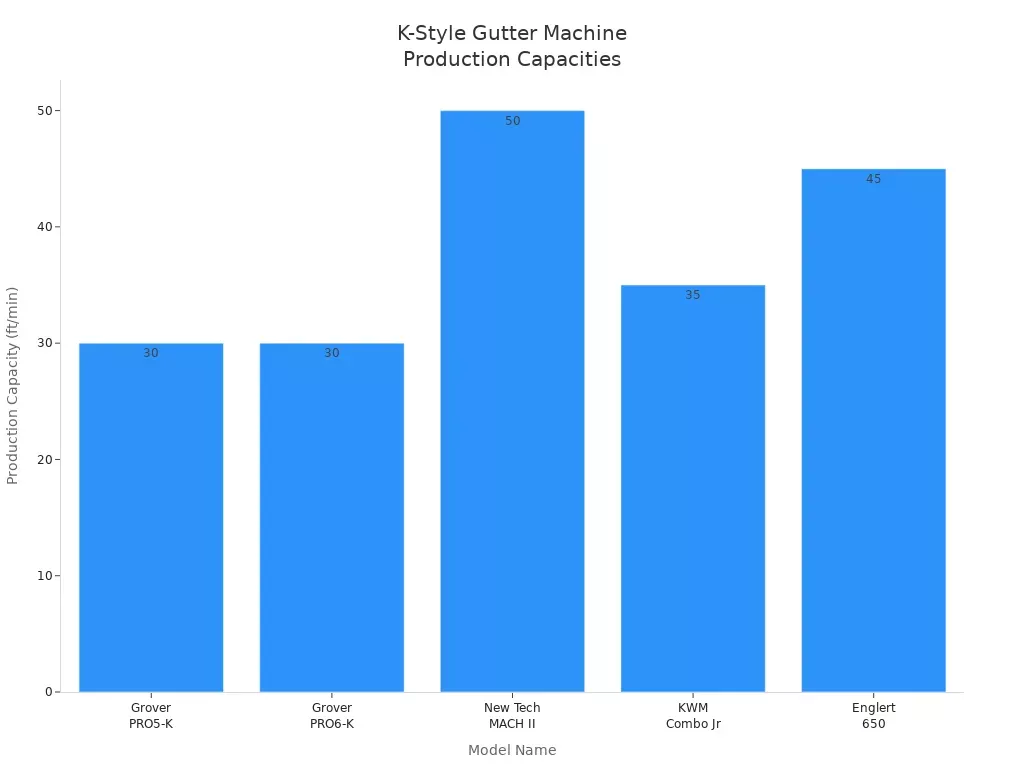
Look at this chart to see how fast some K-Style gutter machines work:
If you want to make sectional gutters, these machines can cut pieces to the right length. They also make seamless gutters, which helps stop leaks.
Fascia Gutter Machine
Profile Features
Fascia gutter machines make gutters that sit flat against the fascia board. This gives your roof a neat and modern look. These gutters can handle a lot of rain. They are good for homes with big roofs or places with lots of storms. Fascia gutters look nice and match new house styles.
Tip: Fascia gutters are strong and look good, but they are harder to clean than other types.
Here are some good and bad things about them:
Application Areas
Fascia gutter machines are used in places with lots of rain and trees. For example, in Oregon, gutters are important because it rains a lot. Fascia gutters help control water and keep out leaves. If you live where it rains a lot, fascia gutters are a smart choice.
Box Gutter Machine
Commercial Uses
Box gutter machines are made for big jobs. You see them on big buildings, warehouses, and factories. These machines make strong gutters that hold a lot of water. Builders like box gutter machines because they follow building rules.
Here’s a table to show why box gutter machines are good for big projects:
Key Benefits | Description |
Specification Compliance | Premium materials meet architectural requirements. |
Heavy-Duty Capability | Equipment designed for large-format commercial profiles. |
Extended Lengths | Fewer seams lead to better performance and a more professional appearance. |
Project Management | Coordination support with general contractors and architects. |
Your Brand | White-label service helps maintain customer relationships. |
Competitive Edge | Ability to win bids that other contractors cannot fulfill. |
Size Options
Box gutter machines are very flexible. You can make custom gutter sizes for big buildings. These machines use different materials like aluminum and steel. They make gutters that fit just right. If you need special gutters, box gutter machines let you make what you need.
The gutter roll forming machine is made for custom sizes.
It works for many uses, like factories.
It can use different materials and designs.
You can pick gutter sizes that fit your project, whether you need wide gutters for a factory or regular ones for a store.
Half-Round Gutter Machine
Aesthetic and Historical Use
Half-round gutter machines help make gutters that look classic. These gutters are seen on old homes and historic buildings. They are also used in places with European-style architecture. The rounded shape gives a fancy look. It keeps your home looking real and true to its history. Many people use half-round gutters for restoration projects. They match the original style and keep the building’s history alive.
Here are some reasons to pick half-round gutter machines:
They copy old styles for historic buildings and keep the building’s character.
The smooth, rounded shape looks nice and fits fancy homes.
Water flows better, so clogs are less likely.
The semi-circular shape lets water move fast, like in nature.
These gutters have a period-correct look, good for old renovations.
The smooth inside stops rust and keeps water moving well.
Debris slides out easily, so cleaning is simple.
Half-round gutter machines help you make seamless gutters that look great and work well. You can also make sectional gutters for special projects. If you want your home to stand out or need to fix an old building, this gutter machine is a smart choice.
Material Compatibility
Half-round gutter machines can use different materials. Aluminum is common for homes and businesses. Copper is used for big estates and fancy projects. It lasts a long time and gets a special color as it ages. Galvanized steel and pre-painted steel work for many styles and resist rust. Zinc is used for projects that need extra strength.
Here is a quick chart of material options:
Material Type | Application Context |
Aluminum | Common for homes and businesses |
Copper | Used for fancy projects |
Pre-painted steel | Works for many styles |
Zinc | Used for strong and special projects |
You need to pick a gutter machine that matches your main material. For example, a machine made for aluminum will not work for copper. Material compatibility is important for getting the best results and making sure your gutters last.
Combo Gutter Machine
Versatility in Profiles
Combo gutter machines are flexible. You can make different gutter sizes and shapes with one machine. This is good if you work on many types of projects. You do not need a separate machine for each style. Combo gutter machines let you switch between K-Style, box, and half-round shapes easily.
Here are some features that make combo gutter machines popular:
Feature | Description |
Two 360° rotatable reel stands | Makes coil loading fast and easy |
Electric motor | Gives reliable power for smooth operation |
Forward pulling, easy cut shear | Helps you cut materials accurately |
Power interruption safety circuit | Keeps you safe while working |
Easy lift reels | Makes handling and setup simple |
You can make seamless gutters or sectional gutters in different shapes. This flexibility means you can take more jobs and meet your clients’ needs.
Ideal Users
If you run a small business or work as a contractor, combo gutter machines help you grow. You can offer more services and install more gutter sizes. This makes your customers happy and helps you stand out. You save money by buying raw materials instead of finished products. Adding gutter installation to your services can help you earn more.
Here are reasons why combo gutter machines are a smart buy:
You offer more services, so customers are happier.
You save money by using raw materials.
You earn more by adding gutter installation to your business.
Combo gutter machines give you the flexibility to handle any project. You can work on homes, businesses, or custom designs. If you want to grow your business and meet more needs, this gutter machine is a great choice.
Gutter Roll Forming Machine Profiles
When you start looking at gutter machines, you’ll notice there are many gutter profiles to choose from. Picking the right profile makes your project easier and helps your gutters last longer. Let’s break down the options so you can make the best choice for your home or business.
Standard Profiles
Most gutter machines produce standard profiles that fit common needs. You’ll see these shapes on many homes and commercial buildings. Here’s a quick table showing the most popular gutter profiles and their typical gutter sizes:
Gutter Profile Type | Dimensions |
K-style | 5-inch, 6-inch |
Half-round | 5-inch, 6-inch |
Box gutter | Customizable sizes |
K-style gutters work well for houses and small shops. Half-round gutters look great on historic homes and fancy buildings. Box gutters are perfect for big projects like warehouses. You can pick the size that fits your roof and water needs.
Specialty and Custom Profiles
Sometimes you need something special. Specialty and custom gutter profiles help you match unique architecture or handle tough weather. These profiles can cost more and take longer to install, but they give you exactly what you want.
Larger or custom gutter styles use more materials and labor, so expenses go up.
Custom fascia gutters blend into the roofline. They look high-end but need careful installation.
Each gutter style changes how much water it can handle, how it looks, and how hard it is to install.
The total cost depends on materials, the shape of your building, and the work needed.
If you want your gutters to stand out or fit a tricky roof, custom profiles are the way to go. Just remember, you’ll need skilled installers and a gutter machine that can handle the job.
Profile Selection Tips
Choosing the right gutter profile isn’t just about looks. You need to think about your climate and building type. Here are some tips to help you decide:
Tip: Match your gutter profile to your local weather and building needs for the best results.
Rainy regions: Use aluminum or copper gutters in larger sizes to handle heavy water flow.
Snowy areas: Pick strong materials like steel. Heated systems help manage ice weight.
Hot climates: Go with UV-resistant vinyl or aluminum. These won’t warp in the sun.
Coastal environments: Choose corrosion-resistant options like aluminum with protective coatings to fight salt air.
You should also consider how easy it is to clean and maintain your gutters. Some profiles make cleaning simple, while others need more attention. Think about your budget, the look you want, and how much water your roof collects. If you’re not sure, ask a pro or check with the gutter machine manufacturer.
You have lots of choices when it comes to gutter machines and gutter profiles. Take your time, look at your options, and pick what works best for your project.
Essential Gutter Machine Equipment
Coil Spools
When you start making gutters, you need a way to hold and feed the metal coil into your machine. That’s where coil spools come in. Think of a coil spool like a big reel that holds your gutter material. You load the coil onto the spool, and it keeps the metal steady as it feeds into the gutter machine. This helps you avoid tangles and keeps your work area neat.
Coil spools make it easy to switch between different colors or materials. If you want to change from aluminum to copper, just swap out the spool. This saves you time and keeps your project moving. Many pros keep extra spools on hand so they can switch gutter profiles or colors fast. You’ll find that having a few spools ready makes your job much smoother.
Tip: Always check that your coil is loaded straight on the spool. This helps prevent jams and keeps your gutters looking sharp.
Run Out Stands
After your gutter machine shapes the metal, the finished gutter needs support as it comes out. That’s the job of run out stands. These stands act like extra hands, holding up the gutter so it doesn’t bend or get damaged. You place them right after the machine, and they catch the gutter as it exits.
Run out stands are important for long pieces of gutter. Without them, the gutter could sag or even break. You can adjust the height of the stands to match your setup. This keeps your gutters straight and makes it easier to cut them to the right length. If you work on big projects or need to make extra-long gutters, run out stands are a must-have.
Here’s a quick list of what run out stands do for you:
Support long gutters as they exit the machine
Prevent dents, bends, and kinks
Make cutting and handling easier
Portable Power Generators
Sometimes you need to work where there’s no easy access to electricity. That’s when a portable power generator comes in handy. You can bring your gutter machine to any job site, plug it into the generator, and get to work. This gives you the freedom to take on projects in remote areas or new construction sites.
Portable generators come in different sizes. Pick one that matches the power needs of your gutter machine. A good generator keeps your equipment running smoothly, even if you’re far from a power outlet. You won’t have to worry about delays or stopping work because of power issues.
Note: Always check your generator’s fuel level before starting a big job. Running out of power in the middle of a project can slow you down.
When you use the right equipment—like coil spools, run out stands, and portable power generators—you make your gutter installation process faster and more reliable. These tools help you deliver quality work, no matter where the job takes you.
Hand Tools
Even with the best gutter machines and equipment, you still need hand tools to finish the job right. Hand tools help you make adjustments, add details, and ensure your gutters fit perfectly. You use them for tasks that machines can’t handle, like crimping, cutting, or shaping small parts. These tools are easy to carry and don’t need power, so you can use them anywhere on the job site.
Here are some of the most common hand tools you’ll use when working with gutters:
Endcap Crimper: This tool helps you attach endcaps to the gutter. You squeeze the endcap onto the gutter edge, making a tight seal that keeps water from leaking out.
Downspout Crimper: You use this tool to crimp the ends of downspouts. It makes the metal fit snugly into the next piece, so water flows smoothly.
Holesaw with Arbor & Bit: When you need to make a hole for a downspout outlet, grab a holesaw. It cuts clean, round holes in the gutter, so you can attach the downspout easily.
Drill Bit Extensions: Sometimes you need to reach tight spots. Drill bit extensions help you drill holes or drive screws in hard-to-reach places.
Snips and Shears: These let you cut gutter material to the right length or trim corners for a perfect fit.
Seamers and Benders: You use these to bend or fold metal edges, making sure everything lines up and looks neat.
Tip: Keep your hand tools clean and sharp. Well-maintained tools make your work faster and safer.
Here’s a quick table to show what each tool does:
Tool Name | Main Use |
Endcap Crimper | Seals gutter ends |
Downspout Crimper | Connects downspout sections |
Holesaw & Bit | Cuts holes for downspout outlets |
Drill Bit Extension | Reaches tight or awkward spots |
Snips/Shears | Cuts gutter material |
Seamer/Bender | Bends and shapes gutter edges |
Hand tools help you finish the details that machines can’t. You can fix small mistakes, adjust pieces on the spot, and make sure every gutter fits just right. If you want your gutters to look professional and last a long time, don’t skip the hand tools. They’re the secret to a job well done!
Materials for Gutter Machines
When choosing a material for your gutters, it affects how long they last and how well they work. Let’s look at the most common metals used in gutter machines and what makes each one special.
Aluminum
Aluminum is the most popular metal for gutters in the U.S. You see it on many homes. Why do people pick aluminum? It’s lightweight, so it’s easy to handle and install. You can choose from many colors to match your house. Aluminum doesn’t rust, so it handles rain and snow well. Most aluminum gutters last over 20 years if you take care of them.
Here’s a quick look at the good and bad points:
Material | Advantages | Disadvantages |
Aluminum | Handles heavy rain, many colors, no rust, lasts 20+ years, affordable | Can dent or bend, less tough in heavy snow |
If you live where storms happen often, aluminum gutters can manage the water. Just be careful of dents if there’s lots of snow or if something bumps into them. Most gutter machines work well with aluminum coils, so finding the right equipment is easy.
Copper
Copper gutters are all about style and strength. If you want your home to stand out, copper gives a classic look that gets better with age. Over time, copper turns green and forms a patina that many people love. These gutters can last up to 100 years with little maintenance.
Check how copper compares:
Material | Advantages | Disadvantages |
Copper | Very durable, resists rust, looks nice, easy to care for, lasts 100 years | Costs more, heavy, harder to install |
Copper costs more than other metals and is heavier. You might need extra help to install it. Not all gutter machines can handle copper, so check if yours is compatible before starting. If you want gutters that last forever and look great, copper is a top choice.
Galvalume
Galvalume is steel coated with zinc and aluminum. This makes it strong and resistant to rust. You can paint galvalume gutters to match your building. They last a long time and work well in most climates. But if you live near the ocean, salt air can cause problems over time.
Here’s a comparison chart:
Material | Advantages | Disadvantages |
Galvalume | Very tough, paintable, resists rust, lasts long | Not good near the sea, reacts with some metals, heavy, harder to install |
If you need strong gutters for a big building, galvalume is a good choice. Just remember, it’s heavier than aluminum, so your gutter machine must be sturdy. Experts say that using special coatings like Zn-Al-Mg can make galvalume even more durable, especially at the edges where rust starts. This means fewer repairs and longer-lasting gutters.
Tip: Always check if your gutter machine is made for the material you want to use. The right match helps your gutters last longer and keeps your projects smooth.
Stainless Steel
Stainless steel is a top choice if you want gutters that last a long time and look sharp. You see stainless steel used in many commercial projects, but it’s also great for homes that need extra strength. This material stands up to tough weather, heavy rain, and even snow. You don’t have to worry about rust or corrosion. Stainless steel keeps its shine and stays strong year after year.
Let’s break down why stainless steel works so well for gutters:
Durability: Stainless steel resists dents, bends, and cracks. You can count on it to handle storms and falling branches.
Corrosion Resistance: Rain, snow, and salty air won’t damage stainless steel. It stays clean and shiny, even in coastal areas.
Low Maintenance: You don’t need to paint or coat stainless steel gutters. Just clean them once in a while, and they keep looking good.
Strength: Stainless steel holds up under heavy loads. If your roof collects lots of water, this material won’t sag or break.
Note: Stainless steel gutters cost more than aluminum or galvalume. You pay extra for strength and long life, but you save money on repairs and replacements.
Here’s a quick table to compare stainless steel with other gutter materials:
Material | Rust Resistance | Strength | Lifespan | Maintenance | Cost |
Stainless Steel | Excellent | High | 50+ yrs | Low | High |
Aluminum | Good | Medium | 20+ yrs | Low | Low |
Copper | Excellent | High | 100 yrs | Low | Very High |
Galvalume | Good | High | 30+ yrs | Medium | Medium |
If you want to use stainless steel, check your gutter machine first. Not every machine can handle this tough material. You need a roll forming machine built for stainless steel, like the BMS Spanish Gutter Roll Forming Machine. This machine works with 201 stainless steel and handles thicknesses from 0.5 to 0.8mm. It forms gutters quickly and keeps them accurate.
You can use stainless steel for both seamless and sectional gutters. Seamless gutters look better and stop leaks. Sectional gutters work well for custom projects. Stainless steel fits both styles.
Here are some tips if you choose stainless steel:
Make sure your gutter machine supports stainless steel coils.
Use gloves when handling stainless steel. The edges can be sharp.
Clean gutters with mild soap and water. Avoid harsh chemicals.
Check for debris after storms. Stainless steel resists rust, but keeping gutters clear helps water flow.
Stainless steel gutters give you peace of mind. You don’t have to worry about rust, dents, or frequent repairs. If you want gutters that last and look great, stainless steel is a smart pick.
Gutter Machine Maintenance & Longevity
Cleaning and Lubrication
You want your gutter machine to last as long as possible, right? Cleaning and lubrication are the first steps to keeping it running smoothly. After each job, take a few minutes to wipe down the machine. Dirt, metal shavings, and debris can build up fast. If you leave them, they can cause parts to wear out or jam.
Lubrication is just as important. Moving parts need oil or grease to work well. If you skip this step, gears and chains can grind and break. Here’s a simple routine you can follow:
Clean the machine after every use to remove dirt and debris.
Lubricate drive gears every 30 hours with open gear spray.
Use dry chain lube on chains every 40 hours.
Spray lube on shear blades and dies every 30 cuts.
Clean shear assembly blades and dies weekly.
Tip: Always check the user manual for the right type of lubricant. Using the wrong one can cause damage.
Keeping the entry guide carriage and cradles clean and lubricated helps the metal feed smoothly. If you stick to this routine, you’ll notice your machine works better and lasts longer.
Electrical Inspections
Electrical parts need attention, too. Before you start a job, look over the wires, switches, and connections. If you see any frayed wires or loose parts, fix them right away. Faulty electrical components can stop your machine or even cause accidents.
Here’s what you should check:
Inspect electrical components for damage or wear.
Make sure all connections are tight and clean.
Test switches and controls to see if they work properly.
Look for signs of rust or corrosion on terminals.
If you find problems, don’t wait. Repair or replace damaged parts before you use the machine again. Regular inspections keep your machine safe and reliable.
Storage Best Practices
When you finish your work, store your gutter machine the right way. Don’t leave it outside for long periods. Moisture and weather can cause rust and damage. If you must keep it outdoors, cover it with a tarp and make sure there’s good ventilation.
Here are some storage tips:
Keep covers on during operation and storage to protect internal parts.
Avoid outdoor storage. If you must, use a tarp and check for airflow.
Store the machine in a dry, sheltered area.
Remove any foreign objects or debris before storing.
Note: Proper storage prevents rust and keeps your machine ready for the next job.
If you follow these steps, you’ll protect your investment and avoid costly repairs. Regular maintenance and smart storage help your machine stay in top shape for years.
Signs of Wear
You want your gutter machine to work smoothly every time. Over the years, parts can start to wear out. If you know what to look for, you can fix small issues before they turn into big problems. Let’s talk about the signs of wear you should watch for.
Common Signs You Might Notice:
Strange noises: If your machine starts making grinding, squeaking, or rattling sounds, something might be loose or worn out.
Slower operation: When the machine runs slower than usual, gears or motors could need attention.
Inconsistent gutter shapes: If gutters come out bent, twisted, or not matching the profile, rollers or guides may be worn.
Visible rust or corrosion: Rust on metal parts means moisture is getting in. Corrosion can weaken the machine and affect performance.
Frequent jams: If the coil jams or gets stuck often, check for worn guides or rollers.
Electrical issues: Flickering lights, unresponsive controls, or tripped breakers can signal worn electrical components.
Difficulty cutting: If the shear blade struggles to cut cleanly, it might be dull or damaged.
Tip: Don’t ignore small changes. Even minor issues can lead to expensive repairs if you wait too long.
Here’s a handy table to help you spot trouble:
Sign of Wear | What It Means | What You Should Do |
Unusual noises | Loose or worn parts | Inspect and tighten |
Rust or corrosion | Moisture damage | Clean and protect |
Bent gutters | Worn rollers or guides | Replace or adjust parts |
Slow operation | Motor or gear issues | Check and lubricate |
Frequent jams | Damaged guides or rollers | Clean or replace |
Electrical problems | Wiring or switch issues | Inspect and repair |
Dull cutting | Worn shear blade | Sharpen or replace blade |
You can use your senses to spot wear. Listen for odd sounds. Look for rust or bent parts. Feel for rough spots when you feed the coil. If you notice anything strange, stop and check the machine.
Sometimes, you might see warning lights on newer machines. These lights tell you when something needs attention. If your machine has a PLC control system, like the BMS Spanish Gutter Roll Forming Machine, pay attention to any alerts on the touch screen.
️ What should you do if you spot wear?
Stop using the machine right away.
Clean the affected area.
Lubricate moving parts.
Tighten bolts and screws.
Replace worn or damaged parts.
Call a technician if you’re not sure what to do.
Note: Regular checks help you catch problems early. You save money and keep your machine running longer.
If you keep an eye out for these signs, your gutter machine will stay in good shape. You’ll avoid downtime and keep your projects moving. Stay alert, and your machine will reward you with years of reliable service!
Cost and ROI of Gutter Machines
Initial Investment
If you want to buy a gutter machine, you need to know the price. Most new gutter machines cost between $5,500 and $15,000. This price covers the machine and basic tools like coil spools, run out stands, and hand tools. For small business owners, this is a big choice. You want your money to go far.
You may also need to pay for delivery, setup, and training. Some machines have special features that make them cost more. If you pick a model with a touchscreen or extra programming, you pay more at first. Think about what your projects need before you buy.
Tip: Ask the maker about warranty and service plans. These plans help protect your machine and save money if you need repairs.
Long-Term Savings
Buying a gutter machine saves money over time. You control how you make gutters and spend less on labor. Seamless gutters last longer and need less fixing. With fewer joints, leaks are rare, so you avoid costly water damage.
Here’s how owning a gutter machine helps you save:
Seamless gutters need less fixing, so you spend less.
You protect your property from water damage, saving money.
The design keeps clogs away, so you pay less for cleaning.
You finish jobs faster because you don’t wait for supplies. You can plan projects when you want and use your team better.
Aspect | Description |
Production Control | You decide when and how much to make, so you don’t depend on suppliers. |
Labor Efficiency | You use less labor because you don’t wait for deliveries. |
Note: The money you save on repairs and labor adds up. Over time, your gutter machine pays for itself.
Accessories and Upgrades
Accessories and upgrades make your gutter machine even better. You can add features that help you work faster and easier. Some upgrades help you cut more accurately, while others help with setup or maintenance.
Here’s a table showing some useful accessories and upgrades:
Feature | Benefit |
Larger touchscreen | Easier to use and operate |
Enhanced job entry | Faster setup for each project |
Improved miter programming | More accurate cuts |
Upgraded power components | Better performance and reliability |
High-visibility red design | Safer and easier to spot on busy sites |
M23 power receptacle | Works with both 110V and 220V |
Waterproof seal | Keeps machine safe from moisture |
Improved mounting | Easier installation and more stability |
Service data tracking | Helps with maintenance and record keeping |
Calibration options | Keeps machine running at its best |
If you add upgrades, your machine works better and lasts longer. You spend less time fixing problems and more time working. Accessories like extra coil spools or run out stands help you switch materials fast and keep your work smooth.
Tip: Pick upgrades that fit your business. The right accessories help you take bigger jobs and grow your business.
Investing in a gutter machine is not just about the price. You get savings, better control, and a chance to improve your business with smart accessories.
Choosing the Right Gutter Machine
Project Scale and Profile Needs
You need a gutter machine that fits your project size. Think about the jobs you do most. If you work on houses, people usually want 5-inch or 6-inch gutters. These sizes are good for homes and small stores. For bigger places, like schools or warehouses, you need machines for 7-inch or 8-inch gutters. Bigger gutters move more water and protect buildings in heavy rain.
You also need to think about the gutter profile. K-style gutters are common because they look nice and work well. Half-round gutters look old-fashioned and are good for historic homes. Some people like fascia gutters for a modern style. If your customers want these, you should look at fascia gutter machines. Box gutter machines are best for big buildings. They hold lots of water and match large building designs.
Here’s a simple checklist to help you pick:
Pick machine size based on the gutters people use most.
Choose profile machines for what your customers like (K-style, half-round, fascia, or box).
Buy combo machines if you want to make more styles.
Check what is popular in your area and what people ask for.
Tip: Ask your customers what gutter style they like. This helps you buy the right machine and get more jobs.
Material Compatibility
You must check if your gutter machine works with the materials you want to use. Aluminum is the most used. It is light, easy to bend, and does not rust. Copper gutters look fancy and last a long time. Not all machines can use copper. Galvalume and stainless steel are strong and fight rust. If you want to use these, check the machine’s details.
Always match the machine to the material. Using the wrong machine can hurt the coil or make bad gutters. Some machines only work with one material. Others can use many. Combo machines let you switch materials for different jobs.
Here’s a table to help you compare:
Material | Machine Needed | Best For |
Aluminum | Most machines | Homes, small businesses |
Copper | Specialized machines | High-end, historic |
Galvalume | Heavy-duty machines | Commercial, industrial |
Stainless Steel | Advanced machines | Commercial, luxury |
Note: Always read the machine manual before using a new material. This keeps your gutters strong and your machine safe.
Portability vs. Stationary
Think about where you do your work. If you go to different places, a portable gutter machine is helpful. You can put it in your truck and use it anywhere. Portable machines are lighter and good for small jobs. If you have a big shop or do large projects, a stationary machine might be better. These machines are bigger, faster, and can use tough materials.
Portable machines help you get more jobs and meet new customers. Stationary machines are good for lots of work and special gutter shapes. Some people use both types so they can do any job.
Here’s a quick list to help you decide:
Portable machines: Easy to move, good for small jobs, flexible.
Stationary machines: More power, good for big jobs, best for shops.
Tip: If you are just starting, a portable machine gives you more choices. When your business grows, you can get a stationary machine for bigger work.
Brand and Model Example: BMS Spanish Gutter Roll Forming Machine
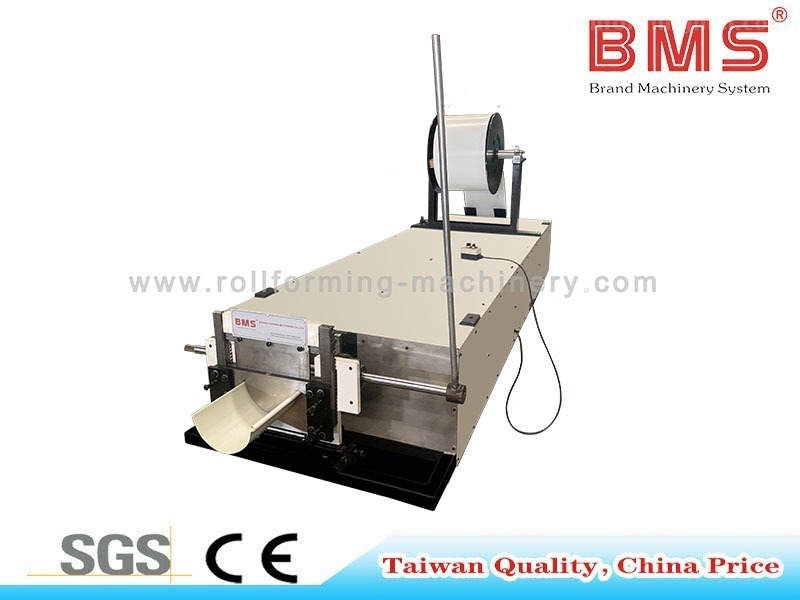
Let’s look at a real example to help you pick a gutter machine. The BMS Spanish Gutter Roll Forming Machine is popular and stands out. This machine is strong, smart, and good for hard jobs. It has many advanced features that make work easier.
The BMS model uses a PLC control system. This means it has a touchscreen that is simple to use. You can set up jobs and watch your progress with a few taps. You can also make changes quickly if you need to. This helps you avoid mistakes and keeps your work fast.
You can change the settings for different gutter profiles and materials. You do not need a new machine for every job. Just adjust the settings and you are ready. This saves you money and space in your shop.
Here is a quick chart to show how the BMS machine compares to others:
Feature | BMS Spanish Gutter Roll Forming Machine | Other Leading Models |
PLC Control System | Yes | Varies |
Customization Options | Yes | Limited |
Enhanced Productivity | Yes | Varies |
CE Certification | Yes | Varies |
The BMS machine works fast. It can run at 10-15 meters per minute. This means you finish jobs quicker and can do more work. The rollers are tough and chrome-plated, so they last a long time and keep gutters looking nice.
Safety and quality are important. The BMS machine has CE certification. This means it meets high safety and quality rules. You can trust it to work well on every job.
Tip: If you want a machine that grows with your business, pick one with easy controls, flexible settings, and strong safety features.
The BMS Spanish Gutter Roll Forming Machine is a good choice. It has smart technology, strong parts, and can handle many projects. When you buy a machine like this, you help your business succeed. You can use it for homes, businesses, or special jobs.
If you want to grow your gutter business, look for a machine with these features. You will save time, make fewer mistakes, and always make great gutters.
You’ve seen the main types of gutter machines and how each fits different jobs. Picking the right machine means you get gutters that last and look great. Remember to match gutter profiles to your roof size, rainfall, and downpipe spacing. Choose materials that fit your warranty and local weather. Make sure your machine works with your mounting system. Think about equipment, maintenance, and cost for long-term value. If you’re unsure, talk to a manufacturer or expert. You’ll make smarter choices and get better results.
FAQ
How do I choose the right gutter machine for my project?
Think about your project size and what shape you need. Also, check which material you will use. Ask yourself what your customers want most. If you work on houses, a portable machine is useful. For bigger jobs, choose a heavy-duty model.
Can I use different metals in one gutter machine?
Most gutter machines can use aluminum. Some advanced machines, like the BMS Spanish Gutter Roll Forming Machine, can use stainless steel. Always read the machine manual before you change materials.
How often should I clean and lubricate my gutter machine?
Clean your machine after every job you finish. Lubricate moving parts every 30 hours of use. This helps your machine run well and last longer.
What is the average lifespan of a gutter machine?
If you take care of your gutter machine, it can last 10 to 15 years. Clean, lubricate, and store it right to get even more years.
Do I need special tools to install gutters?
Yes, you need hand tools like snips, crimpers, and drill bit extensions. These tools help you finish details and make sure gutters fit well.
Can I use a gutter machine in any climate?
You can use gutter machines almost anywhere. Pick materials that resist rust and match your local weather. Aluminum is good for wet places. Stainless steel works well in tough conditions.

 日本語
日本語 한국어
한국어 ไทย
ไทย 繁體中文
繁體中文 العربية
 فارسی
فارسی Français
 Русский
 Español
 Português
 English
 Deutsch
 italiano
 Nederlands
 Tiếng Việt
 Polski
 Türkçe
 አማርኛ
አማርኛ ພາສາລາວ
 ភាសាខ្មែរ
 Bahasa Melayu
 ဗမာစာ
ဗမာစာ தமிழ்
தமிழ் Filipino
 Bahasa Indonesia
 magyar
 Română
 Čeština
 Монгол
 қазақ
қазақ Српски
 हिन्दी
 Kiswahili
 Slovenčina
 Slovenščina
 Norsk
Norsk Svenska
 українська
 Ελληνικά
 Suomi
Suomi Հայերեն
 עברית
עברית Latine
 Dansk
Dansk اردو
اردو Shqip
Shqip বাংলা
বাংলা Hrvatski
 Afrikaans
 Gaeilge
 Eesti keel
 Māori
Māori සිංහල
සිංහල नेपाली
 Oʻzbekcha
 latviešu
 অসমীয়া
 Беларуская мова
 Esperanto
 मराठी
मराठी پښتو
پښتو