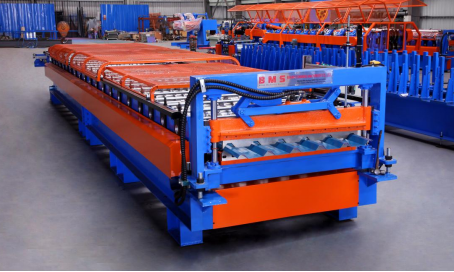
You need the right tool to make strong metal roofing panels. A standing seam machine changes flat metal into panels with raised seams. These seams lock together. You can pick from different types of standing seam machine for your job:
In-plant standing seam machines are good for making many panels fast.
Portable standing seam machines are easy to move and use at job sites.
Multi-profile portable machines let you make different panel styles.
Many contractors want to know about buying a portable standing seam machine. They also ask how much automation is helpful and if training matters. When you use a standing seam machine, you control the look and quality of your roof panels. A standing seam machine helps you give your customers what they need with good results.
Key Takeaways
Standing seam machines make strong metal roofing panels. These panels have raised seams that lock together to keep out weather. You can pick in-plant machines for making many panels at once. Or you can use portable machines for more flexibility at job sites. Important parts like the uncoiler, forming section, and control system help make panels precise and good quality. Picking the right machine for your project, speed, and materials can save time and money. Knowing about different panel profiles, like snap-lock and mechanical seams, helps you give customers what they want and makes installation easier.
How Standing Seam Machines Work
Main Components
You want your standing seam panels to look perfect and last for years. That starts with a machine built for precision. Every standing seam machine includes several key parts that work together to turn flat metal into strong, weather-tight panels. Here’s a quick look at the main components and what they do:
Component | Function |
Uncoiler | Feeds the metal coil into the machine, keeping the process smooth and steady. |
Forming Section | Uses rollers to bend and shape the metal into the exact profile you need. |
Shearing Operation | Cuts each panel to your chosen length with a sharp, clean edge. |
Control System | Lets you set panel length, monitor progress, and automate production for accuracy. |
You may also find these parts on many machines:
Manual Decoiler: Controls the feeding of the steel coil and handles heavy loads.
Manual Pre-Cutter: Lets you save material by cutting coils to the right length before forming.
Main Machine Frame: Holds everything steady for consistent results.
Post Hydraulic Cutter: Delivers powerful, long-lasting cuts.
Exit Rack: Makes it easy to move finished panels out of the way.
Tip: A well-built machine with quality components means fewer mistakes and less downtime. You get more panels, faster.
Roll Forming Process
You want every panel to fit perfectly. The roll forming process makes that happen. Here’s how your standing seam machine transforms a flat coil into a finished panel:
Decoiling: The machine unwinds the metal coil, feeding it into the rollers.
Leveling: Rollers flatten out any bumps or curves, so your panels start smooth.
Pre-punching: The machine can punch holes for fasteners or clips, making installation easier.
Seam Forming: Rollers shape the edges into raised seams that lock together for a watertight seal.
Cutting: The machine cuts each panel to your exact length, so you get custom sizes for every job.
You control the process with a modern control system. You can set the panel length, profile, and even the speed. This means you get panels that match your project, every time.
Tolerance/Quality Control | Description/Impact |
Dimensional Accuracy | +/- 0.5 mm ensures panels fit perfectly. |
Regular Quality Checks | Keeps every panel consistent and reliable. |
Roll Calibration and Pressures | Maintains the right shape and prevents defects. |
Strip Feed Alignment | Stops waviness and twist in your panels. |
Tooling Condition | Good rollers keep your profiles sharp and clean. |
Note: You should always check your machine’s rollers and alignment. This keeps your panels looking sharp and fitting tight.
Panel Cutting and Sealing
You want panels that fit your roof exactly. The machine’s shearing system cuts each panel to the length you need. Some machines use a hydraulic shear for power and durability. Others use a plasma torch for extra precision. Both methods give you clean, straight edges.
After cutting, you need to make sure the seams seal tight. The machine forms the seam height and shape, which is key for keeping water out. For some profiles, you may use a special seamer tool to lock the panels together on the roof. This step creates a watertight seal that stands up to rain, snow, and wind.
The right seam height and profile protect your building from leaks.
Precision tools help you get a perfect seal every time.
Onsite panel production means you avoid damage from shipping and get the exact lengths you need.
Tip: When you use a standing seam machine, you cut costs, reduce waste, and deliver panels that perform better for your customers.
You can trust a standing seam machine to give you control, speed, and quality. With the right setup, you will impress your clients and grow your business.
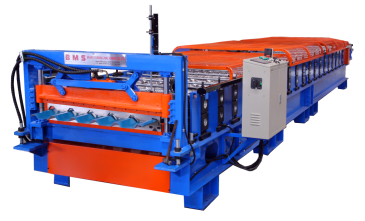
Types of Standing Seam Machines
When you pick a standing seam machine, you want the right one for your work. You can choose in-plant machines, portable machines, or pick between fixed-panel and multi-profile types. Each kind has its own benefits.
In-Plant Machines
In-plant machines are best for big projects. You find these machines in factories that make panels for large buildings. These buildings can be warehouses or convention centers. The panels are strong and keep out bad weather. The seams lock together tightly. You can change the size and shape of the panels for your job.
Here are reasons to use in-plant machines:
You need to make lots of panels fast.
You want panels with special sizes.
You have room for a big machine that stays in one place.
Look at this table to see how in-plant machines compare to portable ones:
Feature | In-Plant Machines | Portable Machines |
Size | Needs lots of floor space | Compact, fits in tight spaces |
Output Speed | Very fast | Up to 75 feet per minute |
Versatility | Fewer profile options | Many profile varieties |
Portability | Fixed in one place | Use on-site or in-plant |
Changeover Time | Can take days | Less than an hour |
Cost | Higher investment | Lower starting cost |
Tip: In-plant machines help you finish big jobs quickly and with care.
Portable Machines
Portable machines are easy to move. You can take them right to the job site. This lets you make panels where you need them. You save time and money. A portable roll forming machine works for small homes or big buildings. You do not pay for shipping and your panels do not get damaged.
Why pick portable machines?
You want to work far from your shop.
You need to make panels in different sizes right away.
You want to do any job, big or small.
You can change your work fast if you need to.
Contractors like portable machines because they are flexible and easy to use.
Fixed-Panel vs. Multi-Profile
You also need to pick between a fixed-panel or a multi-profile machine. A fixed-panel machine makes only one kind of panel. This is good if you always use the same style. A multi-profile machine can make many panel styles. You can help more customers and do more jobs.
Fixed-Panel: Simple, strong, good for one style.
Multi-Profile: Flexible, lets you make more choices.
If you want your business to grow, a multi-profile machine helps you get more jobs.
Picking the right standing seam machine helps you do good work, save money, and make your customers happy.
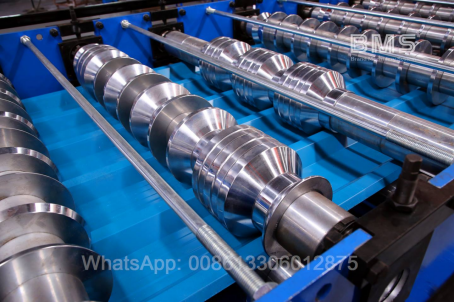
Standing Seam Profiles
Picking the right profile for your roof is important. It changes how your roof looks and works. You want panels that go on fast and last a long time. These panels should keep your building safe from bad weather. Let’s check out the most common standing seam profiles and see how each one helps you.
Snap-Lock Profile
Snap-lock profiles make roofing jobs simple and quick. You do not need special tools to join the seams. The panels have edges that snap together by hand. This profile works best on roofs with a slope of 3/12 or more. You save time and money because you can install them fast. Labor costs are lower too. Snap-lock profiles work for homes and businesses. If you want a roof that looks good and goes on fast, snap-lock is a smart choice.
Tip: Snap-lock panels are great when you need speed and easy work.
Mechanical Seam Profile
Mechanical seam profiles give you a strong and tight roof. You use a crimping tool to lock the seams. This makes a seal that keeps out wind, rain, and snow. Mechanical seams are good for low-slope roofs and places with tough weather. You get extra strength and less chance of leaks. If you want a roof that lasts and stays dry, pick mechanical seam panels.
Mechanical seams make a strong, weather-tight seal.
These panels fight wind and last a long time.
You can trust your roof to protect your building.
Other Common Profiles
You have more choices to fit your project. Each profile has special benefits for different jobs.
Profile Type | Unique Benefits |
Symmetrical Panels | Look neat, easy to put on, great for weather |
Asymmetrical Panels | Cool design, better water flow, makes buildings look nice |
Batten Panel Profiles | Nice style, sheds water well, works without solid base |
Some panels, like YX300, are good for homes. Wider panels, such as YX400 and YX500, are better for big buildings and save time. When you pick the right profile, your job gets easier and your customers are happier. Standing seam panels give you lots of choices and work well for any roof.
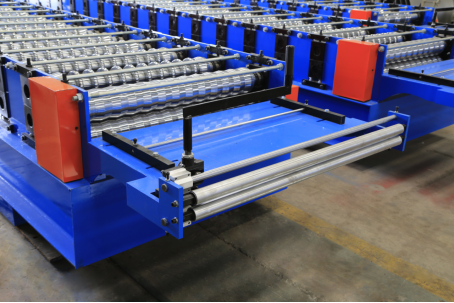
Key Features and Buying Guide
Picking the right standing seam machine helps you work faster. It also helps you do a better job. You need a machine that fits your project and gives you good value. Here are the most important things to look at before buying.
Panel Width and Material
Your machine should let you make panels in different widths. This way, you can work on small homes or big warehouses. Most machines make panels from 12 to 24 inches wide. You can use copper, aluminum, stainless steel, or coated steel. Some machines work best with galvalume and special finishes for more weather protection.
Panel Width (inches) | Common Applications | Material Types |
12 - 24 | Architectural | Copper, Aluminum, Stainless Steel, Metal |
16 - 18 | Most Popular | Galvalume with Kynar 500/PVDF finish |
24 | Low-slope projects | Galvalume with Kynar 500/PVDF finish |
You should also check how thick the steel can be. This tells you how strong your panels will be. Thicker panels last longer and keep buildings safer.
Tip: Choose a machine that fits your usual jobs. Make sure it can also handle special projects.
Speed and Automation
Speed is important if you want to finish more jobs. Faster machines help you make more panels quickly. Automation features, like automated notching, mean less work by hand and fewer mistakes.
Automation saves time on each job.
Fast machines help you do more work and earn more money.
You get the same results every time, so you waste less material.
Feature | Benefit |
Automated notching | Less hand work, jobs finish faster |
Increased job capacity | More jobs, more money |
Precision automation | Less waste, better results |
Cost Considerations
You want to get the most for your money. New machines cost more but have the newest features and last longer. They also come with support. Used machines cost less but might need fixing or upgrades.
Standard machines cost $25,000 to $100,000.
Advanced machines cost $100,000 to $250,000.
Custom machines can cost more than $250,000.
Used machines start at $10,000.
If you want new features and a warranty, buy new. If you need to save money, a good used machine can work. Always check the machine’s condition and support before you buy.
Note: The right machine helps you work smarter. Pick one that fits your job size, budget, and future needs.
Choosing the Right Standing Seam Machine
Assessing Project Needs
You want your money to work for you for years. First, look at how big your project is. Think about how hard it will be and what materials you need. Plan for the jobs you will do now and later. Ask if the machine can make enough panels for busy days. Make sure it works well for long jobs.
Here’s an easy way to check your needs:
Write down the types of jobs you want to do, like homes or businesses.
Decide if you need panels in different sizes or styles.
See if the machine works with steel, aluminum, or copper.
Make sure the machine fits in your shop and can go to job sites.
Check if your supplier gives good help and training after you buy.
Tip: Always plan for the future. Pick a machine that can grow with your business and handle new jobs.
Comparing Options
You have many choices when picking a standing seam machine. Focus on the features that matter most for your work. Use this table to compare important things:
Criteria | Details |
Weight | Electric models weigh 40-60 lbs; drill-powered ones are under 20 lbs |
Seam height compatibility | You can adjust for seam heights from 1 to 1.5 inches |
Motor power | Strong motors help the machine work well |
Durability | Tough steel and hard parts last longer |
Maintenance | Easy cleaning and storage keep your machine working |
Supported seam profiles | Handles single-lock (90°) and double-lock (180°) panels |
Forming accuracy | Makes panels that look the same every time |
Also look at these things:
Production speed: Machines that make at least 15 meters per minute help you finish faster.
Forming accuracy: A tolerance of ±0.5 mm means your panels fit well.
Motor power: At least 7.5 kW keeps your machine strong, even with heavy work.
Safety: Emergency stop buttons, guards, and locks keep you and your team safe.
When you compare machines, check the total cost. This means the price to buy, energy use, how often you fix it, and how long it lasts. A smart choice now saves you money and problems later.
Tips for Selection
You want a machine that fits your needs and lasts a long time. Use these tips to help you choose:
Pick a machine for your most common jobs. If you do lots of business work, get a strong model.
Choose a machine that works with your favorite materials. Copper and galvalume need different things.
Look for a machine with the seam system you like. Mechanically seamed systems cost more but are stronger.
Think about how hard your roof jobs are. Harder jobs may need special features.
Check the warranty and brand reputation. A longer warranty and trusted brand can be worth more money.
Think about long-term value. Standing seam roofs last 30 to 50 years, so a good machine is a smart buy.
Make sure your team knows how to install panels the right way. Even the best machine cannot fix poor work.
Note: The right standing seam machine gives you control, speed, and quality. It helps you get more jobs and build a good name.
You want your roofing work to be special. Standing seam machines give you lots of choices for panel styles. They work fast and use strong materials. You can pick a portable machine or one that stays in a factory. Both types fit small or big jobs. New machines have smart features and are built to last. This helps you save time and money. Look at this table to see the main features:
Feature | Benefit |
16 profiles | More choices for every job |
75 ft/min speed | Finish projects quickly |
Portability | Easy to move and set up |
Think about what you need and how much you can spend. Ask companies or people who know about these machines for help. Pick the best machine for you and help your business grow.
FAQ
What is a standing seam machine used for?
You use a standing seam machine to make metal roofing panels with raised seams. These seams lock together for a strong, leak-free roof. This tool helps you create custom panels right at your job site.
How do I choose between portable and in-plant machines?
Pick a portable machine if you want flexibility and on-site panel production. Choose an in-plant machine for high-volume jobs in a factory. Think about your project size, location, and how fast you need panels.
Can I make different panel profiles with one machine?
Many machines let you switch profiles. If you want to offer more styles, buy a multi-profile machine. This gives you more options for customers and helps you win more jobs.
What materials can I use in a standing seam machine?
You can run steel, aluminum, copper, or zinc through most machines. Always check your machine’s specs. Using the right material gives you strong, long-lasting panels.
Is it hard to learn how to use a standing seam machine?
No, you can learn quickly. Most machines come with guides or training. With a little practice, you will make perfect panels and impress your customers.

 日本語
日本語 한국어
한국어 ไทย
ไทย 繁體中文
繁體中文 العربية
 فارسی
فارسی Français
 Русский
 Español
 Português
 English
 Deutsch
 italiano
 Nederlands
 Tiếng Việt
 Polski
 Türkçe
 አማርኛ
አማርኛ ພາສາລາວ
 ភាសាខ្មែរ
 Bahasa Melayu
 ဗမာစာ
ဗမာစာ தமிழ்
தமிழ் Filipino
 Bahasa Indonesia
 magyar
 Română
 Čeština
 Монгол
 қазақ
қазақ Српски
 हिन्दी
 Kiswahili
 Slovenčina
 Slovenščina
 Norsk
Norsk Svenska
 українська
 Ελληνικά
 Suomi
Suomi Հայերեն
 עברית
עברית Latine
 Dansk
Dansk اردو
اردو Shqip
Shqip বাংলা
বাংলা Hrvatski
 Afrikaans
 Gaeilge
 Eesti keel
 Māori
Māori සිංහල
සිංහල नेपाली
 Oʻzbekcha
 latviešu
 অসমীয়া
 Беларуская мова
 Esperanto
 मराठी
मराठी پښتو
پښتو


