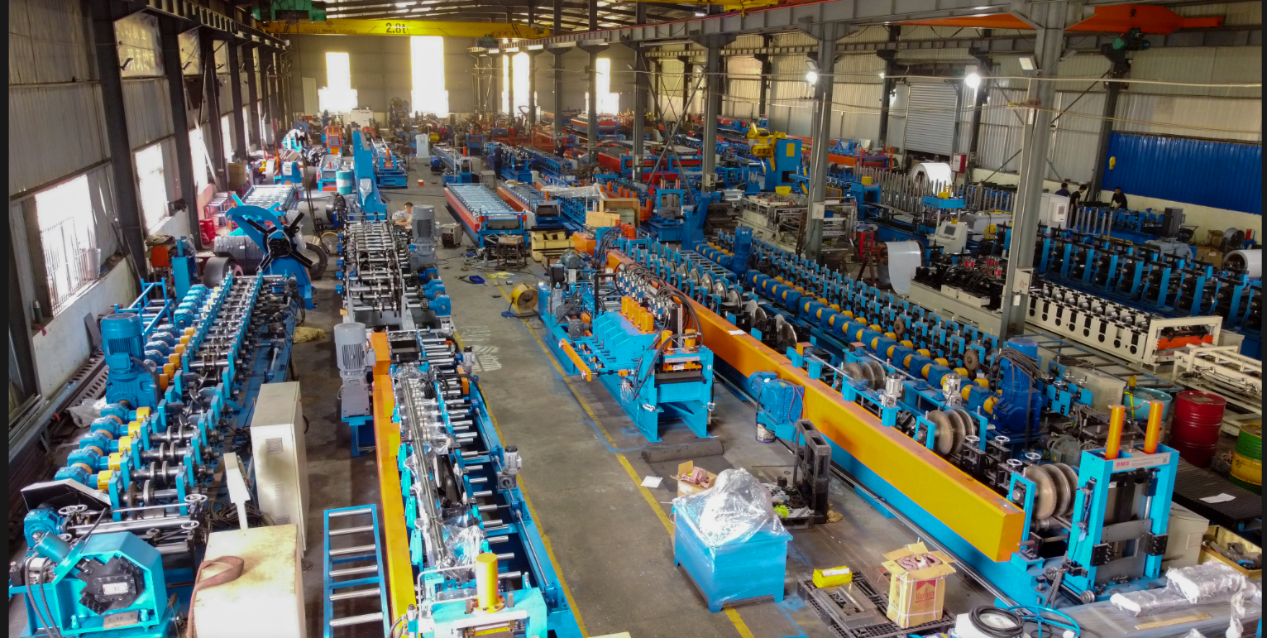
You see many types of metal forming in factories. These include roll forming, extrusion, press braking, stamping, forging, casting, bending, and spinning. Each way shapes metal in its own style. These methods make things for many industries. Stamping is used for fast production. Rolling helps build strong beams and frames for buildings. The table below shows how metal forming helps different industries. It also shows how each type works well in its own way.
Industry | Applications | Efficiency Characteristics |
Automotive | Body panels, frames | Stamping makes tough parts that last and resist stress |
Construction | Beams, structural frames | Rolling forms steel to give strong support |
Unlike stamping or bending, cold roll forming produces continuous, uniform profiles with high dimensional accuracy, minimal material waste, and suitability for long-length production.”
You will also learn about the metal roll forming machine. You will see its different types and uses.
Key Takeaways
Metal forming changes the shape of metal. It does not add or take away material. It uses force to bend, stretch, or squeeze metal.
There are two main types of metal forming. Bulk forming is for big parts. Sheet forming is for thin pieces.
Some common metal forming methods are rolling, extrusion, forging, stamping, and casting. Each method has a different use.
Roll forming machines make long shapes from flat metal sheets. These machines are used in building and making products.
Forging makes strong parts by pressing or hitting metal. It is best when you need parts that must be very strong.
Casting makes complex shapes by pouring melted metal into molds. It helps make detailed parts in large numbers.
Picking the right metal forming process depends on the part’s size, shape, and strength. You should also think about your budget and how many parts you need.
Safety is very important in metal forming. Always wear safety gear and follow rules to avoid accidents.
Overview of Metal Forming Processes
What is Metal Forming
When you work with metal, you often need to change its shape. You do this without taking away or adding any material. Metal forming uses force to bend, stretch, or squeeze the metal.
Metal forming is a metalworking process. It makes metal parts and objects by changing their shape with force. The metal keeps the same amount of mass because nothing is added or removed.
Metal forming helps you get the size and shape you want. It can also change how the metal acts.
Metal forming means you press or pull the metal to get the right size or shape. This can also change how the metal looks or works.
This process lets you make strong parts for many jobs.
Metal forming changes the outside and inside of a metal piece. The metal stays together and does not lose any mass.
Bulk vs. Sheet Metal Forming
There are two main ways to form metal. One is bulk forming and the other is sheet forming. Each way is good for different things.
Bulk forming uses a lot of metal at once. It is good for making big, solid parts like gears or beams.
Sheet forming shapes thin pieces of metal. You use it for car doors or covers for machines.
Sheet-bulk metal forming mixes both ways. It helps you make parts that are light but still strong. This saves material and makes things faster.
Bulk forming can also work with sheets or plates. This helps make new products with special features.
You pick the best way by looking at the part’s size and shape. You also think about how strong it needs to be. Picking the right method helps you get the best results.
Types of Forming Process
There are many types of forming process. Each one is good for different jobs. The main types are in the table below:
Category | Description |
Bulk Forming | Uses a lot of material to make big parts. |
Sheet Forming | Shapes thin sheets of metal for cars and appliances. |
Powder Forming | Uses metal powders to make parts with special shapes or features. |
Some common types of metal forming are:
Metal Rolling
Metal Extrusion
Metal Forging
Metal Drawing
Metal Stamping
These processes help you make parts for cars, buildings, and machines. Each one shapes metal in a special way. When you learn about these types, you see how they help factories today. These methods let you make strong and exact products that do not cost too much.
Metal Roll Forming Machine Types
What is a Metal Roll Forming Machine
A metal roll forming machine helps you turn flat metal sheets or coils into long, shaped profiles. You feed the metal into the machine. The metal passes through a series of rollers. Each roller bends the metal a little more until you get the final shape you want. This process works at room temperature and does not remove any material. The rollers are set up in a special order. Each set of rollers does a small part of the bending. By the end, you have a strong, smooth, and precise profile. You can use this machine to make many shapes for different industries. The heart of the machine is the roll forming unit. It uses computer-designed rollers to make sure every bend is perfect. This method works well for many metal forming materials, such as steel, aluminum, and copper.
Tip: Roll forming lets you create complex shapes with tight tolerances and smooth finishes. You can make long parts with the same cross-section, which is great for building and manufacturing.
Key Types by Application
You will find different types of metal roll forming machines based on what you need to make. Each type is designed for a special job.
Roofing and Wall Panel Machines
These machines help you make panels for roofs and walls. You can create corrugated panels, standing seam panels, and glazed tiles. These panels protect buildings from weather and give them a finished look. Roofing and wall panel machines are common in construction. You can also use them to make gutters and ridge caps.
Structural and Framing Machines
If you need to build strong frames, you use structural and framing machines. These machines make purlins, studs, and tracks. Purlins support roofs and walls in metal buildings. Stud and track machines help you make parts for drywall framing. You will see these machines in factories that build warehouses, offices, and homes.
Storage and Racking Machines
Storage and racking machines help you make shelves, beams, and uprights for storage systems. You can use these machines to build racks for warehouses, supermarkets, and factories. The profiles made by these machines hold heavy loads and keep items organized.
Cable Tray and Specialized Machines
Cable tray machines let you make trays for holding electrical wires and cables. These trays keep wires safe and organized in buildings and factories. Some machines are designed for special jobs, like making solar panel brackets, guardrails, or door frames. You can even find machines for elevator walls, car bumpers, and garage doors.
Note: Many industries use metal roll forming machines. You will see them in construction, automotive, and appliance manufacturing. They help you make parts like wall panels, car frames, and safety doors.
Classification by Mechanism
You can also group metal roll forming machines by how they work. The main types are:
Pre-cut vs. Post-cut
Pre-cut machines cut the metal before it goes through the rollers. This method works well for short parts and simple shapes.
Post-cut machines cut the metal after it has been formed. This method is best for long parts and complex profiles. You get clean cuts and less waste.
Single-pass vs. Multi-pass
Single-pass machines make one shape at a time. They are fast and good for high-volume jobs.
Multi-pass machines can switch between different shapes. You can change the rollers to make new profiles. This gives you more flexibility.
Double Layer and Portable Machines
Double layer machines have two sets of rollers. You can make two different profiles on the same machine. This saves space and time.
Portable machines are small and easy to move. You can use them on job sites to make panels right where you need them.
Automation is changing how you use metal roll forming machines. Many new machines have smart controls and sensors. These features help you work faster and make fewer mistakes. You can also find machines with touch screens and multi-language support, making them easy to use in different countries.
Classification by Material
Cold roll forming is suitable for a wide range of metals, including carbon steel, stainless steel, aluminum, and copper, and can produce complex open, closed, or special-shaped profiles.”
When you choose a metal roll forming machine, you need to think about the type of metal you want to process. The material you select will shape the machine’s design, performance, and the final product’s quality. Each metal brings its own strengths and challenges to the roll forming process.
Here are the most common materials you will see in roll forming:
Steel
You often use steel because it is strong and affordable. Steel works well for building frames, panels, and support structures. It keeps its shape during forming, which helps you make large batches of the same profile.
Aluminum
Aluminum is light and resists rust. You will find it in places where weight matters, like in cars or window frames. It is easy to shape and does not corrode, so it is great for outdoor products.
Stainless Steel
Stainless steel stands up to harsh weather and chemicals. You use it when you need parts that last a long time, such as in kitchens or factories that handle food and drinks.
Copper
Copper carries electricity well and looks good. You use it for electrical parts or decorative trim. It is softer than steel, so you need to adjust the machine for best results.
Tip: Picking the right material is important. It affects how fast you can run your machine, how much power you need, and how long your tools will last.
The table below shows how different materials impact the design of a metal roll forming machine:
Key Element | Impact on Design |
Roll Tooling & Roller Stations | Controls how well the metal bends and keeps its shape. |
Frame & Structural Components | Keeps the machine steady and reduces shaking. |
Drive System & Motor Power | Decides how fast and strong the machine can work. |
Cutting & Punching Mechanism | Makes sure cuts and holes are clean and accurate. |
Control System & Automation | Lets you use smart controls for better results. |
You need to match your metal roll forming machine to the metal forming materials you plan to use. For example, steel needs strong rollers and a powerful drive system. Aluminum may need less force but careful handling to avoid marks. Stainless steel requires tough tooling to handle its hardness. Copper needs gentle forming to keep its smooth finish.
When you understand how each material behaves, you can set up your machine for the best performance. This helps you make high-quality products and keeps your production running smoothly.
Rolling Process in Metal Forming
Rolling stands as one of the most important metal forming processes. You use this method to reduce the thickness of metal and increase its length. When you pass metal between rotating rolls, you change its shape and improve its surface. This process helps you create strong and uniform parts for many industries.
Rolling Methods
You can choose from several rolling methods. Each method gives you different results and works best for certain jobs.
Hot Rolling
Hot rolling means you heat the metal above its recrystallization temperature. This makes the metal soft and easy to shape. You can roll large pieces, like slabs or blooms, into plates, beams, or rails. Hot rolling lets you make big changes to the metal’s size and shape. You often use this method when you need to create structural shapes for buildings or bridges. The surface may look rough, but you get strong and flexible parts.
Tip: Hot rolling is great for shaping metal when you need to make large sections quickly.
Cold Rolling
Cold rolling happens at room temperature. You do not heat the metal much, so it stays hard. This method gives you parts with a smooth surface and tight size control. You use cold rolling to make sheets, bars, and strips. These parts often go into cars, appliances, and machines. Cold rolling makes the metal stronger and improves its finish. You get products that look good and last a long time.
Note: Cold rolling is best when you want high strength and a clean surface.
You also see flat rolling and roll forming as common types of metal forming. Flat rolling uses two rollers to press the metal flat. Roll forming bends long strips into special shapes. Both methods help you with shaping metal for different needs.
Applications of Rolling
You find many applications of rolling in metal manufacturing processes. Rolling helps you make sheets, plates, and structural shapes. You use these parts in cars, buildings, and machines. For example, you can create I-beams for bridges or rails for trains. Rolling also improves the properties of metal forming materials. You get better strength and a smoother surface.
Here are some common applications:
Sheets and plates for construction and shipbuilding
Structural beams and rails for bridges and railways
Bars and strips for automotive and appliance parts
Rolling stands out as one of the most flexible metal forming techniques. You can use it to shape many types of metal and meet different industry needs.
When you understand the main rolling methods, you can choose the right metal forming process for your project. You get strong, reliable parts that fit your design and budget.
Forging in Metal Forming
Forging is one of the oldest ways to shape metal. People trust this process because it makes strong parts. You use forging by pressing or hitting metal with a hammer or press. This changes the inside of the metal and makes it tougher. There are many ways to form metal, but forging is best when you need parts that are very strong.
Forging Methods
There are different ways to do forging. Each way has its own good points.
Open-Die Forging
Open-die forging shapes metal between two flat dies. The dies do not cover the metal all the way. This lets you work with big or odd-shaped pieces. You move and turn the metal while pressing it. This way, you can make many sizes and shapes. It is good for custom parts or making big blocks smaller. But open-die forging is not as exact as other ways.
Closed-Die Forging
Closed-die forging is also called impression-die forging. It uses dies that fit around the metal. The dies have a special shape inside. You put the metal in and press until it fills the space. This way gives you parts with smooth surfaces and exact shapes. You get the same results every time. Closed-die forging is good for making lots of the same part.
Tip: Open-die forging is more flexible. Closed-die forging is more exact and gives better surfaces.
Here is a table that compares the main forging methods:
Forging Method | Description | Efficiency and Quality Comparison |
Open-Die Forging | Shapes metal between simple dies, not fully enclosed | Flexible for size, lower precision |
Closed-Die Forging | Metal enclosed in shaped dies for complex parts | High precision, better surface finish, improved product quality |
Roll Forging | Rolls shape metal into long, uniform sections | Efficient for uniform shapes, good mechanical properties |
Thixoforming | Combines solid and liquid states for advanced shaping | High precision, low waste, excellent efficiency and quality |
Precision Forging | Focuses on tight tolerances and fine finishes | Maximizes quality, higher tooling costs |
Applications of Forging
Forging is used in many jobs because it makes strong parts. You see forging in these areas:
Aerospace: Turbine discs, blades, rotors, and landing gear are forged.
Automotive: Crankshafts, rods, pistons, and suspension parts are made by forging.
Defense: Artillery shells, tanks, and aircraft use forged parts.
Medical: Implants, tools, and dental gear are made by forging.
Oil and Gas: Drill bits, valves, and pipes are forged.
Agricultural Machinery: Gears, shafts, and levers come from forging.
Hand Tools: Pliers, hammers, and wrenches are forged for strength.
Railroad and Off-Highway Equipment: Forged parts hold heavy loads and last long.
General Industrial Equipment: Steel mills, textile machines, and power plants use forged parts.
Note: Forging makes parts that last longer and work well under stress. You can count on forged parts when safety and strength are important.
Forging is a key part of metal forming. When you need strong, exact, and reliable parts, forging is often the best choice.
Extrusion Metal Forming Process
Extrusion is a strong way to shape metal into long pieces. These pieces have the same shape all the way through. You use extrusion to make rods, tubes, or special shapes that need to be very exact. In this process, you push hot or cold metal through a die. The die gives the metal its final shape. This method works well for metals like aluminum, steel, and copper.
Extrusion Methods
There are two main ways to do extrusion. Each way is good for different jobs.
Hot Extrusion
Hot extrusion means you heat the metal until it is very soft. You put the hot metal into a chamber. Then a piston pushes the metal through the die. The high heat makes the metal easy to shape. You can make thick or tricky shapes without cracks. Hot extrusion is best for metals that are hard to shape when cold, like steel or titanium.
Tip: Hot extrusion helps you make big parts with smooth surfaces and fewer mistakes.
Cold Extrusion
Cold extrusion shapes metal at room temperature or close to it. You start with a metal slug and push it through a die with high pressure. This way gives you parts with a smooth surface and strong metal. Cold extrusion works well for soft metals like aluminum, copper, or lead. You get very exact shapes and less rust because you do not use heat.
Note: Cold extrusion is great when you need parts that fit perfectly and look clean.
Here is a table that shows the main good and bad points of extrusion:
Advantages | Disadvantages |
Very exact shapes because of the die | You need extra steps to add features after extrusion. |
You can make many shapes and control thickness | You must age the metal after extrusion. |
Tooling does not cost much | Thin parts are hard to make without bending or twisting. |
| You need to spend a lot on machines and tools, so only some companies use it. |
Applications of Extrusion
Extrusion is used in many industries because it makes strong and light shapes. You can use it to make many different products.
Some common things made by extrusion are:
Aluminum cans and tubes
Bars, rods, and cylinders
Electrodes and fittings
Window and door frames
Fuel lines and injection parts
Rails, tracks, and tubing
Custom parts for buildings
You see extrusion in these industries:
Farming
Building and construction
Making things people use every day
Electronics and lighting
Military and transportation
Extrusion helps you make window frames, pipes, channels, and special shapes for buildings and machines. You also use it for furniture, bike frames, and cases for electronics. This process gives you better size control, no welds, and faster making time. You can make shapes that are hard to make with other methods.
Remember: If you need parts that are always the same and have special shapes, extrusion is a good choice.
Stamping and Press Braking
Stamping Process
Stamping helps you shape flat metal sheets into parts. This method is good for making lots of parts quickly. You get very exact shapes with stamping. A press and a special die cut, bend, or form the metal. The stamping process has several main steps: First, you design the part and make a custom die. Next, you pick the right metal sheet for your project. Then, you cut the metal into the shape you want. After that, you use pressure to bend or shape the metal. You remove extra pieces and make holes if you need them. Last, you clean and smooth the part’s surface.
There are different types of stamping. Progressive stamping is for making many parts fast. Transfer stamping is used for bigger parts. Four-slide stamping helps you make tricky shapes. Deep drawing lets you make deep parts. Fine blanking gives you smooth edges with no rough spots.
Blanking, Punching, Bending
Blanking cuts the metal into a simple shape. Punching makes holes or slots in the metal. Bending changes the metal’s angle without cutting it. These steps help you make many shapes in one process. Stamping can make things like connectors, brackets, and covers. The machines for stamping include presses, dies, and feeding systems. You must get the metal ready, feed it into the press, and finish the part after stamping.
Press Braking Process
Press braking is a common way to bend metal sheets. You use a press brake machine for this job. The machine holds the metal between a punch and a die. The punch pushes the metal into the die to make a bend. Press braking is cheap and works fast. It is good for small batches, test parts, or custom jobs. You can use it to make channels, ribs, and angles.
There are different kinds of press brakes. Some use machines, some use oil, air, or electric power. Each kind is best for different jobs. Press braking gives you exact bends and many shapes. Sometimes you need to do more work to make the part look just right.
Tip: Press braking is not the same as roll forming. Press braking is for short runs and many shapes. Roll forming is better for long, same-shaped parts.
Applications in Industry
Stamping and press braking are used in many industries. These methods help make parts for electronics, medical tools, cars, planes, and buildings. The table below shows where you might see these processes:
Industry | Application Description |
Electronics | Stamping makes connectors, terminals, and heat sinks for devices. |
Medical and Healthcare | Stamping makes tools and parts for surgery. |
Automotive | Stamping is used for car panels, engine parts, and brackets. |
Aerospace | Press brakes bend airplane wings and bodies. |
Construction | Press brakes help make beams and columns for buildings. |
You see stamping and press braking in many factories. They are fast, accurate, and can do many jobs. These methods help make both small and big parts. They are important for many industries and help meet high quality rules.
Casting and Other Metal Forming Processes
Casting Process
The casting process lets you make parts by pouring melted metal into a mold. The metal cools down and takes the shape of the mold. This way, you can make shapes that are hard to get with other methods. There are different types of casting. Each type has its own good points and uses.
Casting Type | Main Benefits | Typical Applications |
Sand Casting | Flexibility, scalability, cost-effectiveness | Engine blocks, statues, pipes |
Investment Casting | Precision, material versatility, smooth finish | Turbine blades, medical components, automotive parts |
Shell Molding | Accuracy, stability, surface quality, efficiency | Automotive parts, military components |
Lost Foam Casting | Accuracy, clean process, versatility | Automotive parts, artistic items |
Plaster Casting | Detail, accuracy, versatility, cost-effectiveness | Sculptures, decorative elements, jewelry prototypes |
Ceramic Mold Casting | High-temperature resistance, excellent surface finish | Various industrial applications |
Die Casting
Die casting is used when you need parts with fine detail. In this process, melted metal is pushed into a steel mold using high pressure. The mold is called a die and can be used many times. Die casting is good for making lots of the same part. You get smooth parts that fit together well. This method is common in car and electronics factories.
Sand Casting
Sand casting uses a mold made from sand. You pack sand around a pattern, take the pattern out, and pour in the melted metal. Sand casting is cheap and easy to use. You can make big parts like engine blocks or pipes. This process helps stop cracks and other problems. Sand casting is used in building and machine factories.
Investment Casting
Investment casting uses a wax shape covered with a ceramic shell. You melt out the wax and pour in the metal. This way, you get small parts with lots of detail and a smooth finish. Investment casting is used for things like turbine blades, medical tools, and car parts. It works well for small, tricky shapes.
Tip: Pick your casting method by thinking about the size, detail, and how many parts you need. Each method is good for different jobs in factories.
Bending and Spinning
Bending and spinning shape metal without cutting any away. Bending turns flat sheets into angles or curves. You use press brakes and dies to make channels, ribs, and brackets. Spinning shapes round parts by turning a metal disc on a form. You push the metal against the form to make things like tank ends or cones.
Process | Description | Typical Applications |
Bending | Forms flat sheets into complex shapes with dies | Sheet metal parts, brackets, enclosures |
Spinning | Shapes round parts by rotating metal around a mandrel | Tank ends, hemispheres, cylindrical and conical parts |
Bending is used to make cabinets, panels, and frames. Spinning is important for making gas tanks, venturi tubes, and reflectors. These ways help many industries, like building, transportation, and making things people use every day.
Applications of Casting and Other Methods
Casting and these other methods are used in many industries. Car companies use casting for engine parts and brackets. Airplane makers use investment casting for tricky plane parts. Builders use sand casting for special building pieces. Jewelry makers use investment and plaster casting for fancy designs. Companies that make things for homes use these methods for tools, appliances, and decorations.
Metal drawing is also important for making wires and tubes. Drawing is used for electric wires, bike frames, and supports. Each metal forming method is best for different products and jobs.
Note: When you know what each process does best, you can pick the right one for your project. This helps you make good parts and reach your goals.
If you know about different metal forming processes, you can pick the best one for your job.
Forging is good when you need strong parts.
Casting works well for tricky shapes and making lots of parts.
Sometimes, you use more than one method to make your design better.
Learning about machine types, like roll forming machines, helps you make more parts and better quality.
Machine Type | Description |
Stud and Track | Makes frames for walls from different steel thicknesses. |
Beam | Makes strong box beams for building things. |
You should always think about what is good and bad about each process before you decide.
FAQ
What is the main benefit of metal forming?
You can shape metal into strong, precise parts without wasting material. This process helps you save costs and improve product quality.
How do you choose the right metal forming process?
You should look at the part’s size, shape, and strength needs. You also need to consider your budget and production volume.
Can you use roll forming for all metals?
You can use roll forming for many metals like steel, aluminum, and copper. Some metals need special rollers or settings for best results.
What is the difference between stamping and forging?
Stamping shapes flat sheets with a press. Forging uses force to shape heated metal. You get stronger parts with forging.
Why do factories use extrusion?
Factories use extrusion to make long parts with the same cross-section. You can create rods, tubes, and custom profiles quickly.
Is casting good for making complex shapes?
Yes. You can use casting to make parts with detailed shapes and smooth surfaces. This method works well for small or large batches.
What safety steps should you follow in metal forming?
Wear safety gear like gloves and goggles.
Check machines before use.
Keep your work area clean.
Follow all safety rules.

 日本語
日本語 한국어
한국어 ไทย
ไทย 繁體中文
繁體中文 العربية
 فارسی
فارسی Français
 Русский
 Español
 Português
 English
 Deutsch
 italiano
 Nederlands
 Tiếng Việt
 Polski
 Türkçe
 አማርኛ
አማርኛ ພາສາລາວ
 ភាសាខ្មែរ
 Bahasa Melayu
 ဗမာစာ
ဗမာစာ தமிழ்
தமிழ் Filipino
 Bahasa Indonesia
 magyar
 Română
 Čeština
 Монгол
 қазақ
қазақ Српски
 हिन्दी
 Kiswahili
 Slovenčina
 Slovenščina
 Norsk
Norsk Svenska
 українська
 Ελληνικά
 Suomi
Suomi Հայերեն
 עברית
עברית Latine
 Dansk
Dansk اردو
اردو Shqip
Shqip বাংলা
বাংলা Hrvatski
 Afrikaans
 Gaeilge
 Eesti keel
 Māori
Māori සිංහල
සිංහල नेपाली
 Oʻzbekcha
 latviešu
 অসমীয়া
 Беларуская мова
 Esperanto
 मराठी
मराठी پښتو
پښتو


