Purchasing a purlin roll forming machine from a manufacturer is a significant financial commitment. This equipment will directly influence your production capacity and profitability for years to come. The market is crowded with intermediaries and low-quality fabricators. For a newcomer, distinguishing a genuine purlin roll forming machine manufacturer from a reseller can be challenging.
This guide offers a straightforward approach to evaluating suppliers. You will learn how to assess technical expertise, financial transparency, and after-sales support. I will also highlight hidden red flags that often surface only after the purchase is complete.
Before requesting any quotes, make sure you know your production floor layout and the exact purlin profiles you intend to produce. This preparation safeguards your investment and helps you choose the right purlin roll forming machine manufacturer for your specific needs.
Key Takeaways
Before you talk to suppliers, know how much you need to make and how much you can spend.
Check that the supplier really owns a factory, so you don't end up dealing with a middleman.
When you compare machines, think about the total cost of ownership, not just the price you pay at first.
Look at the machine parts and custom choices to see how well they work.
Pick a manufacturer that offers solid help after you buy and a good warranty.
Assessing Production Needs and Budget
Before you reach out to a purlin roll forming machine maker, you need to know your own production goals and limits. This knowledge stops expensive mistakes. Two main things rule this first step: how much you produce and what materials you use.
Calculating Output Volume and Material Compatibility
Your daily or weekly output goal decides the speed and power you need. A small shop might need 5 tons per shift, but a big factory could need 20 tons or more. Pick a machine speed that matches your needs. Buying too much wastes money. Buying too little slows you down. Figuring out your needed output helps you choose the right machine. Multiply your needed parts per day by the time for each part. That shows you the slowest speed you can use.
Material compatibility is just as important. Steel and aluminum act differently when shaped. Steel needs more force and stronger rollers. Aluminum needs softer handling to avoid scratches. The thickness range also matters. Some machines only work with thin materials, while others handle thick steel. Look at the specs closely. A machine made for 1.5mm steel might not work well with 0.5mm aluminum. Check the full list of specs before you decide. Some machines can handle 0.5mm to 3.0mm thickness. Others have a smaller range that limits what you can do.
BMS Machinery's Auto C&Z Purlin Machines are a good example. They let you change profiles quickly between C and Z shapes. This cuts downtime when you make different profiles. But your choice should depend on your own materials. Ask suppliers about their machine's thickness range and how it handles materials. The right machine fits your exact production mix.
Setting a Realistic Budget for Total Cost of Ownership
The price you pay is just one part of the whole cost. A cheap machine might break down often, leading to expensive stops. A better machine from a trusted maker often costs less over time. Think about spare parts, energy use, and upkeep needs. These things affect your long-term output. Common spare parts are rollers, cutters, and electrical parts. Make sure they are easy to get before you buy.
Your budget must cover setup, training, and first tools. These add 10 to 20 percent to the starting price. Also include the cost of any custom changes for your profiles. A machine that fits your exact needs saves money later. Don't buy a smaller machine just to save money now. The output you lose from a slow machine will wipe out those savings. Some makers offer payment plans. These can help with the upfront cost and still give you good equipment.
Researching Purlin Roll Forming Machine Manufacturer Reviews
Once you know what you need to produce, you can start looking at suppliers. This step can feel overwhelming. Many companies say they are manufacturers. But many are just trading companies. You need to tell the real makers from the resellers. This section shows you how to check factory status and study reviews. You will learn to spot warning signs and judge real user feedback. This helps you pick the right purlin roll forming machine manufacturer.
Verifying Factory Status vs. Trading Company Status
You must confirm if a supplier really builds the machines. A trading company buys from others and adds a fee. This adds cost and lowers quality control. You can spot a trader by looking for common warning signs. Here are five signs that point to a trading company:
Material bait-and-switch: The supplier changes the roller material spec only after you ask about hardness. This shows they do not control the making process.
Withholding technical drawings: They refuse to share the flower diagram or profile drawing. A real manufacturer would have these engineering documents.
Vague compliance claims: They claim "CE" certification but cannot provide the directive paperwork. Real manufacturers can show the certificate number and issuing body.
Unspecified components: They refer to an "imported control system" without naming the PLC brand. You should hear Siemens, Mitsubishi, or another specific name.
Payment pressure: They push for full payment before a pre-shipment inspection. This avoids responsibility for final product quality.
If you see these signs, move on to another supplier. To verify a true manufacturer, request factory audit reports. Ask for documents that prove in-house production abilities. Here are the key documents to request:
A real manufacturer will provide these documents without delay. For example, BMS Machinery has over 20 years of experience and exports to more than 80 countries. They serve clients like Tata Bluescope Steel. This shows they are a verified manufacturer with checkable global references.
Analyzing Customer Reviews and Industry Ratings
After you confirm factory status, you need to study user reviews and industry ratings. Real reviews from other buyers give you insight into machine performance and support quality. But you must check the source of these reviews. Look for detailed reviews that mention specific machine features and performance. Avoid vague praise or complaints without details.
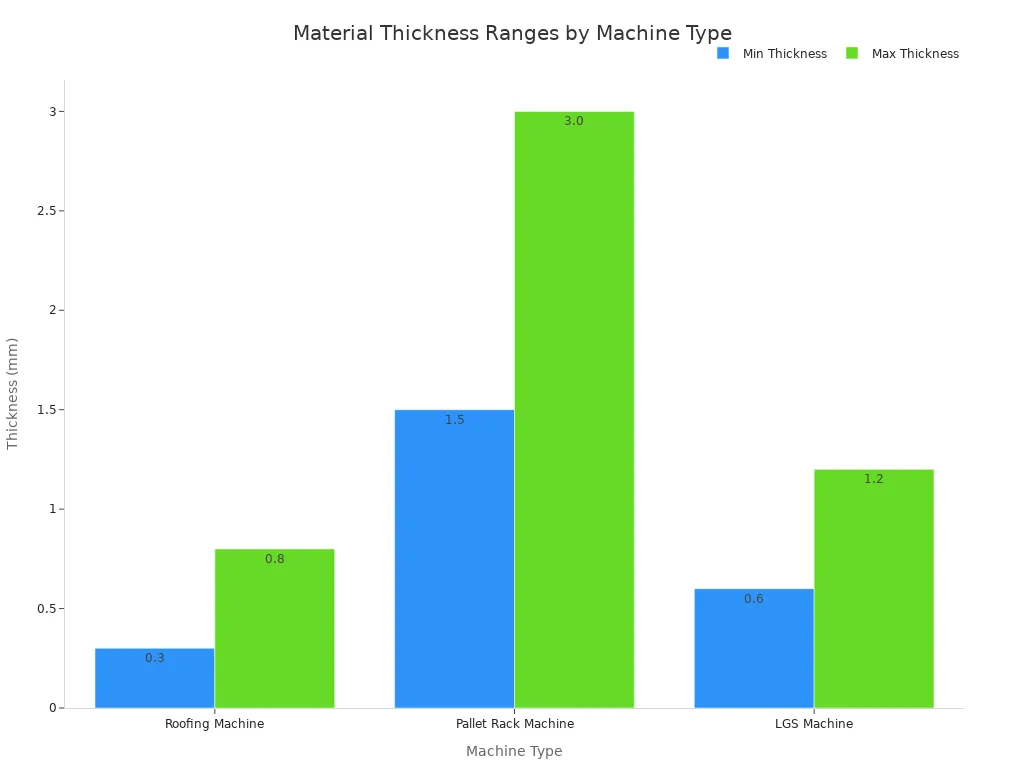
Industry ratings use specific criteria to judge machines. The table below shows how material thickness applies to different machine types:
Machine Type
Material Thickness
Core Industry
Roofing Machine (includes Purlin Machines)
0.3mm – 0.8mm
Industrial Building
Pallet Rack Machine
1.5mm – 3.0mm
Logistics & Warehousing
LGS Machine
0.6mm – 1.2mm
Residential Construction
This table shows purlin machines fall under the roofing category and handle 0.3mm to 0.8mm material for industrial building use. Use this as a benchmark when comparing machines.
The chart below shows the min and max material thickness for roofing, pallet rack, and LGS machines.
When evaluating purlin roll forming machine reviews, focus on these key rating criteria:
Certifications: ISO 9001 for quality management is standard. CE certification matters for international markets.
Number of forming stations: More stations generally mean gentler, more accurate forming, especially for thicker gauge material.
Roller material and hardness: Rollers should be hardened and precision-ground. Softer rollers wear faster and distort the profile.
Gearbox and drive type: Chain-driven vs. gear-driven stations affect long-term maintenance and synchronization accuracy.
Punching flexibility: The punch unit should support the hole patterns used in actual projects.
PLC and changeover time: Quick tooling changeover directly affects daily output for fabricators running multiple profiles.
Also consider four broad criteria: machine quality, warranty, customer service, and experience. Machine quality determines the quality of the formed parts. A warranty (e.g., one-year with free spare parts) protects you against early breakdowns. Customer service means a professional team for technical support. Experience means the manufacturer can give professional advice on machine setup.
When you read user reviews and ratings, look for comparisons of top brands and models. See how real users rate the machine's reliability and support. Compare reviews across multiple platforms. This gives you a complete picture. Look for reviews that mention specific brands and models. This helps you compare top brands and models side by side. User reviews and ratings often highlight reliable machines. Use these reviews to narrow your choices. User reviews and ratings are a powerful tool. User reviews and ratings should guide your final decision. Ratings from industry experts also matter. Look for ratings that use the criteria above. Ratings from verified buyers are most trustworthy. Check ratings on multiple sites. Compare ratings to find the best machine for your needs. A good roll former will produce consistent results. Reviews often point to reliable machines. User reviews and ratings help you decide. Top brands and models vary by region.
Evaluating Machine Performance and Efficiency
Once you have confirmed a manufacturer's credibility, you must examine the machine itself. Performance and efficiency determine your daily output and long-term profitability. A purlin roll forming machine that runs fast but produces inaccurate parts wastes material and time. You need equipment that balances speed with precision. This section covers the key features to consider when evaluating machine performance, the core components that affect durability, and the customization options that give you profile flexibility.
Inspecting Core Components and Control Systems
The heart of any roll forming machine lies in its components. You should inspect each part carefully because each one affects output quality. The machine base, typically made of high-quality steel or cast iron, provides the structural foundation. Any misalignment here causes product deformation. Roller stands contain multiple pairs of rollers that progressively bend the metal sheet. The number and arrangement of these rollers depend on profile complexity. High-grade GCr15 steel rollers offer excellent durability and precision in shaping. Tooling, including forming dies and guide rails, defines the final geometry and surface finish.
The cutting system deserves special attention. A thickened DC53 steel cutting blade provides robust, burr-free cuts and prevents edge jamming. This enhances durability and output quality. The decoiler holds and unwinds the steel coil, ensuring a steady material feed. Manual decoilers work for smaller operations, while electric versions improve operational efficiency. The control system allows you to set sizes and lengths via a touch screen. A PLC electronic control cabinet ensures precise length accuracy and automated discharge, preventing deformation.
Speed performance varies significantly between machine types. Standard machines operate between 9 and 45 meters per minute. High-speed machines can reach up to 90 meters per minute. However, running at excessive speeds prevents the metal from being properly shaped. This leads to rounded edges or incorrect cross-sectional dimensions. These issues matter because purlins are load-bearing components. The table below shows typical speed ranges:
Machine Type
Speed Range (meters per minute)
Standard
9 – 45
High-speed
Up to 90
Precision directly affects structural integrity. Worn rollers or uneven pressure across the strip produce inaccurate dimensions and surface defects. Proper setup and alignment prevent twisting or bowing. Steel coils with edge burrs or welded joints disrupt the forming process. These defects propagate through the entire length, resulting in unusable products. Length tolerance benchmarks show that tighter tolerances reduce rework and erection time. A tolerance of 0.5–0.8mm over 8 meters ensures purlins fit precisely. Lower-quality machines may have a tolerance of ±1mm or more. In large-scale projects using thousands of purlins, small deviations accumulate into large errors. This directly affects the overall stability of the building.
Assessing Customization Options for Profile Flexibility
Modern purlin roll forming machines offer impressive customization capabilities. The key features to consider include automatic profile changeover systems and programmable size settings. Modern C/Z purlin machines automatically switch between C and Z profiles, sometimes with the push of a button. The tooling adjusts internally, enabling seamless transitions in just minutes. These systems store profiles as recipes, minimizing downtime between orders.
Digital changeovers using barcode or QR recipe loading reduce setup time by 30–60 percent. Servo-driven CZ interchangeable systems paired with digital recipes deliver the fastest return on investment when product mix changes daily. Closed-loop control using encoder feedback and inline laser gauges stabilizes hole-to-cut pitch and length accuracy during speed ramps. This cuts setup scrap dramatically.
Material thickness and coil width flexibility matter just as much as profile shapes. A versatile machine handles material thickness from 1.0 to 3.0 mm without additional tooling. Adjustable profile width ranges from approximately 60 to 250 mm. These ranges come from the machine's automatic size adjustment feature. This flexibility lets you accept diverse projects without buying new equipment.
The industry standard for computer-controlled systems includes advanced CNC technology that integrates with CAD software. This enables precise customization and rapid design adjustments. The system supports quick reconfiguration of punching holes, enabling seamless switching between different CZ purlin specifications. This minimizes downtime and maximizes productivity.
For maintenance tips for optimal performance, follow a regular inspection schedule. Check roller alignment weekly and replace worn rollers promptly. Keep the cutting blade sharp and properly adjusted. Lubricate moving parts according to the manufacturer's recommendations. These maintenance tips for optimal performance extend machine life and maintain output quality.
Marco Giordano (Gasparini SpA): "Servo-driven CZ interchangeable systems paired with digital recipes deliver the fastest ROI when product mix changes daily."
Aiden Clarke (Siemens): "Closed-loop control using encoder feedback and inline laser gauges stabilizes hole-to-cut pitch and length accuracy during speed ramps, cutting setup scrap dramatically."
A regional plant running separate C and Z purlin lines installed a CZ interchangeable line with servo tool adjustment and barcode recipe loading. Changeover time dropped from 70 to 18 minutes. First-pass yield rose from 94.1 to 97.6 percent. Energy per ton fell 13 percent. Monthly output increased 21 percent without adding shifts. These results show how modern features improve production efficiency.
When comparing machines, examine the specifications carefully. Look for the number of forming stations, roller material hardness, and drive type. Chain-driven versus gear-driven stations affect long-term maintenance and synchronization accuracy. Punching flexibility should support the hole patterns used in actual projects. The PLC and changeover time directly affect daily output for fabricators running multiple profiles. A strut roll forming machine with quick-change capabilities offers the best value for diverse production needs. A strut roll forming machine that handles multiple profiles reduces your equipment investment. Choose a strut roll forming machine that matches your production volume and material requirements. The right strut roll forming machine becomes a long-term asset. A quality strut roll forming machine pays for itself through consistent output.
Comparing Quotes and After-Sales Support
When you look at different quotes, the cheapest price might seem good. But the cheapest option often ends up costing more over time. You should look at the full cost of owning the machine. That includes hidden costs that many quotes don't show. You also need to think about how fast you can get spare parts and technical help. A machine that breaks down often with no quick support will hurt your production.
Deciphering the Quote: What is Included vs. Excluded
A basic machine quote rarely covers everything. You need to ask about the foundation for installation, electrical work, and training. These items add a lot to the cost. The table below shows typical hidden costs you should expect.
Cost Category
First Year Cost
Annual Ongoing Cost
Notes
Installation Foundation
~$500-1,000
—
Concrete floor prep and anchor bolts
Electricity Consumption
Depends on use
$2,000-8,000
Based on motor KW × hours × local rate
Consumable Parts
Covered by spares kit
$500-1,500
Shear blades, seals, filters, lubricants
Roller Die Replacement
Not needed
$500-2,000
Depends on how much you produce
Labor (Operators)
In wage bill
Per local wage rate
1-2 operators per shift
Maintenance Labor
Very little first year
$1,000-3,000
In-house technician time
Shipping and Freight
Varies by destination
—
One 40ft container
Import Duty and Tax
Country-specific
—
Check HS code and local tariff
These costs add up fast. A $70,000 machine might need another $10,000 to $15,000 in first-year hidden costs. Always ask each supplier for a full breakdown. Make sure the quote includes delivery, installation, and operator training. If a supplier avoids these questions, that is a warning sign.
Scrutinizing Warranty, Spare Parts, and Installation Services
The warranty terms tell you a lot about the manufacturer's confidence. A one-year warranty with free spare parts is standard. But you need to check what the warranty covers. Does it include labor for repairs? Does it cover shipping for replacement parts? Read the small print.
Spare parts availability is critical. Common parts like shear blades, seals, filters, and lubricants wear out over time. Ask the supplier about their spare parts stock and how long it takes to get parts. If you need a part and it takes weeks to arrive, your machine sits idle. That lost production time means lost money.
Installation services also vary. Some manufacturers include installation and training in the quote. Others charge extra. Make sure you know who handles the installation. A professional installation team sets up the machine correctly. This prevents problems later.
Other factors to think about:
Shipping and logistics
Installation and training
Spare parts and maintenance
Import duties and taxes
A reliable roll former from a trusted purlin roll forming machine manufacturer will have strong after-sales support. Look for a manufacturer that offers technical support by phone or video call. Fast support reduces downtime when issues arise.
BMS Machinery's CE certification, issued by SGS, serves as a quality benchmark. This certification ensures the machine meets international standards for safety and performance. It reduces long-term risk because you know the roll forming machine has passed strict testing. A certified machine is more likely to run reliably for years.
The features of a good warranty include clear terms, fast replacement parts, and responsive technical support. The features of a strong after-sales program include on-site installation help and operator training. Compare these features across suppliers. Do not settle for vague promises. The features of a transparent quote include itemized costs for every category. The features of a reliable supplier include fast communication and clear documentation. Get everything in writing.
Regular maintenance keeps your roll former running smoothly. Ask the supplier for a maintenance schedule. Common maintenance tasks include checking roller alignment, lubricating moving parts, and inspecting the cutting blade. A supplier that provides a detailed maintenance guide shows they care about your long-term success. Maintenance is a key factor in long-term reliability.
Maintenance costs vary by machine quality. A cheaper machine may need more frequent maintenance. This means higher annual expenses. The annual ongoing maintenance labor cost ranges from $1,000 to $3,000. Consumable parts cost $500 to $1,500 per year. Roller die replacement costs $500 to $2,000 depending on production volume. Add these numbers into your budget.
The features of a maintenance-friendly machine include easy access to components, clear labeling, and a digital control system that tracks wear. These features reduce the time your technician spends on upkeep. Less downtime means more production. A good maintenance plan prevents costly breakdowns. Do not ignore these ongoing expenses.
Making the Final Decision and Securing the Partnership
You have narrowed your options to a few good suppliers. Now comes the big moment. You must check their claims with your own eyes. Then you need to agree on terms that protect your money. This last step separates careful buyers from those who later regret their choice. Follow a clear plan, and you will get a machine that works for your business for many years.
Conducting a Factory Audit or Virtual Tour
A factory audit gives you direct proof of a maker's abilities. You see the factory floor, the tools, and the quality checks. You also meet the people who build your machine. This visit shows you more than any brochure or sales call ever can.
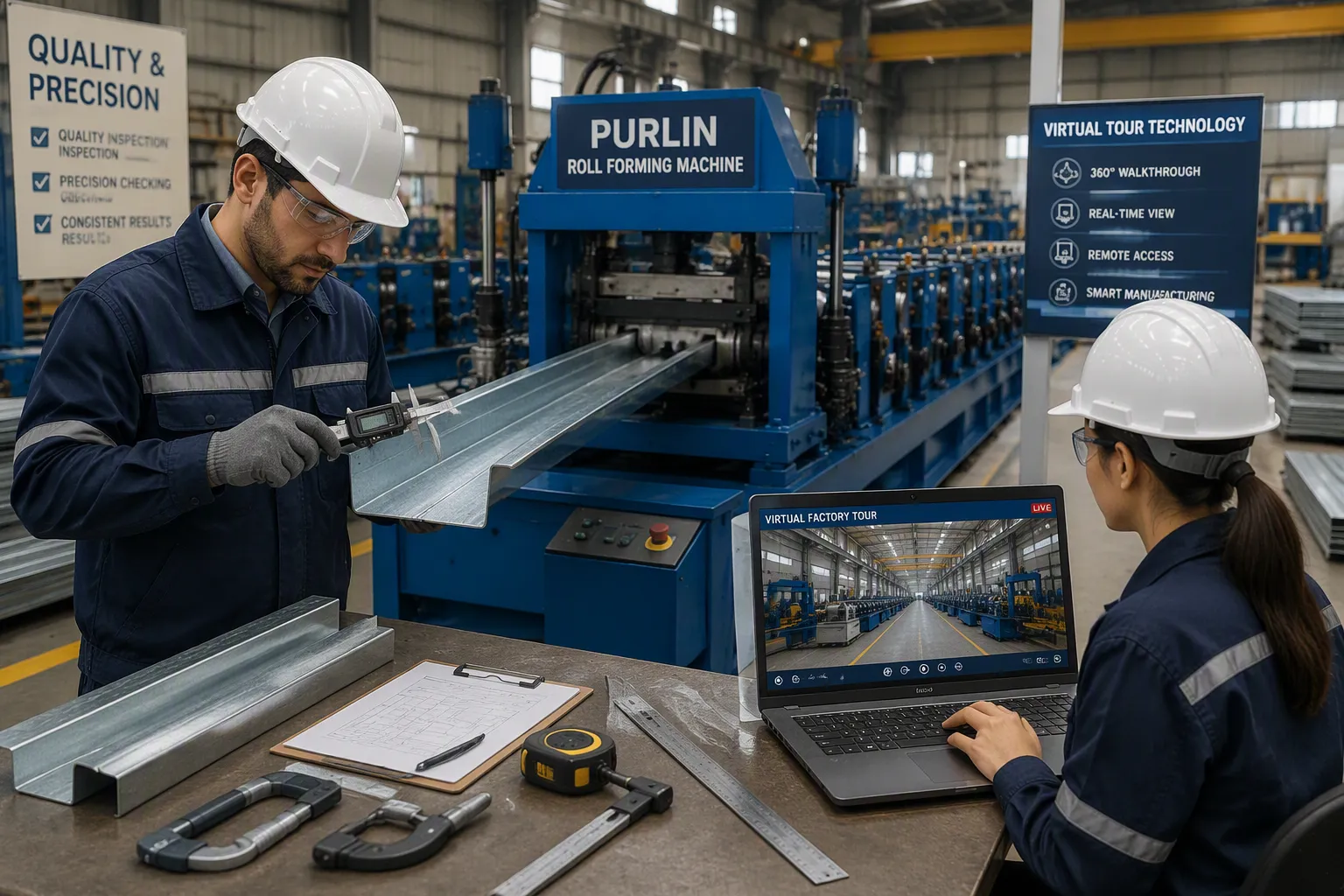
If you cannot travel, ask for a virtual tour. Many good makers offer live video walkthroughs of their factories. BMS Machinery, for example, runs 8 factories across China. A virtual tour lets you see their work without leaving your office. This option saves travel costs but still gives you clear information. You can watch recorded tours anytime online. You can also set up a live session to ask questions right away.
During your audit, focus on five key areas. The table below shows what to check at each step.
Aspect
What to Verify
Measure precision of molded products
Check that product sizes meet design limits. This shows good roll design and making.
Check material and appliance brands
Confirm roll material quality and that electrical parts match the brand in the contract.
Check automated production
Run a test with enough steel to see if the automation system works without errors.
Check punching and cutting molds
Look at molds for standard compliance. Check raw edge quality and mold material specs.
Check surface smoothness and straightness
Make sure finished products have smooth surfaces and straight shapes to avoid later sales problems.
These checks confirm the machine makes quality parts. They also show that the maker uses the parts they promised. A supplier who is slow to run a live test is a warning sign.
Virtual tours offer several clear benefits:
Build customer trust: You get a behind-the-scenes look at production. This meets vendor management needs and builds confidence.
Enhance employee training: Your team can learn about the factory before the machine arrives.
Reduce business risk: Full view of operations cuts down uncertainty and allows full openness.
Reduce travel costs: You avoid the need to travel to factories around the world.
Provide transparency: An immersive experience builds trust across your whole company.
During the tour, check the machines and tools yourself. See if the maker owns the machinery they claim to own. Rate their ability for current and future needs. Bring technical experts to judge equipment age and condition. Look at factory conditions, including cleanliness, order, material storage, and safety steps. Look for growth plans or team growth as good signs.
Meet with your contacts face-to-face, even if it is a video call. Build rapport and trust by talking directly with technical staff. Judge company culture by how clear and useful their answers are. Watch real-time production to confirm machines are working. Check that the maker can build parts without problems. Think about your own project needs. Talk about confidentiality with a non-disclosure agreement. Tell them the specific abilities you want to see to make the visit most useful.
Negotiating Payment Terms and Delivery Schedules
Once you finish the audit, you move to contract talks. This step needs careful attention. The payment plan and delivery timeline affect your cash flow and project schedule. You want terms that protect you without pushing away a good supplier.
Standard payment milestones follow a common pattern:
30% deposit to start production
70% balance due after inspection and before shipping
This plan protects both sides. You commit to the project with a deposit. The maker commits to building your machine. You release the final payment only after you check the finished equipment. This approach lowers your risk compared to paying overseas factories directly.
Manufacturing lead time usually ranges from 8 to 24 weeks. The exact time depends on machine complexity and the maker's schedule. Shipping time adds another 4 to 8 weeks by sea. Smaller machines can ship by air in 1 to 2 weeks. Add these timelines into your project planning.
Your negotiation plan should include several key steps:
Negotiate warranty terms: Standard warranties range from 12 to 24 months. Extended coverage may be available for an extra cost.
Avoid red flags: Be careful of very low prices, lack of documents, unclear delivery times, or refusal to provide test reports.
Verify support services: Ask about training, spare parts availability, and technical support response time before finalizing terms.
Hidden costs beyond the purchase price can surprise you. Shipping and import duties range from $2,000 to $10,000. Installation and operator training fees add more. Annual maintenance costs run 5 to 10 percent of the machine price. Energy use depends on machine efficiency. Production losses from downtime also add to the total. Plan for at least 10 to 15 percent extra for hidden costs when budgeting.
Request quotes from at least 3 to 5 manufacturers. Compare features, warranty, and after-sales support, not just price. Different brands offer different strengths. Some brands are fast, while others focus on durability. Study the models each maker offers. Compare how each model handles your needed material thickness and width. Avoid paying extra for features you do not need. Think about financing or leasing if upfront money is tight.
Invest in high-quality spare parts, such as hardened steel rollers made from GCr15. These reduce wear and extend machine life. A machine that runs well for years costs less than a cheaper model that breaks down often.
Engineering support and after-sales service should cover the whole project life. This includes evaluation, layout planning, installation guidance, and operator training. Spare parts availability, remote technical help, and long-term maintenance support keep the machine running after setup. Building trust through steady performance and clear communication creates lasting partnerships.
BMS Machinery, with its 8 factories and exports to more than 80 countries, offers a reliable supply chain. Their CE certification, issued by SGS, confirms they meet international standards. Use their record as a benchmark when checking other suppliers. But your negotiation plan matters more than any single maker's reputation.
When you compare different models, focus on your specific production needs. A machine that handles multiple profiles lowers your equipment investment. A model with quick-change features offers the best value for varied production needs. Choose a model that matches your production volume and material needs. The right machine becomes a long-term asset. A quality machine pays for itself through steady output.
Before you sign, ask for a detailed timeline for production, testing, and delivery. Clarify payment milestones in writing. Confirm who handles installation and training. Get everything written in the contract. A professional maker will welcome these questions. A vague answer signals possible problems.
Your final decision should balance machine quality, warranty coverage, customer service, and maker experience. These factors decide long-term satisfaction. The cheapest quote rarely gives the best value. Factor in downtime, support, and machine life. A reputable purlin roll forming machine manufacturer acts as a long-term partner for business growth. Choose wisely, and your investment will serve you for decades.
You have walked through every step, from assessing your production needs to negotiating final terms. The cheapest quote rarely delivers the best value. Downtime, support gaps, and short machine life erase early savings quickly.
A reputable purlin roll forming machine manufacturer becomes your long-term partner. They help you grow, not just sell equipment. Their roll forming machine performs reliably for decades when you maintain it properly.
Trust the structured process you learned here. Prioritize technical performance and after-sales reliability over short-term savings. Measure efficiency in output quality, not just speed.
Create your own vendor evaluation checklist using these criteria. Start your research today. Secure a roll former that will serve your business for decades.
FAQ
How Do I Confirm a Supplier Is a Real Manufacturer?
Ask for factory audit reports and business registration papers. Request quality management certificates and production process records. A true manufacturer shares these without delay. Trading companies often stall or give unclear answers. You can also ask for a live video tour of the factory floor to check their claims.
What Performance Features Matter Most?
Pay attention to forming station count, roller material hardness, and drive type. Check the PLC brand and how fast it changes over. A machine with quick-change tooling handles many profiles well. Look for computer-controlled systems that work with CAD software. These features affect your daily output and product quality directly.
How Should I Compare Quotes From Different Suppliers?
Look past the base price. Ask for itemized costs covering installation, training, shipping, and import duties. Check warranty terms and spare parts availability. Read customer reviews about after-sales support. Compare top brands and models side by side. The cheapest quote often hides expensive long-term costs.
What Maintenance Does a Purlin Machine Require?
Regular maintenance keeps your machine running smoothly. Check roller alignment weekly and replace worn rollers promptly. Keep the cutting blade sharp and properly adjusted. Lubricate moving parts according to the manufacturer's schedule. Follow these maintenance tips for optimal performance. A well-maintained machine lasts longer and produces consistent quality.
Can One Machine Handle Multiple Profile Types?
Yes. Modern purlin machines switch between C and Z profiles automatically. Some models adjust width and thickness ranges without extra tooling. A versatile strut roll forming machine handles diverse projects efficiently. This flexibility reduces your equipment investment. Choose a strut roll forming machine that matches your production volume. The right strut roll forming machine becomes a long-term asset. A quality strut roll forming machine pays for itself through steady output.
Content list
RELATED NEWS
content is empty!
ABOUT BMS
BMS Machinery was initially established in 1992. In 2017, we became a member of XIAMEN BMS GROUP and invested 8 factories, 6 machining centers and 1 steel structure company in China, which totally covers an area of more than 30000 square meters.

 日本語
日本語 한국어
한국어 ไทย
ไทย 繁體中文
繁體中文 العربية
 فارسی
فارسی Français
 Русский
 Español
 Português
 English
 Deutsch
 italiano
 Nederlands
 Tiếng Việt
 Polski
 Türkçe
 አማርኛ
አማርኛ ພາສາລາວ
 ភាសាខ្មែរ
 Bahasa Melayu
 ဗမာစာ
ဗမာစာ தமிழ்
தமிழ் Filipino
 Bahasa Indonesia
 magyar
 Română
 Čeština
 Монгол
 қазақ
қазақ Српски
 हिन्दी
 Kiswahili
 Slovenčina
 Slovenščina
 Norsk
Norsk Svenska
 українська
 Ελληνικά
 Suomi
Suomi Հայերեն
 עברית
עברית Latine
 Dansk
Dansk اردو
اردو Shqip
Shqip বাংলা
বাংলা Hrvatski
 Afrikaans
 Gaeilge
 Eesti keel
 Māori
Māori සිංහල
සිංහල नेपाली
 Oʻzbekcha
 latviešu
 অসমীয়া
 Беларуская мова
 Esperanto
 मराठी
मराठी پښتو
پښتو